
Livraison le jour même ou le lendemain

Qualité garantie

Débloquez vos offres de bienvenue: Livraison GRATUITE | Jusqu'à -80 % | 30 jours d'essai gratuits à JoyPlus
Téléchargez l'application
A notebook that buckles, ink that bleeds through the pages, or art paper that pills the moment you first use an eraser can quickly turn a practical purchase into a waste of money. Whether you're a student, artist, teacher, office worker or journaling enthusiast, the choice goes far beyond the cover design or the page count.
Before buying notebooks and creative paper, three common pitfalls keep cropping up:
Measured in gsm (grams per square metre), the paper weight gives you a first indication of its durability.
A higher weight isn't always better: it often makes the notebook heavier and bulkier. For everyday notes, 70 or 80 gsm paper can actually be more practical.
The size should match your intended use, whether at university, in the office or at home.
A spiral binding lets you fold the pages back and work comfortably on a flat surface. A hard cover with an elastic band offers better protection inside a bag. Glued pads make it easy to tear out sheets, provided they are micro-perforated.
The paper's texture directly affects the final result. A smooth surface suits writing, fine pens and detailed work. A slight grain gives more grip for charcoal, pastels and certain pencils.
The Clairefontaine Cray’ON R.I. Pad A4 has two sides: one with a very fine grain and the other almost smooth. Its product description states it is made from extra-white cellulose, has a weight of 120 gsm, is acid-free and carries PEFC certification. It is designed for dry techniques such as drawing, sketching, charcoal, pastel and coloured pencil.
For watercolour and mixed media, it's best to check the absorbency, weight and manufacturer's recommendations. A paper intended for fine-art printing doesn't necessarily have the same properties as a fine-art paper designed to take water.
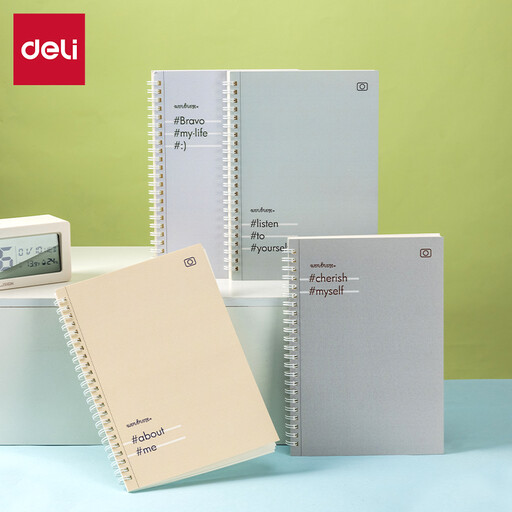
Why this choice suits this profile: This pack of A5 notebooks is ideal for students and anyone who wants to organise notes across several subjects, projects or journaling activities.
The A5 size and spiral binding keep it compact while allowing it to lie flat. The pack also saves you from having to buy several notebooks separately.
60 sheets per notebook, 120 pages stated and 70 gsm paper for writing and everyday school use.
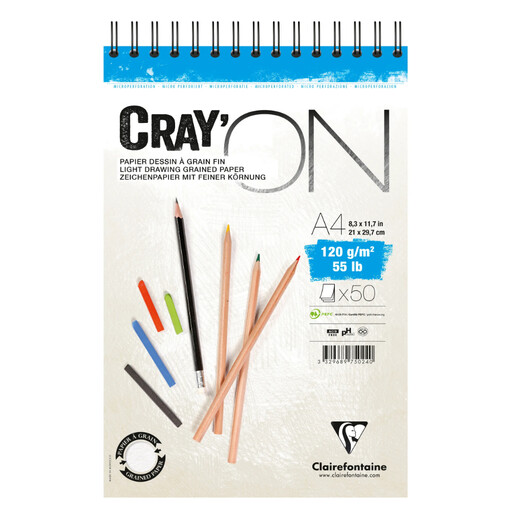
Why this choice suits this profile: This A4 pad is aimed at amateur and professional artists looking for a versatile surface for sketching and dry techniques.
Its two sides let you choose between a very fine grain and a smooth surface. At 120 gsm, the paper withstands repeated corrections better than some very lightweight papers.
Acid-free extra-white paper, stated PEFC certification and compatibility with drawing, charcoal, pastel and coloured pencil.
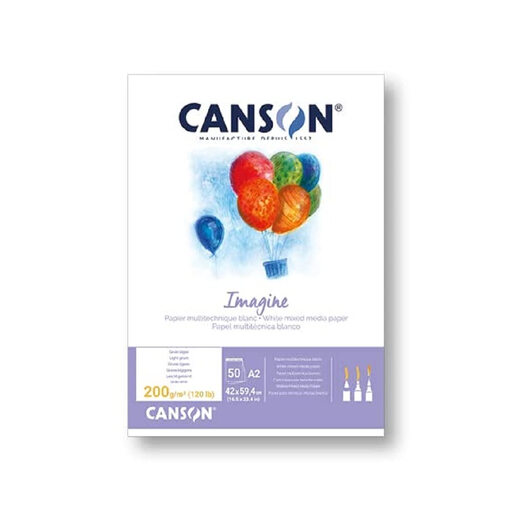
Why this choice suits this profile: Its A2 size and 200 gsm weight are ideal for projects that need a large surface, layering and the use of dry or wet media.
Its high weight is far better suited to gouache, watercolour and mixed media than a standard writing notebook. It reduces the risk of buckling when applying several layers.
50 A2 sheets, natural texture, stated absorbency and compatibility with pencil, charcoal, gouache and watercolour.
We've put together a comprehensive, real-time updated list of products that meet these demanding selection criteria and European safety standards.
For ballpoint pens, pencils and standard ink pens, 70 to 90 gsm is usually sufficient. If you use markers or want to minimise show-through, go for paper of 100 to 120 gsm.
Yes. An A5 spiral notebook slips easily into a bag and lies flat during lessons. For complex diagrams, mind maps or large-format drawings, an A4 or an art paper pad will be more comfortable.
Not necessarily. Check the manufacturer's instructions, the paper weight and its absorbency. A 200 gsm watercolour and mixed media paper can work with several mediums, but the result also depends on how much water you use and the drying time. Always store sheets flat, away from moisture and direct light.