
Livraison le jour même ou le lendemain

Qualité garantie

Débloquez vos offres de bienvenue: Livraison GRATUITE | Jusqu'à -80 % | 30 jours d'essai gratuits à JoyPlus
Téléchargez l'application
Choosing drawing paper might seem trivial, but with an overwhelming number of options, it's easy to feel lost. The wrong medium won't just stifle your creativity; it's also money down the drain. To get it right, it's crucial to know the pitfalls to avoid and the features that will truly make a difference in your artistic practice.
From beginners to seasoned artists, many fall into common traps that can ruin their creations. Here are the most frequent ones:
To make the right choice, focus on a few essential technical criteria. They will guide you to the perfect medium for your projects.
Expressed in grams per square meter (gsm), the weight indicates the paper's thickness and rigidity. It's the number one criterion for determining its compatibility with your preferred techniques.
The surface texture, or grain, has a direct impact on the final look of your artwork.
For works you wish to preserve, paper composition is non-negotiable. Always look for the "acid-free" or "pH-neutral" label. This guarantees the paper won't yellow over time. Papers are made from cellulose (wood pulp) or cotton. More refined and durable, cotton is often reserved for high-end papers, especially for watercolor.
Instead of searching for a one-size-fits-all solution, it's best to choose a medium tailored to your practice. Here is our selection for different needs.
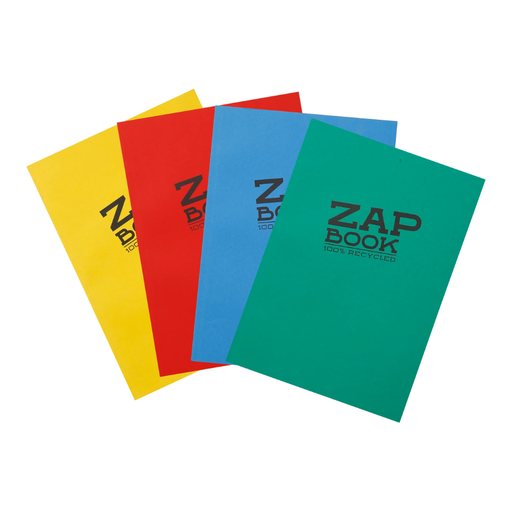
Why we love it: Perfect for students and artists who fly through sketchbooks. Its 100% recycled paper and generous page count make it a smart, cost-effective choice for daily sketching and note-taking.
Its 80 gsm weight confines it to dry media, preventing any unpleasant surprises with wet techniques. It's also acid-free, a real bonus for preserving your sketches.
Excellent value with 160 sheets. Ideal for practicing without limits.
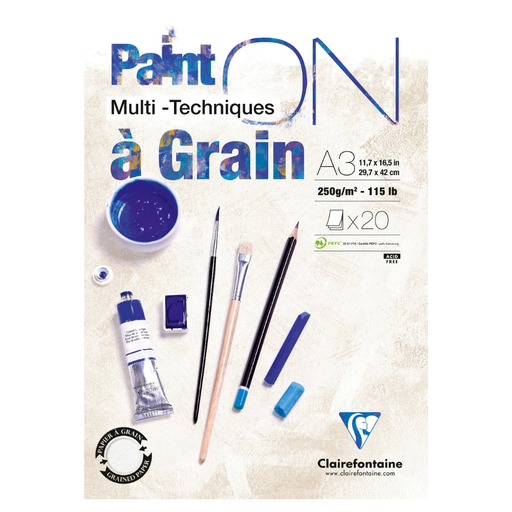
Why we love it: The Swiss Army knife of papers, designed for the artist who loves to experiment. This multi-media paper transitions seamlessly from dry to wet media. Its dual-sided surface (one textured, the other smoother) offers formidable creative flexibility.
Its 250 gsm weight is the perfect middle ground: robust enough to minimise buckling with moderate wet media. The reversible surface solves the grain dilemma.
A true all-terrain paper that lets you go from pencil to gouache on the same sheet. It absorbs well and allows for corrections (lifting).
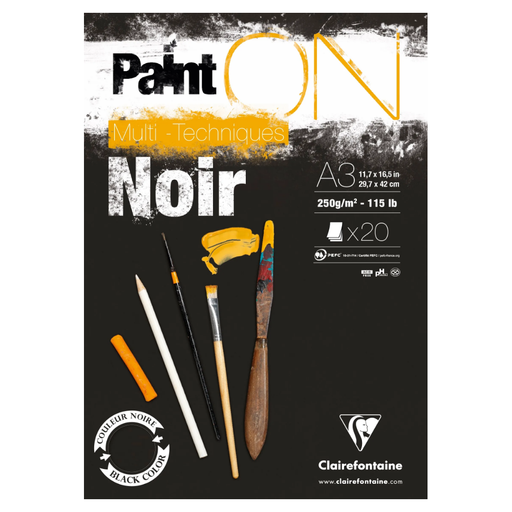
Why we love it: This black paper is the perfect partner for artists working with light, metallic, or fluorescent media. Its deep tone creates striking contrast and gives immediate depth to the artwork.
This is a specialty paper that meets a specific need, without the compromises of a standard medium. Its 250 gsm weight gives it the same versatility as the white version, compatible with both dry and wet media.
A deep, intense black for maximum visual impact. Its light grain perfectly grips the pigments of colored pencils and pastels.
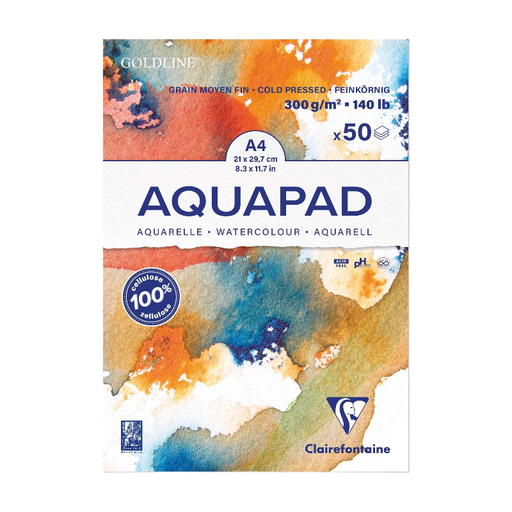
Why we love it: A student-grade paper designed for watercolor. Its heavy weight and surface treatment make it an accessible, high-performing medium for students and anyone starting out with water-based techniques.
At 300 gsm, it tackles the problem of buckling head-on. It's a true watercolor paper, which prevents the disappointment of a medium that can't keep up.
Good water resistance thanks to double sizing (internal and surface). Its fine grain is versatile. Bonus: it's acid-free and vegan-friendly.
Discover our full selection of products that meet our strict selection criteria and the most demanding standards.
For pencil drawing, a weight between 90 and 120 gsm is generally sufficient. It's thick enough to hold graphite, charcoal, or sanguine well, and to withstand repeated erasing without pilling. For more advanced techniques involving heavy blending and layering, a 160 gsm paper will offer a more comfortable experience.
Buckling is a normal reaction of paper to moisture. To minimise it, the first rule is to choose a heavy weight, ideally 300 gsm or more. For very wet work (large washes), the secret is to stretch the sheet on a rigid support (like a board or frame) with masking tape or gummed tape. Wait until the paper is completely dry before removing it.
Canson and Clairefontaine are two French paper giants, and both offer excellent product lines. The choice depends less on the brand than on the specific product.
Our advice: compare the specific features (weight, grain, composition) of a product rather than choosing a brand blindly. Both manufacturers have something to offer every artist, regardless of their skill level or technique.