
Livraison le jour même ou le lendemain

Qualité garantie

Débloquez vos offres de bienvenue: Livraison GRATUITE | Jusqu'à -80 % | 30 jours d'essai gratuits à JoyPlus
Téléchargez l'application
An icy draft slipping under your front door, street noise invading your living room, or a heating bill that climbs for no apparent reason… The culprit is often the same: a poorly insulated door. Weatherstripping is the simplest and most cost-effective solution. The problem? The market is a jungle of products with sometimes misleading claims.
As a Product Manager at Joybuy, I test these solutions every day. My role is to help you sort through the options. To avoid a pointless purchase, here are the 3 pitfalls to avoid:
Choosing the right product isn't about brand, but about compatibility with your specific needs. Here are the essential criteria to check.
For a long-lasting result and real savings on your bill, a few technical points need to be checked. A quick analysis of your door and its environment will guide you to the most suitable solution.
The fastening method is the first thing to check. An adhesive door sweep is quick and easy to install, but its compatibility with your floor is crucial.
For the door frame, door and window insulation seals most often come as adhesive foam or rubber tape, which is applied directly to the door jamb.
The choice of material directly impacts the seal's lifespan and performance, including for door soundproofing.
This is the most overlooked detail, yet it's the most important. A seal that doesn't match the gap size will be completely ineffective. Before any purchase, precisely measure the gap between the door and its frame, or between the bottom of the door and the floor. Manufacturers always indicate the effective range of their products (e.g., 1 to 3?mm, 2 to 4.5?mm, or up to 15?mm). Choosing the right size ensures optimal compression and a perfect seal.
To help you make the right choice for your situation, here are a few products that meet specific needs while avoiding the pitfalls mentioned.
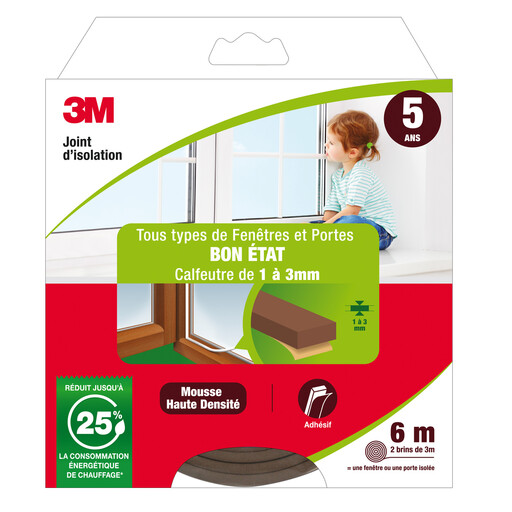
The right choice if: you're looking for a simple, budget-friendly solution for doors and windows in good condition with a small gap. Ideal for renters or a quick fix without breaking the bank.
This seal is designed for a precise gap of 1 to 3 mm. By respecting this measurement, you avoid the "universal" product trap and ensure a perfect seal.
Its high-density foam compresses perfectly to fill small gaps. 3M reports up to 25% savings on heating bills.
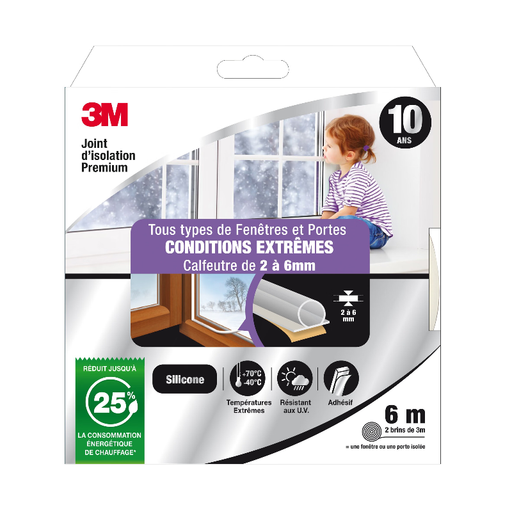
The right choice if: you're a homeowner looking for a permanent solution for older doors or windows with gaps. Silicone offers unparalleled resistance and longevity.
Unlike low-end rubbers, its high-quality silicone won't harden or crack. Its resistance to UV rays and extreme temperatures ensures exceptional longevity.
It fills significant gaps from 2 to 6 mm. The manufacturer estimates its lifespan at over 10 years, for long-lasting peace of mind.
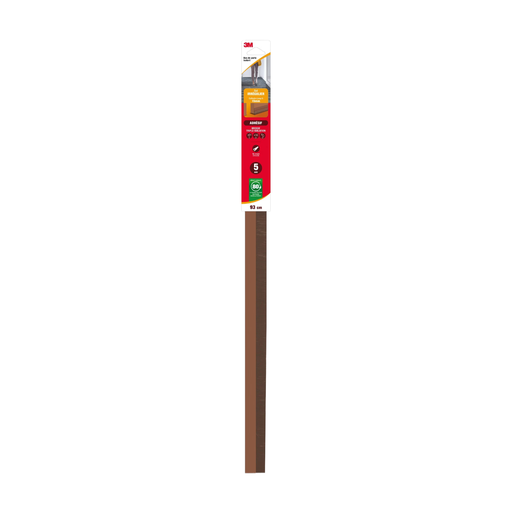
The right choice if: you have old tile with prominent grout lines, or a floor that isn't perfectly level. This door sweep is specifically designed for these scenarios.
Its design (double row of brushes and a flexible membrane) allows it to conform to the floor's contours. Where a standard door sweep would be ineffective, this one maintains contact and blocks drafts.
Its effectiveness on uneven floors is its major strength. It can fill a gap of up to 15 mm and reduce drafts by 80%, according to 3M.
What is the lifespan of a door seal? It all depends on the material. An entry-level foam seal will last one or two seasons. A good EPDM rubber seal can last over 5 years. Silicone is the longevity champion, offering more than 10 years of peace of mind.
How do I know which type of weatherstripping to choose for my door? It's simple. Where is the draft coming from? The bottom or the sides? Next, measure the gap you need to fill. For the bottom, analyze your floor: is it smooth or uneven? For the frame, a rubber or silicone seal of the correct size is almost always the best option.
Is installing an adhesive door sweep difficult? Not at all. It's very simple and requires no tools (except perhaps a saw if you need to adjust the length). The secret to a successful installation is preparation: thoroughly clean, dry, and degrease the door surface before applying the adhesive. Then, press firmly along the entire length for a perfect bond.