
Livraison le jour même ou le lendemain

Qualité garantie

Débloquez vos offres de bienvenue: Livraison GRATUITE | Jusqu'à -80 % | 30 jours d'essai gratuits à JoyPlus
Téléchargez l'application
A chilly draft seeping through the front door, a heating bill that skyrockets without warning... These daily annoyances almost always point to poor sealing on your doors and windows. To fix this, door and window weatherstripping is a simple and cost-effective solution, ideal for reducing heat loss. But faced with the overwhelming array of products on the shelves, the risk of choosing the wrong one is high. Here are the classic mistakes to avoid so you don't throw your money out the (poorly insulated) window:
This guide breaks down the essential criteria for you, so you can stop making mistakes and choose the solution that's genuinely right for your home.
For successful weatherstripping, three parameters should guide your choice: the size of the gap to be filled, the nature of the surface, and the fastening method.
The first, non-negotiable step is to precisely measure the gap between the fixed frame and the moving part (the sash) of the door or window. The thickness of the door or window insulation seal you choose will depend on this measurement.
The door sweep is the targeted solution to eliminate drafts that pass under doors. To be effective, it must be perfectly compatible with your flooring.
The installation method has a direct impact not only on the ease of fitting but also on the durability of the installation.
Rather than a simple product list, we've selected solutions that address concrete problems. The goal: to help you find the one that precisely matches your situation.
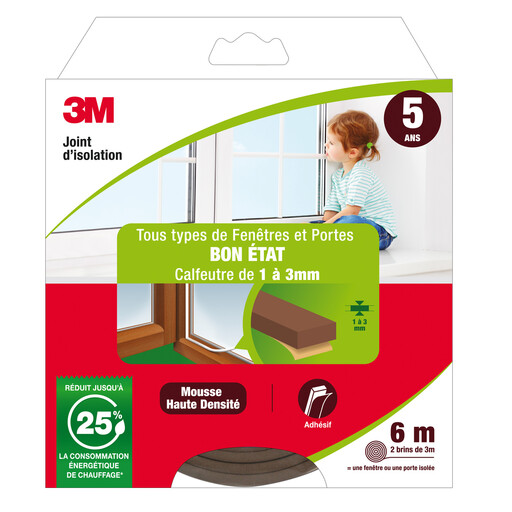
Why we chose it: Perfect for renters or as a stopgap solution on sound frames with a small gap (1 to 3 mm). It's the ideal option for quickly improving comfort without breaking the bank.
Its high-density foam ensures it holds up for several seasons, avoiding the trap of a "disposable" product that falls apart after a few months.
Ultra-simple and fast installation thanks to its adhesive backing. It suits small budgets without sacrificing reliable baseline quality for the most common gaps.
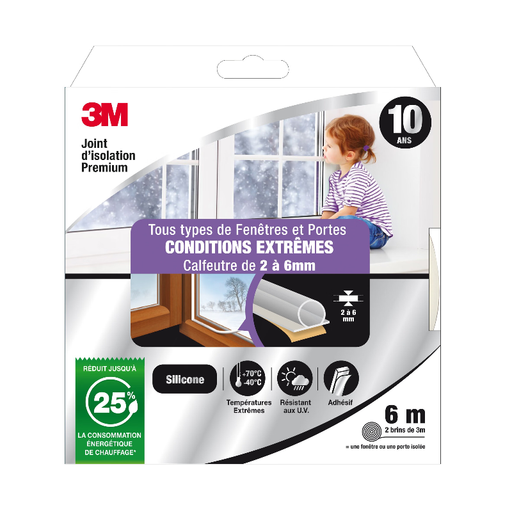
Why we chose it: The long-term solution for homeowners with old or warped windows that have a significant gap (2 to 6 mm).
The silicone is resistant to UV rays and extreme temperatures (-40°C to +70°C), unlike standard foams or rubbers that eventually crack. It fills large gaps, solving the problem of an undersized seal.
Exceptional durability (10-year lifespan stated by 3M) and flexibility that adapts to the most difficult cases. Its transparency makes it discreet on any surface.
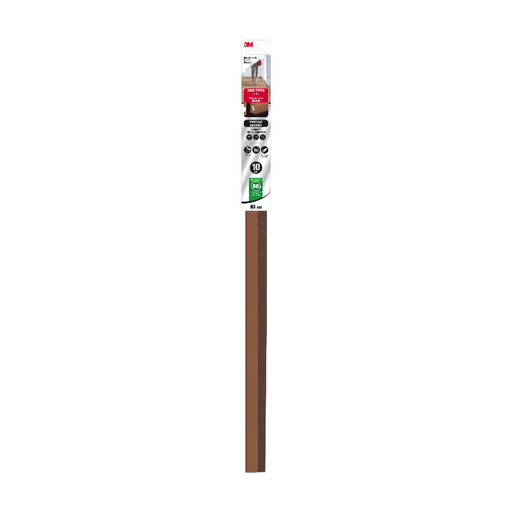
Why we chose it: The go-to solution for garage doors, workshop doors, or entrances leading onto uneven concrete slabs or old tiles, where a large gap (up to 25 mm) needs to be filled.
It is specifically designed for uneven floors thanks to its combination of brushes and a thin membrane, where a simple lip-style door sweep would be ineffective and wear out prematurely.
Adapts to floor imperfections for a continuous and effective seal against drafts, dust, and even water infiltration.
The lifespan of an adhesive seal depends mainly on two things: the material and the quality of the installation.
This is the step that guarantees a durable bond. Follow these four points:
Yes, a door sweep also improves door soundproofing. By blocking the space under the door, it creates a barrier to airborne noise (conversations, television, etc.). The improvement is noticeable for reducing light noise pollution between two rooms. However, for true acoustic insulation, it should be combined with other solutions, such as seals around the entire door frame and a solid-core door.