
Livraison le jour même ou le lendemain

Qualité garantie

Débloquez vos offres de bienvenue: Livraison GRATUITE | Jusqu'à -80 % | 30 jours d'essai gratuits à JoyPlus
Téléchargez l'application
The cutting board: a trivial accessory? Far from it. It's the cornerstone of any well-organized kitchen. Yet, faced with an overwhelming number of options, it's easy to get lost between marketing promises and superfluous gadgets. A poor choice means it's not just your knives that will pay the price, but your hygiene too. This guide breaks down the essential criteria for choosing the perfect model for your needs and helps you avoid the most common pitfalls.
The market is full of boards with enticing promises that are often disappointing in practice. Here are the three mistakes to avoid:
To make the right choice, focus on the few criteria that truly make a difference in performance and longevity.
The choice of material is arguably the number one criterion. Each option has its strengths and weaknesses.
Beyond the material, certain design details can greatly enhance your kitchen experience.
Here is a selection of models that cater to a variety of user profiles, while meeting our quality and safety criteria.
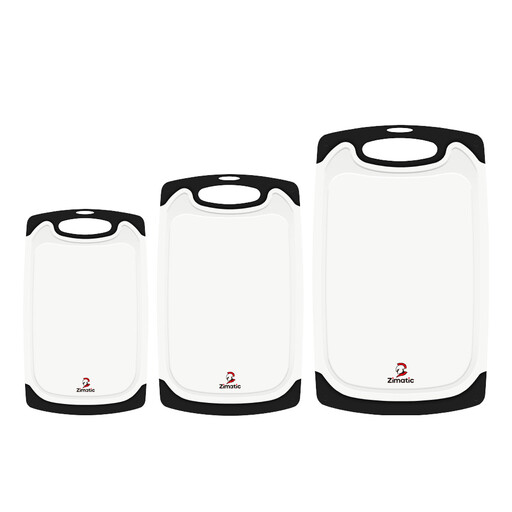
The ideal user: Perfect for anyone seeking a simple, hygienic solution for daily use. This set allows you to dedicate a board to each food type, thus limiting the risk of cross-contamination.
This set of BPA-free plastic boards sidesteps the "single board" pitfall by encouraging a healthy separation of foods. Dishwasher compatibility ensures a deep clean.
Deep juice grooves to collect liquids; non-slip handles for a secure grip; durable and easy-to-maintain material.
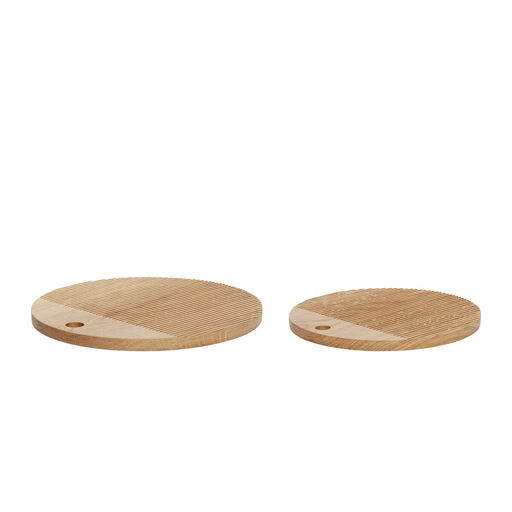
The ideal user: Perfect for those who love to entertain and appreciate beautiful objects. This duo of FSC-certified oak boards works equally well for prep and for presenting cheeses or charcuterie.
This product doesn't sacrifice function for design. The solid oak is a durable material that's gentle on knives, while its natural aesthetic makes it an ideal presentation board.
Dual-purpose (cutting and serving); sustainable FSC-certified wood; two sizes for greater versatility.
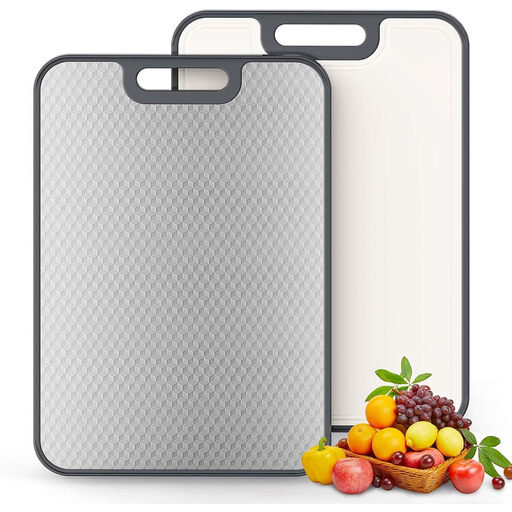
The ideal user: Designed for those who demand maximum hygiene and versatility. The double-sided design allows for strict separation of raw foods from vegetables, combining the benefits of two materials.
This board directly addresses the risk of cross-contamination. The stainless steel side is perfect for meat, while the wheat straw/PP side is gentler on knives for chopping vegetables.
Double-sided design for perfect hygiene; textured, scratch-resistant surface; dishwasher-safe for easy maintenance.
Explore our full selection of products that meet our selection criteria and safety standards.
Never let a wooden board soak, and definitely do not put it in the dishwasher. The right way: wash it by hand with hot, soapy water after each use, then dry it immediately. To nourish and protect it, apply a thin coat of food-grade mineral oil once a month.
Absolutely. To prevent any cross-contamination, it's essential. The ideal setup is to have at least two boards: one dedicated to raw meat and fish, and a second for everything else (vegetables, fruit, bread, cheese). To avoid getting them mixed up, use a colour-coded system!
Not necessarily. When new, a non-porous plastic board is perfectly hygienic and simple to disinfect. The problem arises with wear and tear: deep knife grooves become havens for bacteria. Conversely, a well-maintained wooden board has natural antibacterial properties that give it better long-term durability in this regard. The real game-changer is the cleaning method: plastic is dishwasher-safe, allowing for high-temperature sterilization. That's an undeniable advantage.