
Livraison le jour même ou le lendemain

Qualité garantie

Débloquez vos offres de bienvenue: Livraison GRATUITE | Jusqu'à -80 % | 30 jours d'essai gratuits à JoyPlus
Téléchargez l'application
A bamboo chopping board can be used to prepare vegetables, slice bread or meat, and even serve a selection of charcuterie. However, a natural finish and claims such as ‘durable’, ‘antibacterial’ or ‘easy to clean’ are not enough to guarantee the right choice.
Before placing your order, three common pitfalls are worth bearing in mind:
The right model therefore depends on the space available, your cooking habits and the foods you prepare most often.
Bamboo is popular thanks to its light colour, generally reasonable weight and surface, which is well suited to everyday food preparation. However, models made from assembled strips can vary in thickness, finish and build quality.
A solid wood chopping board, such as one made from oak, offers a more robust feel and can also be used as a serving board. It is often heavier, which improves stability, but requires careful drying and regular maintenance.
Models made from wheat straw or composite materials may be suitable for a small kitchen or occasional use. Check that the board is specifically designed for food contact and follow the manufacturer’s recommendations rather than relying solely on marketing claims.
For everyday use, a surface of around 40 × 28 to 40 × 30 cm offers a good balance between comfort and size. A large board is particularly useful for families, preparing larger quantities and handling bulky ingredients.
Smaller formats are still suitable for:
Thickness affects the weight, stability and sense of sturdiness. A thin board is easy to handle, while a thicker model will generally stay more firmly in place on a dry, stable surface.
A chopping board with a juice groove is useful if you often prepare particularly juicy foods. It does not remove the need to handle ingredients carefully, but it helps limit liquid running onto the worktop.
A chopping board with a handle is easy to carry from the kitchen to the table. It is a real advantage when serving cheese, bread or charcuterie. When cutting, however, the board must remain completely flat: a handle is no substitute for a non-slip system.
A set of chopping boards lets you separate different uses or have several sizes available. You will, however, need enough space to dry them properly after washing.
The models below are grouped according to specific situations. The dimensions, materials and care advice are based on the information available in the product listings.
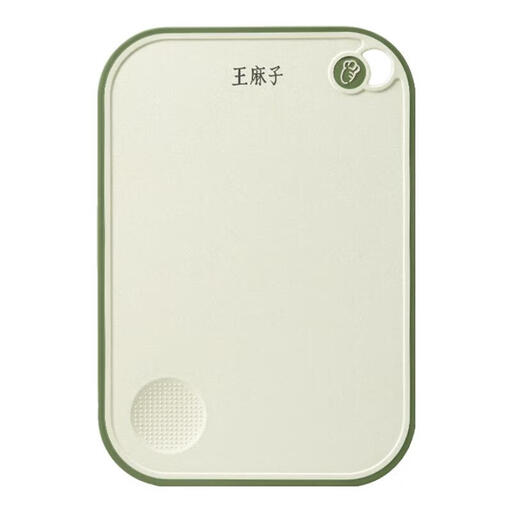
Why it suits this profile : Its size, designed for smaller kitchens, is suitable for simple food preparation and for anyone looking for a reversible surface for different uses.
The product listing mentions a reversible design and easier cleaning. It is still essential to wash and dry the board after every use.
A reversible surface and compact format, perfect as an additional chopping board.
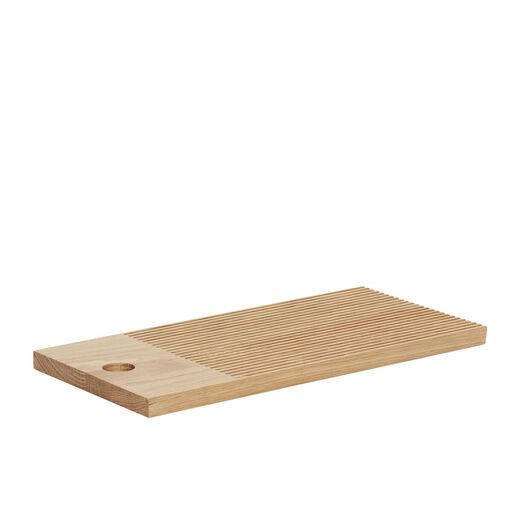
Why it suits this profile : Its FSC-certified solid oak construction and 40 × 20 cm dimensions make it a great choice for anyone looking for an item that is as pleasant to use as it is to display.
With its stated 2 cm thickness, it provides a sturdier base than a very thin model. Dishwasher use is not recommended.
FSC-certified oak, a rectangular format and a design intended for both chopping and serving.
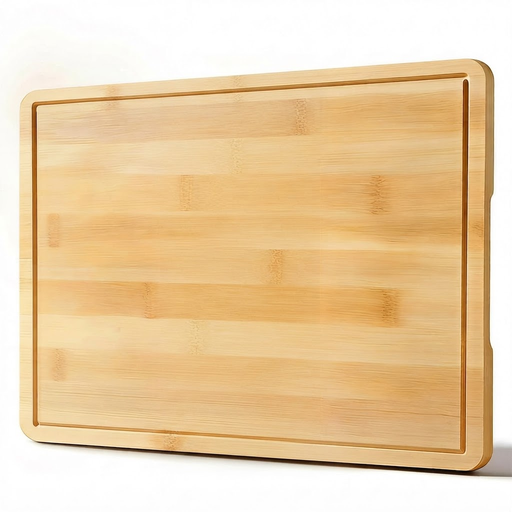
Why it suits this profile : Its stated dimensions of 40,6 × 29,2 × 1,2 cm provide a comfortable surface for preparing family meals or serving cheese.
The juice groove and integrated handles help limit spillages and make the board easier to carry. The manufacturer recommends hand washing and advises against using a dishwasher.
Bamboo advertised as 100% natural, a juice groove and an integrated handle in an XL format.
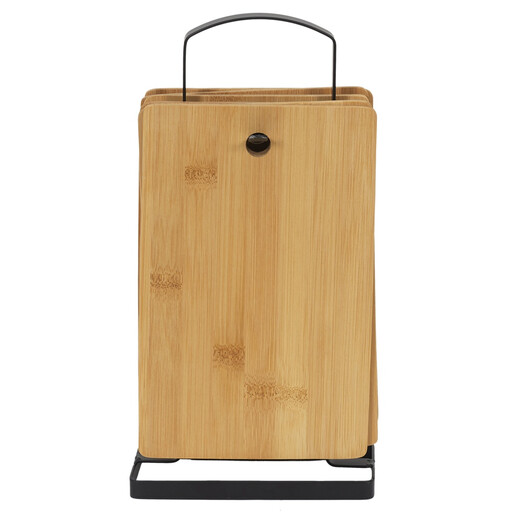
Why it suits this profile : Its four 14 × 22 cm boards and metal stand make it easy to organise small food preparations and serve bread, cheese or appetisers.
The stand keeps the boards neatly stored, but they must be removed before chopping and hand-washed without prolonged soaking.
A set of four bamboo boards and a vertical stand that frees up space on the worktop.
We have selected a complete range, updated in real time, of products that meet these demanding criteria and European safety regulations.
How easy a chopping board is to clean depends as much on its design as on how you look after it. After every preparation:
To prevent cross-contamination, use the board for one type of preparation at a time, or clean it thoroughly after handling raw meat, poultry or fish. Check the condition of cuts, chips and cracks regularly. A heavily damaged board should be replaced.
Generally, no. The product listings for the models featured recommend hand washing. Heat, water and the drying cycle can damage assembled bamboo. Always check the instructions for the product in question.
A format of around 40 × 28 cm is suitable for most everyday preparations. If you prepare several ingredients one after another, a large surface makes chopping easier and stops pieces from falling onto the worktop. Simply make sure you have enough clear space for drying.
A set is useful for separating different uses, varying the sizes available or serving food directly at the table. For one person or in a small kitchen, a single versatile board takes up less space and makes storage easier.