
Livraison le jour même ou le lendemain

Qualité garantie

Débloquez vos offres de bienvenue: Livraison GRATUITE | Jusqu'à -80 % | 30 jours d'essai gratuits à JoyPlus
Téléchargez l'application
The bamboo cutting board has become a staple in modern kitchens. It's attractive, natural, and has an eco-friendly reputation... it seems to have it all. However, behind this picture-perfect image lie realities that can quickly turn a great deal into a total headache. To avoid buyer's remorse, it's crucial to sidestep the most common pitfalls and invest in a model that is truly practical and durable.
As the Head of Product Curation at Joybuy, my role is to help you see things more clearly. Let's forget the marketing speak and focus on the facts to choose the ideal board.
The 3 Pitfalls to Avoid Before Buying a Bamboo Cutting Board:
To avoid falling into these traps, here are the essential points to check before you buy.
Bamboo is a fast-growing grass, which, on paper, makes it an eco-friendly kitchen utensil. Its high density makes it resistant to water and knife marks. But be warned, the quality is all in the construction. A solid wood cutting board (oak, acacia, etc.) will often offer better longevity if carved from a single block, but it will require more consistent maintenance. For the most sensitive tasks, like raw meat, some prefer the safety of non-porous materials like stainless steel, which guarantees impeccable hygiene.
A cutting board with a juice groove isn't a gimmick—it's a necessity. This simple channel carved around the edge collects liquids (from meat, fruit, and vegetables) and keeps your work surface clean and safe. As for the size, it all depends on your needs:
Thanks to its elegant look, bamboo is perfect for presentation. A beautiful board transitions seamlessly from the prep area to the dining table. If you love to entertain, a model designed as a bamboo appetizer board or wooden serving platter is a real asset. Long, narrow formats, or those with handles, are perfect for serving cheese, charcuterie, and other tapas.
Because every kitchen is unique, we've selected a few models that meet specific needs without ever sacrificing quality and practicality.
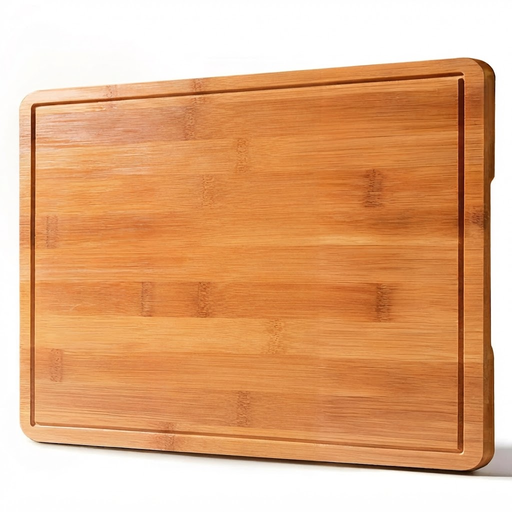
Why we chose it: For those who cook daily and need a reliable, all-purpose tool that can handle everything from vegetables to meat without skipping a beat. Its generous size and practical details make it a true kitchen workhorse.
The carbonisation treatment strengthens its structure and reduces the risk of warping or cracking—a common flaw in low-end models. The juice groove and handles directly address the need for everyday practicality.
Enhanced durability from heat treatment; highly versatile thanks to its large surface area (40x29 cm), juice groove, and handles.
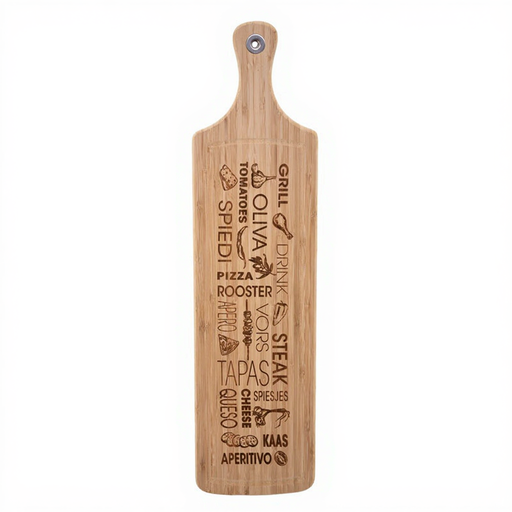
Why we chose it: Perfect for stylishly presenting appetizers, cheeses, or charcuterie when you're entertaining. Its long, narrow shape is as practical as it is beautiful.
Its design is purpose-built for serving, which saves you from repurposing a less-than-elegant prep board. Lightweight (just 0.5 kg) and featuring integrated handles, it's effortless to carry to your guests.
Extra-long serving board format (59.5 cm); lightweight design with handles and a juice groove for flawless serving.
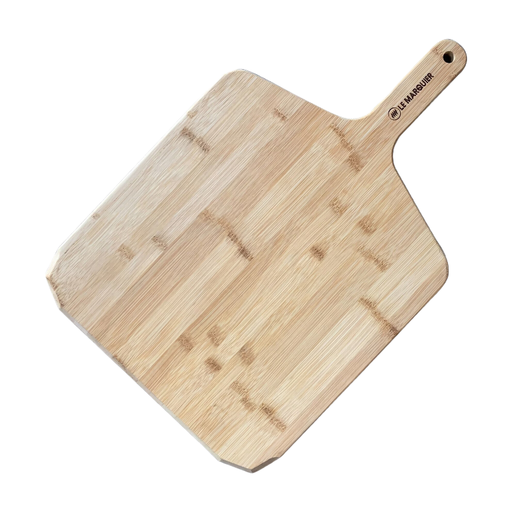
Why we chose it: For homemade pizza lovers who want a dedicated solution for cutting and serving without risking damage to their knives or other boards.
It avoids the jack-of-all-trades pitfall by specialising in a single task. Its round shape and handle are optimised for a simple, efficient motion from oven to table.
Specially designed for pizzas (30 x 30 cm surface); integrated handle for safe transport and serving directly on the board.
We have curated a full range of products that meet our quality criteria and current food safety standards.
Proper maintenance is the key to its longevity.
Yes, but only by following strict hygiene rules. Since bamboo is less porous than many woods, it limits bacterial growth. However, after cutting raw meat, poultry, or fish, it is imperative to wash the board immediately and very thoroughly with hot, soapy water. For maximum safety, it's best to have a dedicated board (often plastic or stainless steel) just for raw meat to prevent any cross-contamination.
Bamboo is harder than most woods used for cutting boards (like maple or beech). As a result, it can dull the edge of your knives slightly faster than a softer wood board. Rest assured, this material is still much kinder to your blades than glass, ceramic, or stone, which should be avoided at all costs. The impact is moderate, and regular maintenance of your knives (with a honing steel or sharpener) will be enough to keep them sharp.