
Livraison le jour même ou le lendemain

Qualité garantie

Débloquez vos offres de bienvenue: Livraison GRATUITE | Jusqu'à -80 % | 30 jours d'essai gratuits à JoyPlus
Téléchargez l'application
A good cutting board is an indispensable ally in any kitchen. Yet, with the sheer number of models available, making the right choice can be a real headache. Between boards that warp after the first wash and those that ruin the edge of your brand-new kitchen knife, it's easy to make the wrong purchase. To avoid disappointment, let's review the most common pitfalls.
Who hasn't cursed at a board that cracks or warps, making chopping both unstable and dangerous? Another recurring problem: a material that looks great but massacres the edge of your blades. Not to mention boards that are difficult to clean, with grooves that quickly become a breeding ground for bacteria, posing a very real risk of cross-contamination.
To make the right choice, you don't need to get bogged down in the details. Focus on the few characteristics that truly matter for your board's durability, hygiene, and ease of use.
This is arguably the number one criterion. The material has a direct impact not only on the lifespan of the board but also on that of your precious cutting tools.
A board that's too small is a guaranteed chore, quickly dirtying your work surface. Make sure the surface is large enough for the foods you prepare most often. A good thickness (over 1.5 cm or 0.6 inches) is a sign of stability and durability, as it limits the risk of warping.
Certain details can transform your kitchen experience:
The perfect universal board doesn't exist. The secret is to choose a model that truly matches your cooking habits.
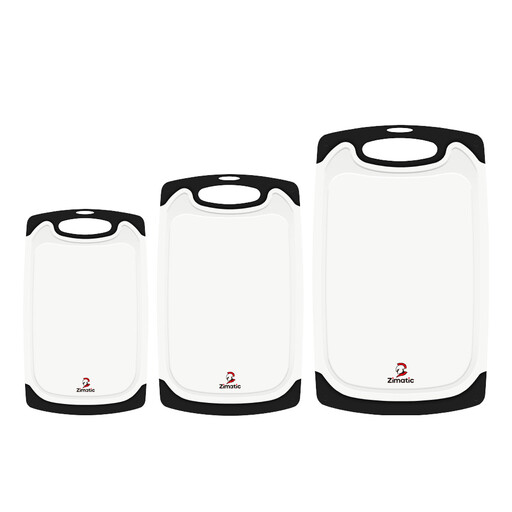
Why it's a match: For everyday cooking, hygiene and practicality are the key priorities. This set of multiple boards allows you to dedicate one to each type of food (meat, fish, vegetables)—an essential practice for food safety.
This set tackles the risk of cross-contamination head-on by establishing a clear separation of foods. Being dishwasher-safe ensures effortless, deep cleaning.
Maximum hygiene: A colour-coding system to never mix foods. Ultimate convenience: Handles, juice grooves, and dishwasher compatibility.
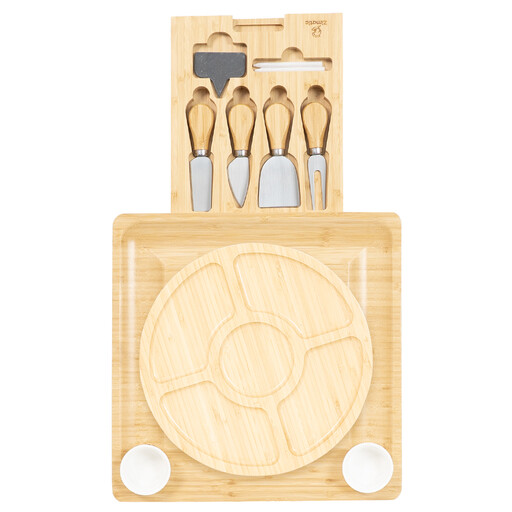
Why it's a match: Perfect for those who love to entertain and care about the presentation of their appetisers. This 2-in-1 board is used for both cutting and serving, ideal for a **cheese board** or a **charcuterie platter**.
No more basic kitchen boards that look out of place on the appetiser table. This all-in-one model is designed for presentation and even includes a **cheese knife set**.
Versatility: One board to prep and one platter to serve. Smart design: The bamboo and integrated accessories make it a beautiful object, always ready for entertaining.
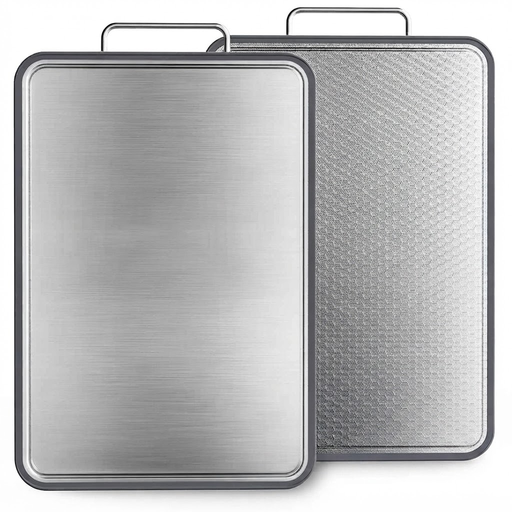
Why it's a match: For those who do a lot of prep work, especially with meat or fish, and demand a robust surface and impeccable hygiene. It's even ideal for use with a light **cleaver**.
Unlike wood or plastic, which eventually stain and retain odours, stainless steel remains pristine. Its double-sided design is perfect for separating raw from cooked foods.
Pro-level durability and hygiene: Resists (almost) everything, doesn't rust, and can be disinfected in an instant. XXL surface: A generous workspace for large cuts.
We have curated a complete range of products that meet our selection criteria and safety standards.
A board's lifespan depends on its material and how often it's used. A plastic board should be replaced when it has deep grooves that are difficult to clean. A wooden cutting board can last for many years if well-maintained, but should be discarded if it cracks or warps irreversibly, as these flaws can harbour bacteria.
To preserve your wooden board, wash it by hand with hot water and mild soap immediately after use. Never let it soak in water or put it in the dishwasher. Dry it thoroughly with a cloth. To nourish and protect it, regularly apply a thin layer of food-grade mineral oil (about once a month).
It is strongly advised not to use the same cutting surface for raw meat and ready-to-eat foods like vegetables or cheese. This creates a high risk of cross-contamination. The safest solution is to use different boards (e.g., with a colour-coding system) or a double-sided board, dedicating each side to a specific type of food.