
Livraison le jour même ou le lendemain

Qualité garantie

Débloquez vos offres de bienvenue: Livraison GRATUITE | Jusqu'à -80 % | 30 jours d'essai gratuits à JoyPlus
Téléchargez l'application
Far more than a simple container, the ceramic bowl is a breakfast companion, a vessel for comforting soup, and the star of a successful appetiser spread. Yet, choosing the right one can quickly become a headache. Caught between marketing promises and everyday reality, we too often end up with bowls that chip at the slightest knock, crack in the microwave, or stack into a wobbly Tower of Pisa in our cupboards.
As the Head of Product Curation at Joybuy, my mission is to help you make sense of it all. Let's skip the jargon and focus on the essentials to make an informed, durable choice that truly fits your needs.
Before we look at specific models, let's identify the most common disappointments so you don't fall into the same traps.
To avoid being disappointed again, you just need to check a few key points. They will make all the difference between a purchase you'll regret and bowls you'll enjoy using for years to come.
The term "ceramic" actually covers several materials with very distinct properties.
Not all bowls are created equal. For optimal comfort, the size and shape should be adapted to its primary use.
Always check for icons or clear labels:
To guide you, here are models that meet our criteria for durability and practicality, each suited to a specific need.
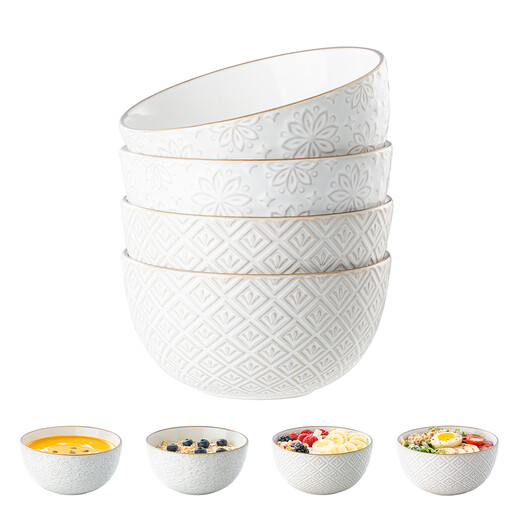
Why we love it: This set is designed for families and heavy use. Its large capacity makes it just as practical as a soup bowl as it is a cereal bowl. Each piece features a different embossed pattern, adding a subtle touch of originality to the table.
Made from quality stoneware, it's built to withstand repeated trips through the microwave and dishwasher. Its design has been engineered for stable stacking that truly optimises space.
Versatility and durability. A set of 4 robust and stylish bowls, perfect for every meal from breakfast to dinner.
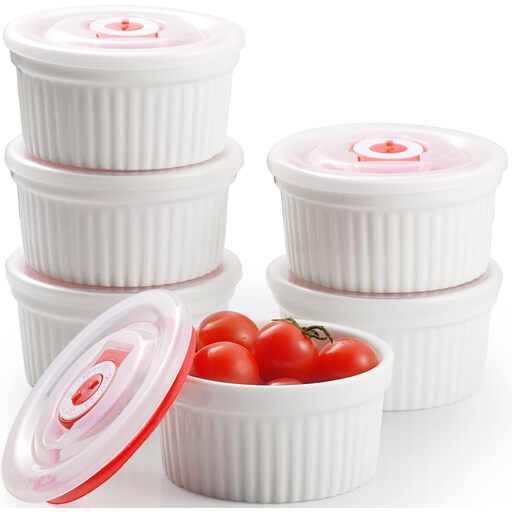
Why we love them: Perfect for baking enthusiasts or for serving individual portions. These ramekins excel at making crème br?lée and soufflés, but they also double as appetiser dishes. The real bonus: the plastic lids with a date dial for keeping preparations fresh.
The high-quality porcelain ensures even baking and unbeatable durability. Unlike a standard bowl, it's designed to go from the oven to the table, and its lids solve the storage problem.
Triple-duty: baking, serving, and storage. The lids with date dials are a clever detail that makes kitchen organisation easier.
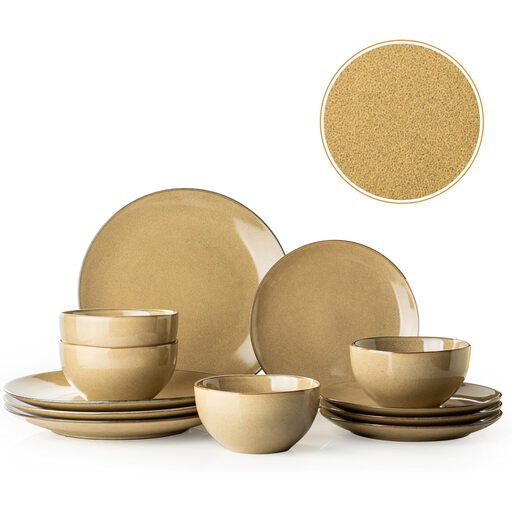
Why we love it: For those seeking a complete and harmonious solution. This service includes a set of bowls, dinner plates, and dessert plates. Its modern design and stoneware construction make it a perfect foundation for refreshing your ceramic dinnerware.
The vitrified stoneware, fired at 1400°C (2550°F), offers far superior scratch and chip resistance compared to entry-level earthenware sets. The glaze is designed to withstand the dishwasher without ever dulling.
A complete and durable set. The guarantee of an elegant, coordinated table with pieces designed to stand the test of time.
Explore our full selection of products that meet our quality criteria and current safety standards.
1. What is the real difference between stoneware and porcelain? The main difference lies in their composition and firing temperature. Porcelain, made from very pure kaolin clay, is fired hotter, which makes it finer, whiter, and non-porous. Stoneware, made from clay and quartz, is more opaque, often thicker, and can have a more textured appearance. In terms of performance, both are very durable, but porcelain is often seen as more refined, while stoneware is prized for its authentic charm.
2. How can you identify a high-quality ceramic bowl? A few tell-tale signs give it away. A quality bowl has some weight to it, a sign of its density. Its glaze should be perfectly smooth and even, including on the rim and under the base. Finally, if you tap it gently with your fingernail, a clear, crisp sound (a light "ping!") is often a sign of high-temperature firing and a lack of defects.
3. Can any ceramic bowl be put in the oven? No, absolutely not! Only bowls with an explicit "oven-safe" label should be used for baking. These are most often ramekins, gratin dishes, or stoneware and porcelain bowls specially treated to withstand high temperatures. Using a bowl not designed for the oven means you risk having it shatter from thermal shock.