
Livraison le jour même ou le lendemain

Qualité garantie

Débloquez vos offres de bienvenue: Livraison GRATUITE | Jusqu'à -80 % | 30 jours d'essai gratuits à JoyPlus
Téléchargez l'application
The ramekin is an essential for anyone who loves individual portions, whether it's a creamy crème br?lée, a light and airy soufflé, or a comforting gratin. However, behind its apparent simplicity lie pitfalls that can turn a promising recipe into a real disappointment. The wrong choice can lead to uneven cooking, cracks, or a storage nightmare. As the Head of Product Recommendations at Joybuy, my job is to give you the keys to navigating these pitfalls and making a successful purchase.
Marketing often highlights features that don't hold up to everyday use. Here are the most common traps.
To avoid falling into these traps, focus on a few objective criteria.
The choice of material directly impacts your utensil's cooking performance and longevity.
The geometry of your small individual oven dish is not just about aesthetics.
Always check the manufacturer's pictograms or descriptions for compatibility:
Here are a few options that meet specific needs while respecting the selection criteria we've just covered.
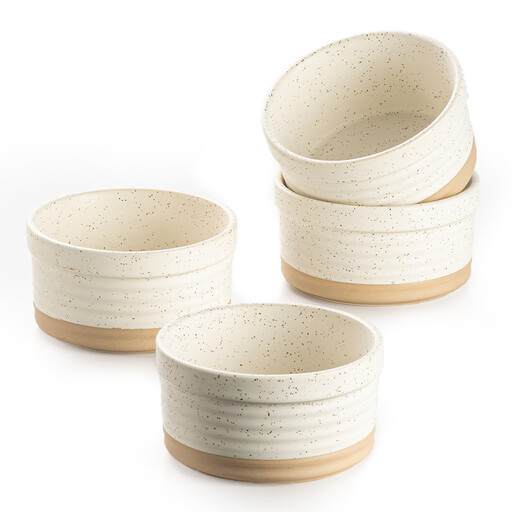
Why it's a great match: Ideal for passionate bakers seeking technical performance. The classic shape and porcelain composition are designed to ensure success with the most delicate recipes, like soufflés and crème br?lées.
The high-quality porcelain is non-porous and resists moderate thermal shock, avoiding the trap of materials that crack or absorb grease.
Uniform heat conduction for even baking. Material specified as lead-free and non-toxic.
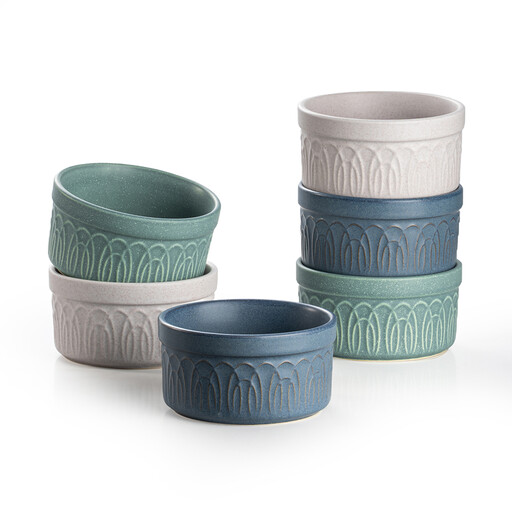
Why it's a great match: For those who love to entertain and value presentation. The modern design and assorted neutral colours allow you to serve elegantly straight from the oven to the table.
The glaze is described as durable and scratch-resistant, which prevents the chipping often seen on lower-quality decorative products.
Elegant and versatile design for both baking and serving. Oven, microwave, and dishwasher safe.
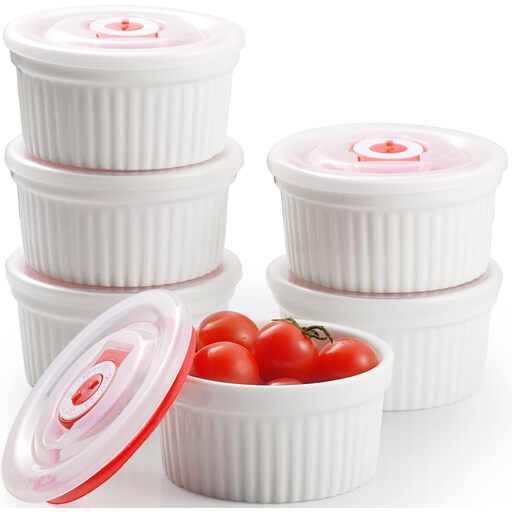
Why it's a great match: Perfect for fans of meal prep and portion control. The lids allow you to prepare, bake, and then store individual meals directly in the same container.
This product directly counters the "design flaw" pitfall by offering functional lids with a date-tracker, a practical solution often missing from standard sets.
Plastic lids with a date dial to track food freshness. Stackable porcelain for space-saving storage.
We have selected a full range of products for you that meet our quality and safety criteria.
This is strongly discouraged. The abrupt change from a very cold temperature to intense heat creates thermal shock that can crack even high-quality porcelain. For safety, let the ramekin return to room temperature for about thirty minutes before putting it in the oven.
Porcelain is a specific type of ceramic, renowned for its high quality. It is made from a particular type of clay (kaolin) and fired at higher temperatures (over 1200°C or 2200°F). This makes it denser, harder, and less porous than standard ceramics (earthenware, stoneware). In practice, a porcelain ramekin will generally be more durable and stain-resistant.
Avoid using metal or abrasive sponges, which could scratch the glaze. The easiest method is to fill the ramekin with hot water and a tablespoon of baking soda or a little white vinegar. Let it soak for at least an hour, then clean with a non-abrasive sponge. The residue will then come off effortlessly.