
Livraison le jour même ou le lendemain

Qualité garantie

Débloquez vos offres de bienvenue: Livraison GRATUITE | Jusqu'à -80 % | 30 jours d'essai gratuits à JoyPlus
Téléchargez l'application
A beautiful ceramic bowl doesn't just hold your meal?— it elevates it. Whether it's for a comforting soup, a generous pasta dish, or a colourful salad, the right vessel enhances its contents. However, the market is flooded with models that make tempting promises, often hiding disappointing quality. To avoid buyer's remorse, it's crucial to know how to sidestep the most common pitfalls.
As the Head of Product Selection at Joybuy, my mission is to help you see things more clearly. Let's review the mistakes to avoid and the criteria to check to choose bowls that finally blend style with durability.
The "Universal Compatibility" Myth?: Many bowls are labelled as microwave or dishwasher safe. The problem?? Low-quality ceramic or a poorly applied glaze can crack from the heat or fade after just a few washes. A bowl that chips after three months is anything but a good deal.
The False Space-Saver?: You fall for a set of ceramic bowls, thinking you're optimising your storage, only to realise they don't nest properly. The result?: poorly designed stackable bowls form unstable piles and waste precious space in your cupboards.
Fragile Elegance?: A bowl might look stunning in a photo, but its delicate appearance can conceal extreme fragility. The slightest knock is enough to chip the rims, and your beautiful original dinnerware quickly ends up in the bin.
To avoid these disappointments, a few technical specifications make all the difference. Here they are.
Not all ceramics are created equal. The base material is the primary guarantee of your dinnerware's strength and longevity.
Also, check that the glaze is food-grade and labelled as lead and cadmium free—an essential for safe, everyday use.
For practical use, compatibility with your home appliances is non-negotiable. Don't settle for vague claims. Look for pictograms or explicit manufacturer statements confirming compatibility with?:
The shape of your bowl should, of course, match its primary purpose.
Finally, if space is at a premium in your cupboards, ensure the base and shape of the bowls allow for stable and compact stacking.
To help you put theory into practice, here are a few models that meet specific needs.
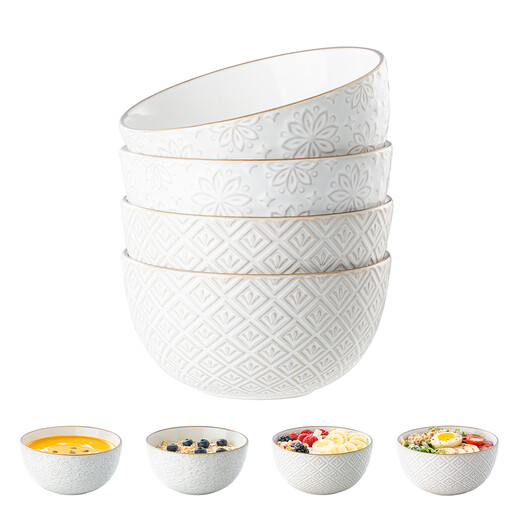
Why we love it : This set is perfect for families and anyone looking for a reliable, versatile set of bowls for every meal, from breakfast to dinner.
This model checks all the boxes : full compatibility (microwave, oven, dishwasher, freezer) and a design specifically engineered to make them perfect stackable bowls.
Their stoneware construction, enhanced with a discreet embossed pattern, ensures excellent durability while adding a touch of simple elegance, perfect for heavy use.
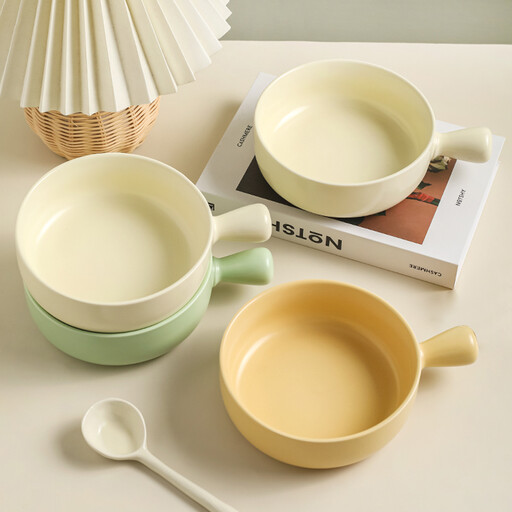
Why we love it : For those who see dinnerware as a decorative element in its own right and are looking for original dinnerware to surprise their guests.
This set stands out from the crowd with its unique design, a far cry from generic dinnerware. The handle is more than just an aesthetic detail : it offers a very practical grip for serving hot dishes, thus blending form and function.
The Japanese dinnerware inspiration and soft colours make them centrepieces for a beautifully set table. Perfect for serving soups, noodles, or individual dishes with a rare touch of elegance.
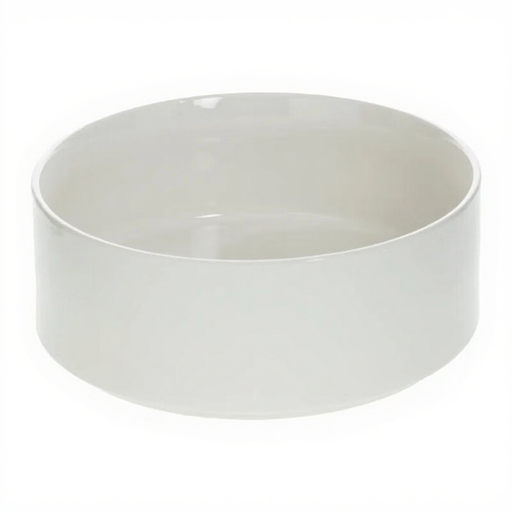
Why we love it : A must-have for those who love to entertain and need a large serving dish for salads, side dishes, or even as a designer fruit bowl on a table or countertop.
There's no pretense here : this isn't a small bowl pretending to be a serving dish. Its large capacity and bamboo stand make it a true ceramic salad bowl, designed for presentation and table service.
The combination of clean white ceramic and natural bamboo creates an elegant and warm contrast that easily complements any table decor style.
Discover our full selection of products that meet our quality criteria and current standards.
To the touch, a quality bowl often feels denser and heavier than a low-end model. Inspect the glaze?: it should be uniform, smooth, and free of bubbles or cracks. Also, take a look underneath the bowl?: an unglazed but well-polished base is often a sign of careful manufacturing. Finally, for durability, opt for stoneware or porcelain.
No, and caution is advised. The golden rule?: always check the manufacturer's instructions or look for the appropriate pictogram. Some glazes, especially those with a metallic effect, can cause dangerous sparks. Likewise, a ceramic that is too porous (like earthenware) can absorb water and crack under the heat.
Stoneware is a clay fired at a high temperature (around 1200?°C), which makes it opaque, sturdy, and quite dense. Porcelain, made from kaolin, is fired at an even higher temperature (up to 1400?°C). It becomes non-porous, finer, often translucent, and extremely resistant to shocks and scratches. For everyday use, both are excellent choices?: stoneware is the champion of sturdiness, while porcelain offers a touch of refinement and long-term resistance.