
Livraison le jour même ou le lendemain

Qualité garantie

Débloquez vos offres de bienvenue: Livraison GRATUITE | Jusqu'à -80 % | 30 jours d'essai gratuits à JoyPlus
Téléchargez l'application
The ceramic pasta bowl has become a staple in modern kitchens. Ideal for a hearty pasta dish, a generous salad, or a steaming soup, its versatility makes it nearly indispensable. But with an overwhelming number of options available, making the right choice can be a real challenge. It's all too easy to be swayed by marketing promises, only to end up with plates that chip at the slightest knock or, due to poor design, take up far too much space in your cupboards.
I'm the Head of Product Recommendations at Joybuy, and my job is to do the groundwork for you. Together, let's break down the common pitfalls and identify the essential criteria for making a purchase you won't regret.
Before you fall in love with a design, it's wise to be aware of the hidden flaws that can turn an impulse buy into a disappointment.
To avoid these pitfalls, focus on a few non-negotiable technical specifications.
The term "ceramic" covers several materials with very different properties.
An oven- and microwave-safe plate offers valuable everyday versatility?: reheating a dish, browning a topping, or keeping food warm becomes effortless. Always check for the corresponding icons on the bottom of the plate. The absence of these symbols means the product was not designed to withstand thermal shock and is at risk of cracking.
The shape of the plate isn't just a matter of taste?; it's crucial to its function. For a pasta bowl or a designer salad plate, opt for a wide, shallow shape that beautifully showcases the food. For soups and saucy dishes, higher rims are better. Finally, examine the base of the plate?: a small, well-defined foot is often the secret to stable and secure stacking.
Here are a few options that meet specific needs, selected based on our criteria for durability and functionality.
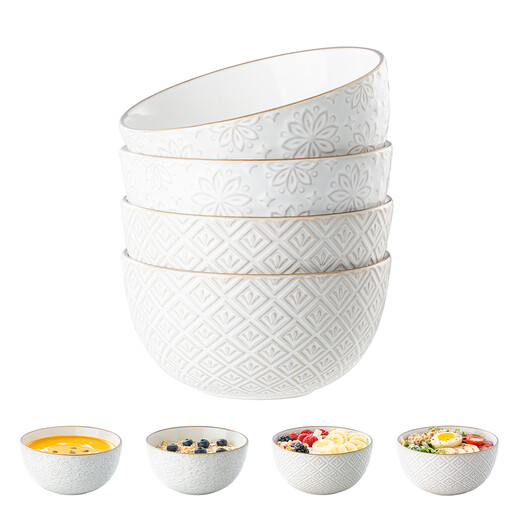
Perfect for the daily marathon. This set of 4 stoneware pasta bowls is built to withstand the rigours of family life, from on-the-go breakfasts to lively dinners.
Their sturdy stoneware construction and well-designed base ensure stable stacking—goodbye, wobbly piles! Full compatibility (oven, microwave, dishwasher) is a true promise of long-lasting durability.
Durable Material : Chip- and scratch-resistant stoneware.
Total Versatility : Safe for the oven, microwave, freezer, and dishwasher for maximum flexibility.
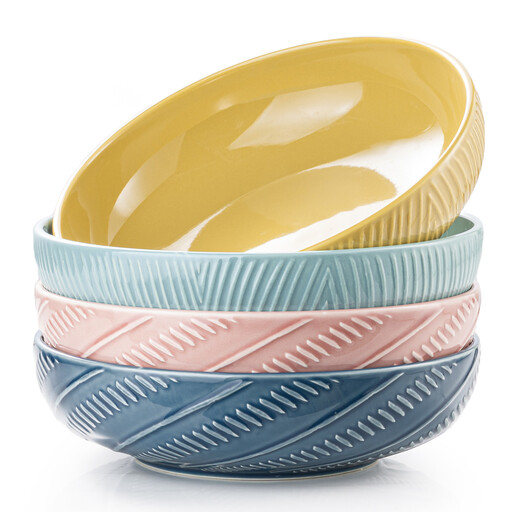
For food lovers who also have a flair for presentation. Its wide, low-profile shape—a hybrid between a plate and a bowl—is perfect for showcasing a pasta dish, a large salad, or a risotto.
Its highly durable, non-porous ceramic is a fortress against sauce stains. It won't retain any colours or odours, even after countless cycles in the dishwasher.
Large Capacity : A 36 oz (1L) capacity ideal for main courses.
Bowl-Plate Design : An ultra-versatile hybrid shape, equally suited for pasta, stews, and more.
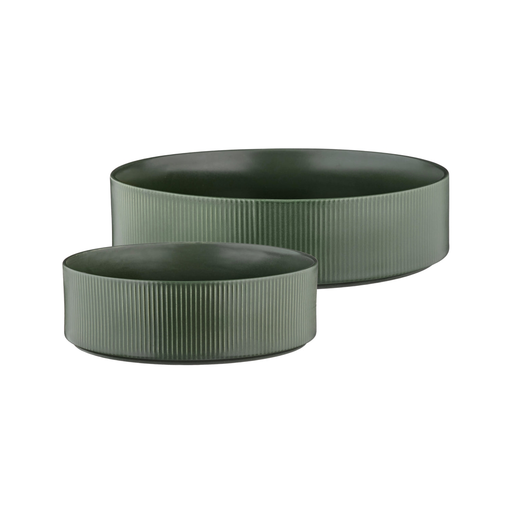
For those who appreciate beautiful objects that tell a story. With its minimalist Scandinavian design and recycled stoneware construction, it's the perfect housewarming gift.
Here, design doesn't come at the expense of durability. The recycled stoneware is treated to offer the same resilience and strength as conventional stoneware, ending the debate between style and substance.
Eco-Conscious Design : Made from recycled stoneware, blending aesthetics with a sustainable purchase.
Versatile Set : The two sizes (21.5 cm and 27.5 cm) are ideal for serving salads, side dishes, or fruit.
Stoneware is typically thicker with a more rustic look, known for its exceptional durability and heat retention. Porcelain is finer and lighter, often offering a brighter white finish. While also very durable, it can be perceived as more delicate. For hassle-free daily use, stoneware is a reliable choice.
Even with dishwasher-safe items, opt for low-temperature wash cycles and avoid harsh detergents to preserve the glaze's lustre. Avoid extreme thermal shock, such as moving a plate directly from the refrigerator to a very hot oven. Finally, if washing by hand, use a non-abrasive sponge.
Absolutely, and this is a crucial point. Most quality ceramic plates can withstand temperatures up to 200-220°C (390-430°F), which is more than sufficient for reheating or browning a dish. However, it is essential to consult the manufacturer's recommendations. Using them at higher temperatures or under a powerful broiler could cause damage.