
Same-day & Next-day Delivery

Quality Guaranteed

Unlock Your Welcome Offers: FREE Delivery | Up to 80% OFF | Free 30-day JoyPlus trial
Download the APP
The trend towards healthy cooking and inert materials marks the great return of the borosilicate glass pot. Valued for its transparency, which lets you monitor a dish without ever lifting the lid, and for its lack of chemical coatings, it is establishing itself as a smart choice in the kitchen. However, not all glass cookware is created equal, and some marketing claims can be misleading. To avoid buyer's remorse, you need to know how to navigate common pitfalls and ensure your investment is as durable as it is useful.
Navigating the jungle of glass cookware can be a real headache. Here are three points to watch out for to save yourself from disappointment and unnecessary expense.
To make an informed choice, focus on a few technical characteristics that make all the difference in terms of quality and versatility.
This is the non-negotiable criterion. The product must explicitly mention its gas and electric hob compatibility. For induction hobs, an adapter disc is almost always necessary, as glass is not a magnetic material. In all cases, carefully check the manufacturer's recommendations before the first use.
A good glass oven casserole must clearly indicate the maximum supported temperature (e.g., 180?°C or 200?°C). This information is crucial for cooking safely. Thermal shock resistance, meanwhile, determines the pot's ability to withstand temperature changes without breaking. However, it is always advisable to avoid extreme shocks, such as moving a dish from the freezer to a preheated oven or placing a hot pot on a cold, wet surface.
The size of your household and your cooking habits will determine the necessary capacity. A 4?L pot with a lid is often an excellent compromise for soups, stews, or pasta for a family of 3 to 4 people. A transparent glass stockpot is obviously practical for keeping an eye on the cooking, but details like a pouring spout or thoughtfully designed handles can truly improve everyday user comfort.
We have selected a few models that stand out for their quality and relevance, based on the criteria we have just detailed.
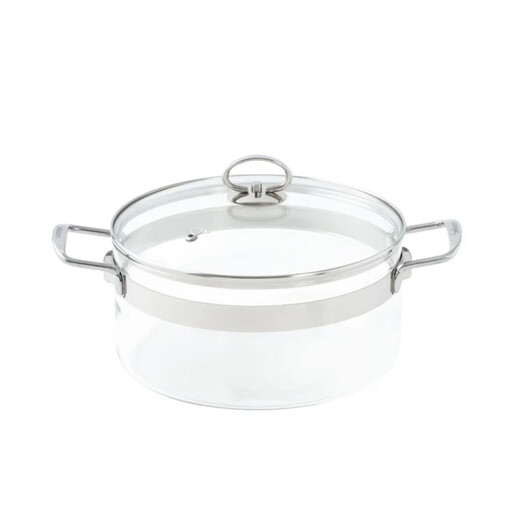
Why we chose it: With its generous 4.2-litre capacity, this pot is the perfect size for preparing soups, stews, or pasta dishes for the whole family. Its pure borosilicate glass composition, free of PTFE and PFAS, makes it a consistent choice for those who prioritise healthy cooking and a perfectly inert material.
Its technical sheet clearly states its compatibility with gas and electric hobs, which removes any ambiguity about its use on direct heat, unlike simple glass oven dishes.
Its versatility: it goes from the stovetop to the oven (up to 180 °C) and can be brought directly to the table. The integrated pouring spout is a real everyday bonus.
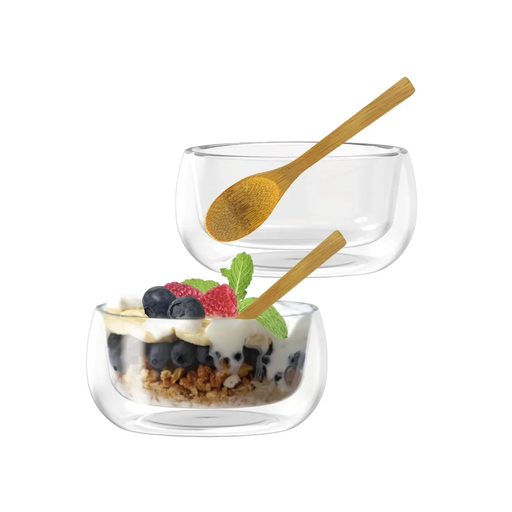
Why we chose it: To serve soups, veloutés, or desserts prepared in your pot, this set of bowls is the perfect complement. Their borosilicate glass construction allows them to hold very hot contents, and their double-wall design ensures an elegant presentation and a comfortable grip.
These bowls are clearly identified for serving. Their borosilicate glass construction guarantees they won't crack when in contact with boiling soup, a very real risk with standard glass bowls.
The insulating double wall maintains the content's temperature (hot or cold) for longer, while protecting hands from heat or condensation.
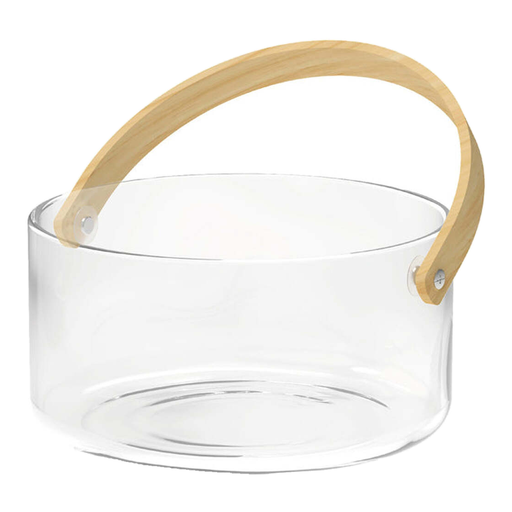
Why we chose it: Perfect for presenting salads, vegetable side dishes, or fruit, this serving bowl combines the elegance of glass with the warmth of bamboo. Its resistance to temperature variations allows it to hold both hot and cold dishes, making it a highly versatile serving accessory.
It is presented as a serving dish, not a cooking dish, which avoids any confusion. Its borosilicate glass composition is a guarantee of durability for everyday use, including with hot foods.
The integrated bamboo handle offers a stable and secure grip for carrying the dish from the kitchen to the table, a detail that is as practical as it is aesthetic.
We have compiled a complete and up-to-date list of products that meet these strict selection criteria and safety regulations.
Yes, provided the manufacturer explicitly specifies it. Pots designed for this purpose are made to withstand a direct, uniform flame. However, it is essential to follow the instructions, particularly to avoid placing the empty pot on high heat and to avoid significant thermal shocks.
To preserve its clarity, washing by hand with a non-abrasive sponge and dish soap is ideal. For stubborn residue, let it soak with hot water and baking soda before scrubbing gently. Avoid scouring powders and metal sponges, which could permanently scratch the surface.
With proper care, a borosilicate glass stockpot can last for years. Unlike materials with coatings, glass does not wear out, rust, or lose its properties. Its longevity depends on only one thing: avoiding mechanical shocks (drops) and extreme thermal shocks.