
Livraison le jour même ou le lendemain

Qualité garantie

Débloquez vos offres de bienvenue: Livraison GRATUITE | Jusqu'à -80 % | 30 jours d'essai gratuits à JoyPlus
Téléchargez l'application
In DIY, the finishing touches are the signature of a job well done. For flawless angle cuts on baseboards, molding, or gaskets, precision is king. Does bringing out the heavy artillery, like an electric miter saw, seem like overkill for these small cuts?? Manual miter shears are the smart, precise alternative. Be careful, though—not all models are created equal. Certain design flaws can quickly turn a promising tool into a real headache and a waste of materials.
As a product expert at Joybuy, I test and analyze dozens of tools. My goal?? To help you make the right choice. Let's break down the mistakes to avoid before you check out.
To avoid these disappointments, here are the key points to check. They are your guarantee of a high-performing and durable tool.
This is the heart of the tool?: the blade. The benchmark material for this application is SK5 steel. Known for its toughness and ability to maintain a flawless cutting edge, this high-carbon steel makes all the difference. It allows for a clean cut in soft materials without crushing them.
A non-negotiable point?: the ability to replace the blade. A tool with a fixed blade is a disposable product. Make sure replacement blades are easy to find and install. This is the guarantee of an investment that lasts.
A multi-angle shear must offer flawless precision. To ensure this, look for models with an engraved scale etched directly into the metal. Unlike printed markings, these graduations are fade-proof and guarantee a reliable angle reading over the long term, typically from 45° to 135°. Also, make sure the angle locking system is firm and easy to operate. A safety lock to keep the shears closed is a significant plus for storage and transport.
This soft wood cutting tool is designed for very specific materials. It excels as a molding cutter for PVC, a shear for PVC or rubber gaskets, and for angle cuts on baseboards made of fir or other soft woods. Never try to tackle metal, hardwood (like oak), or materials that are too thick, as you risk destroying the blade and the mechanism.
To move from theory to practice, here is our selection of models that meet these requirements, for every budget and need.
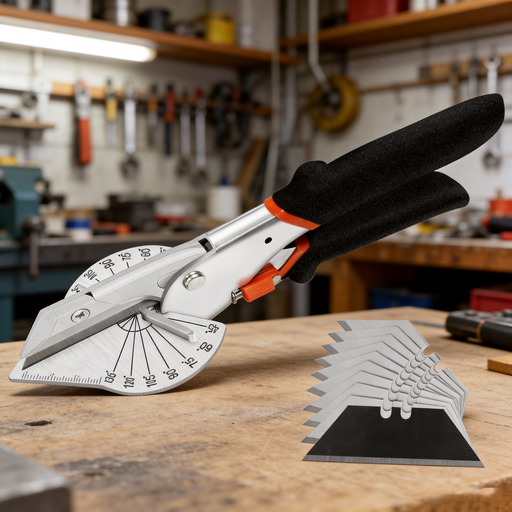
Why this model stands out: Perfect for DIYers who tackle one finishing project after another. With 10 replacement blades included, you're assured of consistent performance over the long term without needing to buy more anytime soon.
The stock of 10 SK5 steel blades eliminates the problem of rapid wear. Its deeply engraved angle scale is a guarantee of lasting precision.
An unbeatable longevity-to-price ratio. The included stock of blades makes it a very smart choice for regular use.
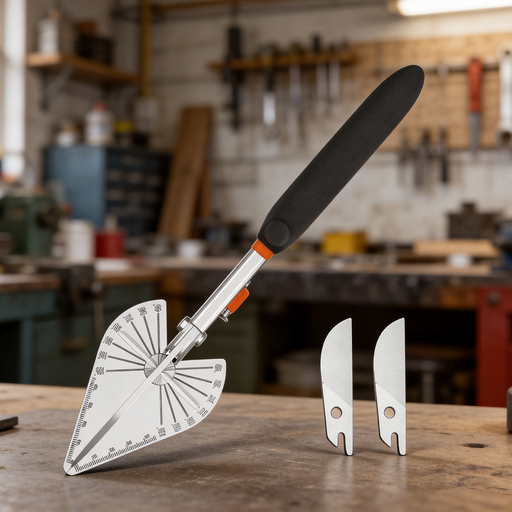
Why this model stands out: Built for craftspeople and expert DIYers tackling tougher profiles (like trunking or thick gaskets). Its extended design increases leverage for enhanced cutting capacity.
Its reinforced structure and non-slip ergonomic handle are designed to withstand heavy use, reducing fatigue and ensuring total control. The SK5 steel blade is up to the task.
Its superior cutting capacity (up to 6.8 cm) makes it far more versatile than standard models for bulkier materials.
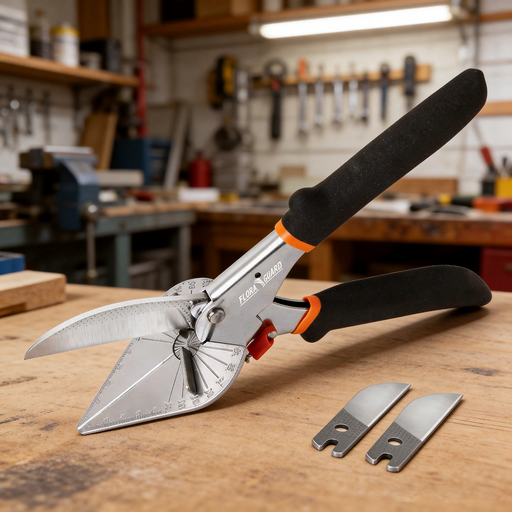
Why this model stands out: The perfect tool for a one-off project or occasional use. It focuses on the essentials, offering key features without the extra cost of superfluous accessories. An excellent choice to get started.
No compromises on the essentials : this model features an SK5 steel blade and an engraved scale. Precision is guaranteed, even on a tight budget.
Excellent value for money, allowing you to get a precision tool without breaking the bank. The two included replacement blades will last you a while.
Your shear's performance depends on its sharp edge. To ensure its longevity, we've selected a range of compatible replacement blades.
Absolutely not. These shears are calibrated for soft materials (pine, fir, balsa, PVC, rubber). Attempting to cut hardwood like oak, or worse, metal, is a surefire way to break the blade and mechanism, not to mention the risk of injury.
It couldn't be simpler. First step, safety?: engage the tool's lock. Most models have one or two screws holding the blade in place. Using a suitable screwdriver or wrench, loosen them. Carefully slide out the old blade (wearing gloves is highly recommended), insert the new one, ensuring it is properly seated, and then firmly tighten the screws.
Miter shears are a manual, lightweight, and portable tool, perfect for finish work on small-section profiles. They are quiet, produce no dust, and allow for precision work even in tight spaces. An electric miter saw is a more powerful workshop machine, capable of cutting much wider and harder pieces of wood. However, it is noisy, generates a lot of sawdust, and requires a dedicated workspace. In short, these two tools are not in the same league?: they are perfectly complementary.