
Livraison le jour même ou le lendemain

Qualité garantie

Débloquez vos offres de bienvenue: Livraison GRATUITE | Jusqu'à -80 % | 30 jours d'essai gratuits à JoyPlus
Téléchargez l'application
An electric saw can save you valuable time, provided you choose a model to suit the material, its thickness and how often you’ll use it. A jigsaw is ideal for curved cuts, a reciprocating saw for demolition and pruning, while a circular saw is designed for making straight cuts in planks and panels.
Before comparing prices, it’s worth checking the most common pitfalls.
A high power rating alone doesn’t guarantee performance that suits your needs. A 900 W reciprocating saw may be suitable for wood, pipes and some metal sheets, but the blade you choose, the stroke length and the speed also play a key role.
For a circular saw, a 1,500 W motor paired with a 185 mm blade should offer good performance on planks and panels. However, you’ll also need to check the cutting depth and how stable the guide is.
A cordless saw gives you welcome freedom of movement, but its run time varies according to the battery capacity, measured in amp-hours, the material you’re working with and the pressure you apply. A 1.5 Ah battery may be enough for occasional jobs, while two batteries make longer sessions much more comfortable.
Check exactly what’s included in the case, too: a battery, charger, suitable blades and a case aren’t always included. A photo may show a complete set, even though the version on offer comes with just one battery or no extra accessories at all.
The weight, handle shape, lock-on button and blade guard all have a direct effect on how well you can control the tool. Before using a chainsaw or mini cordless chainsaw, always check the chain tension, chain brake, hand guard and lubrication system.
If you’re buying in France, read the instructions and check that the relevant regulatory information is provided. In particular, look for the CE marking on the product or its packaging. Wear safety glasses, suitable gloves and hearing protection whenever working conditions call for them.
A saw intended for wood and metal won’t use the same blades for both. The blade’s teeth, pitch and length should all suit the material and the workpiece.
Figures quoted by the manufacturer, such as a cutting capacity of up to 115 mm in wood or 60 mm in metal pipes, are only a guide. The material’s hardness, moisture and shape can all have a noticeable effect on the result.
Variable speed lets you match the cutting rate to the material. A cordless jigsaw with a stated range of 800 to 3,000 strokes per minute can run more slowly on metal and faster on some types of wood.
With a reciprocating saw, the stroke length is also worth considering. A 28 mm stroke helps you work efficiently through wood. Orbital action can speed up some cuts, but the finish may not be as clean.
If you’re working near a power socket, a corded model avoids interruptions and delivers consistent power. For garden jobs, a battery-powered chainsaw or cordless cutting tool is generally more practical.
Compare the following:
A saw with battery and charger is often the easiest way to get started. A bare tool can still be a good option if you already own compatible batteries.
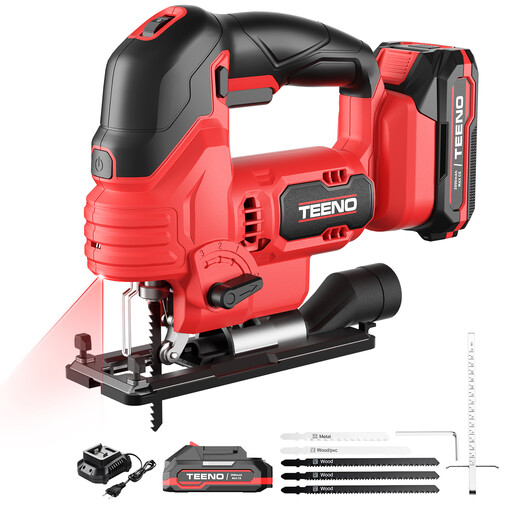
Why it’s a good fit: this cordless jigsaw is ideal for small joinery jobs, making shelves and cutting plastic or light metal, without a cable getting in your way.
Variable speed, tool-free blade changes and a parallel guide make your first cuts easier to control.
20 V lithium-ion battery, speed of 800 to 3,000 strokes/min, LED light, bevel cuts up to ±45° and five T-shank blades.
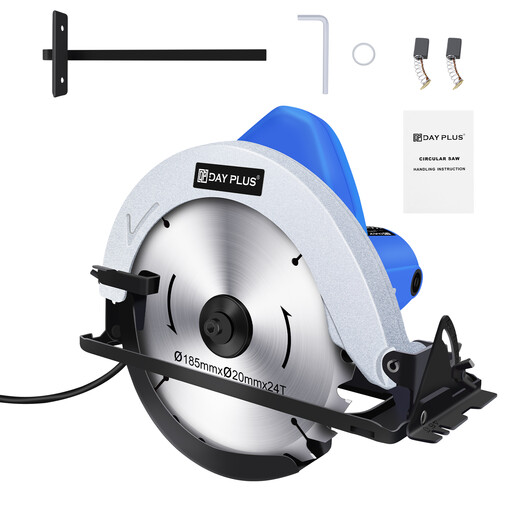
Why it’s a good fit: its mains power and guide system make it a good choice for anyone who regularly cuts straight lines in planks, panels or pieces of wood.
The adjustable cutting depth and marked base plate help you stay in control of each cut, rather than relying on the stated power alone.
1,500 W motor, no-load speed of 5,500 rpm, 185 mm blade, stated maximum cutting depth of 55 mm and 45° bevel cutting.
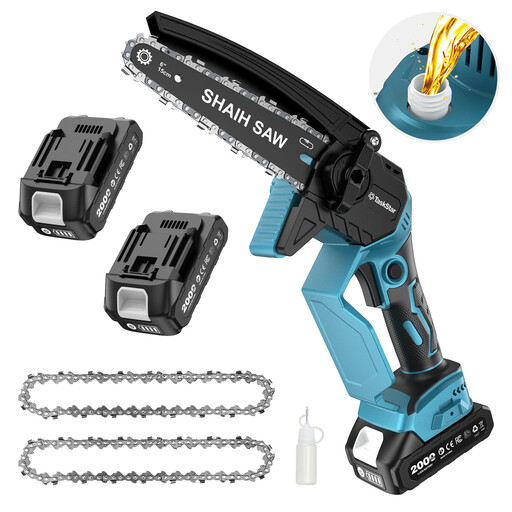
Why it’s a good fit: this compact design is ideal for pruning branches, small wood-cutting jobs and garden work where easy handling matters.
The two 2 Ah batteries help reduce downtime. Automatic lubrication and tool-free chain tensioning make routine maintenance easier.
6-inch guide bar, brushless motor, stated chain speed of 26.2 feet/s, charger, spare chain and safety guards included.
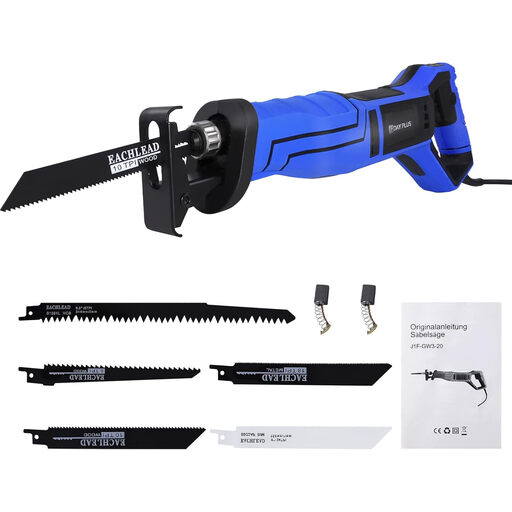
Why it’s a good fit: this corded reciprocating saw is designed for a range of workshop jobs, including cutting wood, pipes and some metals when used with the right blades.
The kit includes separate blades for wood, metal and PVC. That means you can choose the right accessory instead of making do with a universal blade.
900 W power, variable speed up to 2,800 rpm, 28 mm stroke, tool-free blade changes and five blades included.
We’ve brought together a comprehensive selection, updated in real time, of products that meet these demanding criteria and European safety requirements.
For curved cuts or furniture projects, a cordless jigsaw is particularly handy. For straight cuts in thick planks, a circular saw will generally give you better guidance. For branches, choose a chainsaw or mini cordless chainsaw with a hand guard and chain brake.
Yes, for many household jobs. However, run time and cutting capacity depend on the battery and the material you’re working with. For longer sessions, choose a higher capacity or a kit with two batteries. In a workshop, a corded model avoids interruptions while you recharge.
Remove debris after each use, check that the blade or chain is secure and only use the tool on the materials it’s designed for. If your battery-powered chainsaw has a lubrication system, check the chain oil level regularly. Charge batteries with the recommended charger and store the tool somewhere dry, with the blade protected.