
Livraison le jour même ou le lendemain

Qualité garantie

Débloquez vos offres de bienvenue: Livraison GRATUITE | Jusqu'à -80 % | 30 jours d'essai gratuits à JoyPlus
Téléchargez l'application
Multi-angle mitre shears can make fitting skirting boards, mouldings, trunking and flexible seals much easier. But you’ll need to choose the right model. A blade that catches, an awkward angle adjustment or a handle that tires your hand after just a few cuts can all lead to frustration. To avoid these pitfalls, look closely at how the tool is designed rather than relying on the claims on the packaging alone.
Shears advertised as adjustable from 45 to 135 degrees won’t necessarily make precise cuts at every setting. Look for a clearly marked scale, a stable slider and, if possible, intermediate markings. A 45° stop or graduations at 60°, 75°, 90°, 105° and 120° make repeated cuts easier.
PVC cutting shears are suitable for soft or semi-rigid materials, within the limits specified by the manufacturer. They’re not designed for metal, hardwood or pieces that are too thick. Using a blade on an unsuitable material can blunt it more quickly and leave you with a rougher cut.
Mitre shears supplied with replacement blades can come in handy on a building site or during a full renovation. However, the number of blades included isn’t enough to judge a tool. Check how easy the blade is to replace, how the mechanism locks and how easy the tool is to clean. A rotating lock lets you store the shears without leaving the blade exposed.
For skirting boards and mouldings, a range of 45° to 135° covers most internal and external cuts. The adjustment should remain completely stable when you apply pressure to the handle. A scale engraved directly onto the support is generally easier to read and more durable than a simple printed marking, which may wear off.
For repetitive work, look for:
A SK5 blade is made from carbon steel commonly used for hand-cutting tools. This tells you about the material, but doesn’t guarantee durability or cut quality on its own. The blade’s shape and how well it suits the material you’re cutting are just as important.
Depending on the product specifications, shears may be designed to cut:
Avoid using them on metal, hardwood or any material that exceeds the stated capacity. For larger pieces, a longer handle can help you apply more force. Some models claim a capacity of up to 6.8 cm, but you’ll need to consider this alongside the shape and hardness of the piece you’re cutting.
An aluminium-alloy handle with a non-slip PPC coating can provide a more secure grip when making repeated cuts. A steel handle with a PVC coating is another common design. In either case, keep your fingers clear of the blade’s path.
After each use, wipe away any residue, keep the tool dry and engage the safety lock. Replace the blade if it catches, crushes the material or requires unusual pressure. Wearing safety glasses and suitable gloves is still recommended, especially when cutting brittle PVC or stretched seals.
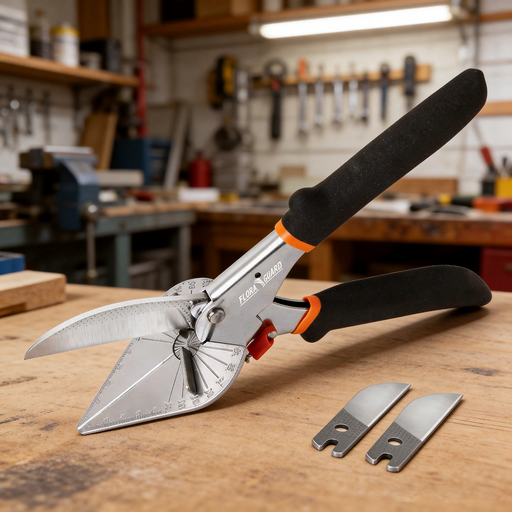
Why this is a good fit for you: With an angle range of 45° to 135°, this model is ideal for your first cutting jobs involving PVC, softwood, seals and mouldings.
The engraved scale and adjustable slider help prevent guesswork, while the rotating lock makes storage easier.
Replaceable SK5 blade, aluminium-alloy handle with PPC coating and two replacement blades included.
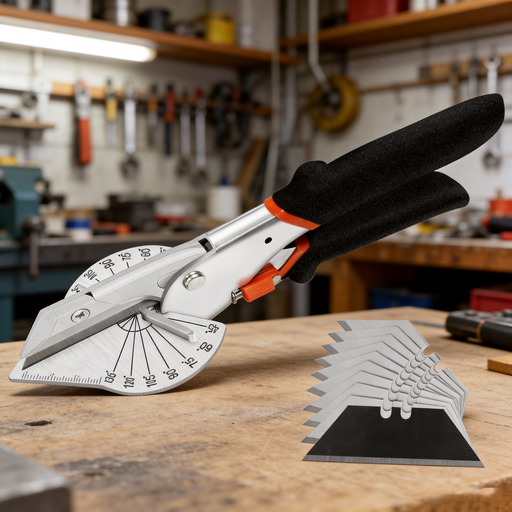
Why this is a good fit for you: The pack of 10 replacement blades is ideal if you want to avoid buying more as you work through several renovation projects.
The extra blades mean you won’t have to carry on with a blunt blade halfway through a job.
Advertised adjustment from 45° to 135°, replaceable SK5 blade and 10 replacement blades included.
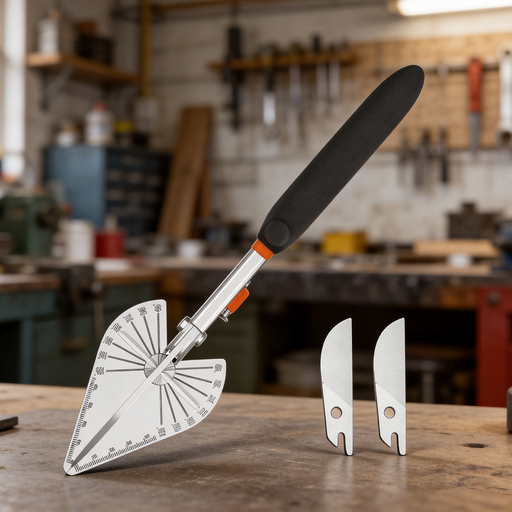
Why this is a good fit for you: Its extended design and stated capacity of up to 6.8 cm make it suitable for working with strips, trunking, mouldings and wider pieces.
The stated capacity and extended handle let you check before buying whether the tool is suitable for a wider piece.
45° to 135° range, aluminium-alloy handle with non-slip coating and rotating lock.
We’ve put together a comprehensive selection, updated in real time, of products that meet these exacting selection criteria and European safety standards.
Yes, for PVC, synthetic or softwood skirting boards, as long as their thickness is within the stated capacity. If the skirting board is rigid, thick or made from hardwood, check the manufacturer’s guidance before you start.
Clean the blade after each use, dry it thoroughly and store the shears locked in a dry place. Replace it as soon as it crushes the material, veers off course or requires excessive pressure. Avoid harsh abrasive products, as these could damage the cutting edge.
Two blades may be enough for a few jobs around the house. A pack of ten is a better choice if you’ll be repeatedly fitting skirting boards, mouldings, seals or trunking. In all cases, check that the replacement blades are compatible with your chosen model.