
Livraison le jour même ou le lendemain

Qualité garantie

Débloquez vos offres de bienvenue: Livraison GRATUITE | Jusqu'à -80 % | 30 jours d'essai gratuits à JoyPlus
Téléchargez l'application
Installing baseboards, fitting decorative trim, placing weather stripping... For all finishing work, precision angle cuts are non-negotiable. Dragging out the electric miter saw for these small tasks? It's often cumbersome, noisy, and overkill. This is where manual miter shears come in—the tool of choice for artisans and detail-oriented DIYers.
Versatile and effective, they allow you to make clean, effortless angle cuts on soft materials. But with so many models available, how do you navigate the options? Our guide is here to shed some light. We've analyzed the market to help you choose the perfect tool for your projects, with complete objectivity and no unnecessary jargon.
Before diving into our selection, let's review the essential criteria that will make all the difference.
The strength of miter shears obviously lies in their ability to make precise angle cuts. Most models cover a range from 45° to 135°. Ensure the angle protractor is etched into the metal and not merely printed on. An etched marking will resist wear and tear, guaranteeing reliable readings over time, unlike a simple print that can fade. A firm, stable adjustment mechanism is also key to ensuring repeatable cuts without any unpleasant surprises.
You can't get a good cut without a good blade—that's a given. Blades made of SK5 steel are a reliable choice, known for their durable edge and robustness. Also, consider the ease of replacement and the availability of blades. A good model should allow you to change the blade in seconds. For regular use, opting for a PVC gasket cutter that comes with several spare blades is a smart move, both practically and economically.
Angle cutting pliers must be comfortable, especially if you're making a series of cuts. Look for ergonomic handles, preferably with a non-slip coating (like PPC) for a secure grip. Weight is also important: an aluminum alloy body often provides the best compromise between lightness and durability. Finally, check for a safety lock. It's essential for storing the tool without risk of injury and for protecting the blade's edge.
After testing and comparing several models based on these criteria, here is our selection of three shears that stand out, whether you're an occasional DIYer or a seasoned professional.
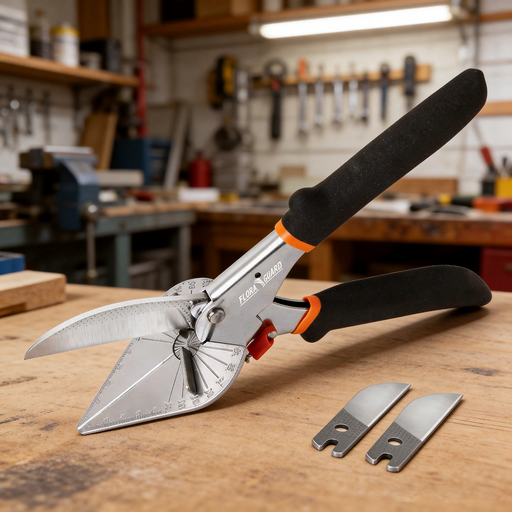
Editor's Verdict: This model checks all the boxes for getting started. It brings together the essential features: a cutting range of 45° to 135°, an SK5 steel blade, and a sturdy aluminum alloy body. The fact that it comes with two replacement blades is a real bonus, allowing you to start your projects without delay.
Pros:
Who is it for? Ideal for demanding DIYers and professionals who perform finishing work on an occasional basis. It's the perfect, reliable tool for cutting softwood trim, PVC profiles, or rubber gaskets.
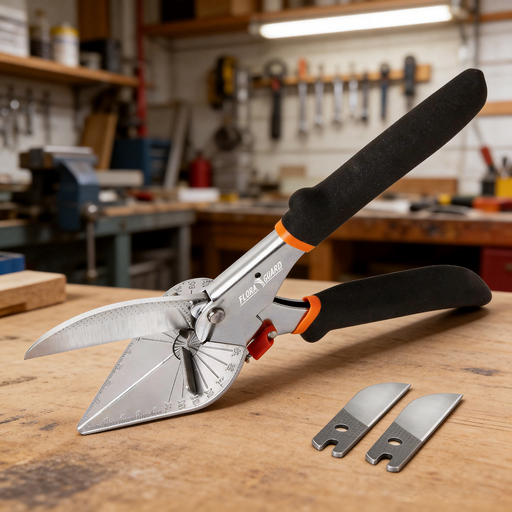
Editor's Verdict: This lengthened version offers better leverage and an optimized grip, which reduces fatigue during long work sessions. It builds on the excellent foundation of the standard model (SK5 blade, etched protractor), targeting users who prioritize comfort above all else.
Pros:
Who is it for? Perfect for professionals and installers who use it daily. Its ergonomic design is a real asset for making continuous cuts on baseboards or flat trim without fatigue.
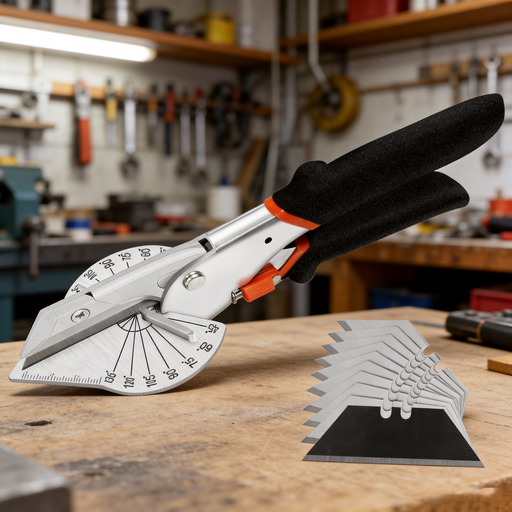
Editor's Verdict: Here, the bundle is what makes the difference. You get the same excellent baseboard shears as the other models, but with a generous supply of 10 replacement blades. A smart and economical choice for those planning intensive use and who want peace of mind for a long time.
Pros:
Who is it for? The obvious choice for professionals (carpenters, installers) and heavy-duty DIYers. With this stock of blades, you're set for multiple projects while maintaining a consistently perfect cutting edge.
Our selection highlights versatile, manual miter shears. If your needs are more specific or you're simply curious to discover other cutting tools, the possibilities are vast.
Feel free to explore our complete category dedicated to Multi-Function Cutters to find the tool that's right for you.
It all comes down to material and scale. Manual miter shears excel on soft materials (softwood, PVC, rubber, plastic) for precision work. They are portable, quiet, and don't generate dust. In contrast, an electric miter saw is a powerful machine, essential for cutting hard and thick materials (solid wood, MDF, aluminum). However, it is heavier, noisier, and stationary.
Absolutely not. These tools are designed exclusively for soft materials. Attempting to cut metal, steel, or a hardwood like oak will irreversibly damage the blade and could warp the mechanism. To preserve your tool, strictly adhere to its usage limitations.
Maintenance is a breeze. After each session, clean the blade to remove any glue or material residue. Always store the tool in a dry place to prevent rust, and don't forget to engage the safety lock. Finally, don't wait until the blade is completely dull to replace it: a new blade guarantees clean cuts and safe operation.