
Livraison le jour même ou le lendemain

Qualité garantie

Débloquez vos offres de bienvenue: Livraison GRATUITE | Jusqu'à -80 % | 30 jours d'essai gratuits à JoyPlus
Téléchargez l'application
Far more than a simple kitchen tool, the enameled cast iron Dutch oven is the beating heart of the kitchen—the promise of unforgettable slow-cooked meals and shared moments. But with an overwhelming number of options, how do you find the right one? Marketing traps are everywhere and can quickly turn a sound investment into a disappointment. As product experts at Joybuy, our mission is to give you the keys to avoid these pitfalls and make an informed choice that will last for years.
Before you rush to buy the first model you see, let's identify the common problems that turn a promising purchase into a bitter regret.
induction cast iron Dutch oven must have a thick, perfectly flat bottom for even heat distribution.To ensure the quality and longevity of your future enameled cast iron pot, carefully examine these three fundamental aspects.
This is your Dutch oven's shield. High-quality enamel is applied in several layers and fired at very high temperatures, making it much more resistant to scratches and thermal shock.
cast iron roaster.Trust its weight: a heavy lid is a sign of stability. Then, look at its underside. The best models are equipped with nubs or ridges. This automatic basting system ensures that condensation droplets are evenly distributed over the food—the secret to tender meats and perfectly juicy dishes.
An all-cooktop Dutch oven ensures maximum versatility. The ruler test is foolproof: turn the pot upside down and place a ruler across its base. It must be perfectly flat for optimal contact with ceramic and induction hobs. A thick bottom is just as crucial: it stores heat to release it slowly and evenly, the very principle of cooking in a cast iron pot.
Rather than an endless list, here are three options that meet specific needs, all validated against the quality criteria we've just discussed.
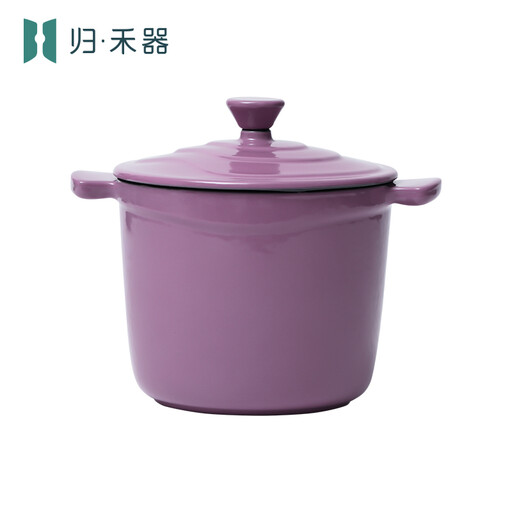
Why we recommend it: This mini-cocotte is perfectly sized for solo meals, side dishes, or even baby food. Its small footprint is a real asset for compact kitchens and saves you from heating a large pot for a single portion.
Despite its mini size, it's made of enameled cast iron, ensuring good heat retention. Its induction compatibility is an excellent sign, suggesting a base designed for efficient heating.
Ideal size for one person, versatile (soup, porridge, solo fondue), and compatible with induction cooktops.
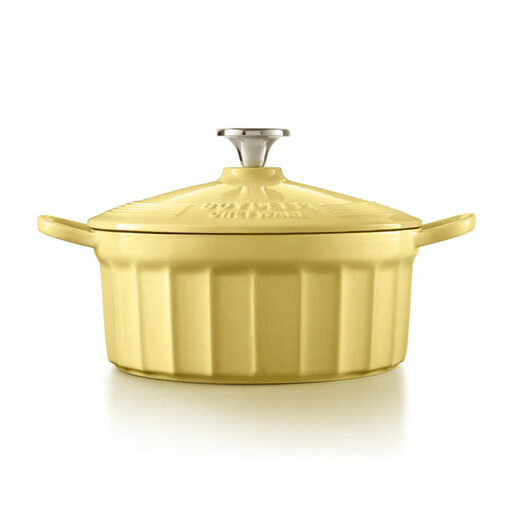
Why we recommend it: Perfect for couples or small families, this 2.9 L Dutch oven is highly versatile for stews, roasts, or even homemade bread. It packs in features worthy of premium models, but at a much more accessible price point.
The manufacturer highlights a durable interior enamel that resists stains and chipping, as well as a domed, tight-fitting lid that circulates steam. The two main traps are thus avoided.
All-cooktop compatibility (gas, induction, electric, etc.), a lid optimized for moisture retention, and quality enamel.
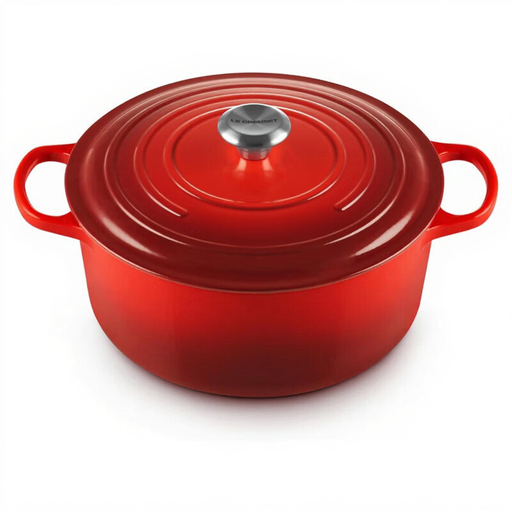
Why we recommend it: Here, we're not just talking about cooking, but about an investment and an heirloom. This 28 cm Dutch oven is an icon, the absolute benchmark. Its generous capacity is perfect for family meals, whole roasted chickens, or large batches of beef bourguignon.
Le Creuset is a guarantee of superior quality cast iron and a nearly indestructible enamel. The perfectly adjusted lid and ergonomic handles are the result of a century of expertise, ensuring performance and durability.
Large 28 cm capacity, exceptional heat retention, French manufacturing, and an iconic design that elevates any table.
Discover our full selection of Dutch ovens that meet our quality charter and current safety standards.
No, and that's one of its major advantages! The enamel makes seasoning unnecessary. The vitrified surface is non-porous and protects the cast iron. A simple wash with soapy water before the first use is all that's needed.
This is strongly discouraged. Knives and metal utensils can scratch or damage the enameled surface. Always opt for wood, silicone, or heat-resistant plastic utensils to preserve the longevity of your Dutch oven.
For food residue or stubborn stains, fill the Dutch oven with hot water and a tablespoon of baking soda. Let it sit for a few hours (or overnight for tough cases), then clean with a non-abrasive sponge. It's a gentle and incredibly effective method.