
Livraison le jour même ou le lendemain

Qualité garantie

Débloquez vos offres de bienvenue: Livraison GRATUITE | Jusqu'à -80 % | 30 jours d'essai gratuits à JoyPlus
Téléchargez l'application
An enameled cast-iron casserole lets you prepare soups, stews, braises, slow-cooked dishes and even bread baked in the oven. However, not all models are equal, and they are not all suitable for every kitchen. Weight, capacity, induction compatibility and enamel care are all important factors to check before placing your order.
An enameled cast-iron casserole has a heavy cast-iron body covered with a glass-like coating. It stores heat for a long time and is particularly well suited to slow cooking. A ceramic pot also retains heat, but its compatibility with different types of hob is not necessarily the same.
The COOKER KING B.Duck 3,5 L model, for example, is a non-magnetic ceramic casserole. It works on a gas cooker, but requires a magnetic induction adapter plate to be used on an induction hob. This is an essential point to check before buying.
Compatibility with gas, electric, ceramic, halogen or induction hobs depends on the casserole’s base and the manufacturer’s instructions. A model suitable for induction must have a compatible base. If you intend to use it in the oven, also check the maximum permitted temperature, particularly if the lid has a steel, silicone or other type of knob.
The stated capacity does not always correspond to the amount you will be able to fill it with in practice. To prevent spills, soup or stew should not reach the rim of the casserole. Once full, a cast-iron casserole can also become difficult to lift and move. The side handles and lid size therefore deserve just as much attention as the diameter.
The enamel interior creates a non-porous surface that limits odour absorption and makes cleaning easier. Unlike bare cast iron, it does not need seasoning. However, it is still vulnerable to knocks, metal utensils and abrasive sponges.
A properly fitted casserole with lid limits evaporation during slow cooking. A domed lid can improve steam circulation, while a heavier lid retains more heat. In all cases, lift it carefully to avoid steam burns.
Here are some useful guidelines:
A 2.9 L casserole designed for slow-cooked dishes will suit a couple or a small family. If you regularly cook for several people, it is better to choose a large-capacity cast-iron stockpot.
Before choosing, check each of the following points separately:
Even when dishwasher use is permitted, washing by hand with a soft sponge will help preserve the finish. Always allow the casserole to cool before cleaning it and avoid sudden changes in temperature.
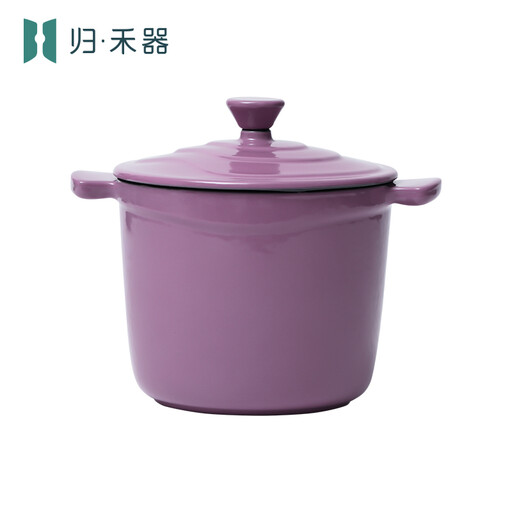
Why this choice suits this profile : With its 1,3 L capacity, this model is suitable for individual portions, soups and small preparations, without requiring a large casserole.
Its compact size reduces the risk of buying a container that is too bulky for one person or occasional use. The product details state that it is compatible with induction.
Enameled cast iron, 14 cm size and stated suitability for induction hobs.
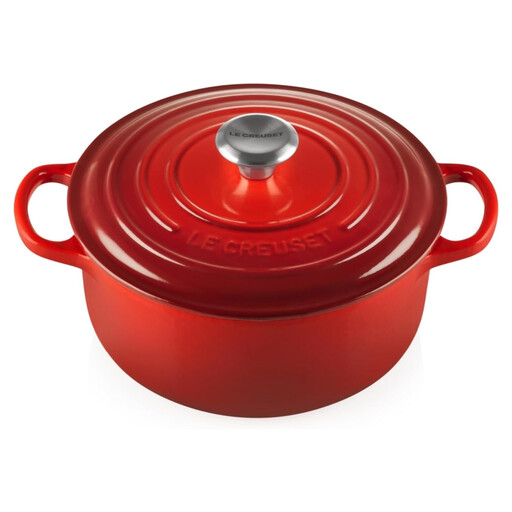
Why this choice suits this profile : This 2,4 L model combines an enameled cast-iron construction, a matching lid and a design compatible with several types of hob.
The product details confirm compatibility with induction, gas, electric and halogen hobs, as well as oven use. They also mention a light-coloured enamel interior and dishwasher-safe cleaning.
2,4 L capacity, stainless-steel lid knob and wide handles.
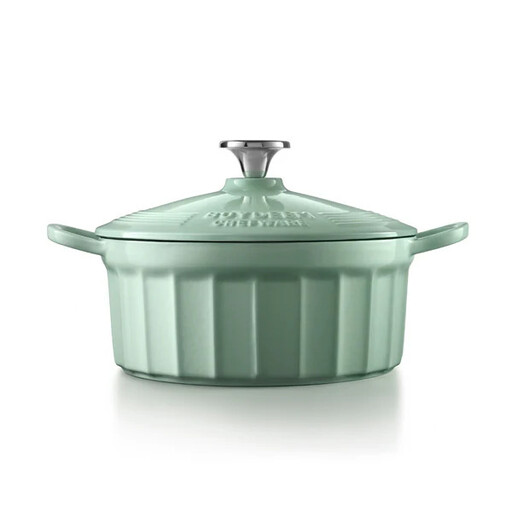
Why this choice suits this profile : Its 2,9 L capacity is ideal for braises, stews, soups and regular slow cooking for a couple or small family.
The product details specify compatibility with gas, induction, electric, halogen and ceramic hobs, as well as oven use.
Enameled cast iron, a well-fitted domed lid, 18/8 stainless-steel knob and stated dishwasher-safe cleaning.
We have brought together a complete, real-time updated selection of products that meet these demanding criteria while complying with European safety regulations.
To help your cookware last longer, a few simple habits are all you need:
Often, yes, but it is not automatic. Check the model’s product details and look for an explicit statement confirming induction compatibility. A non-magnetic ceramic casserole will generally require a suitable induction adapter plate.
A capacity of between 2 and 3 L is generally suitable for preparing soups, stews and slow-cooked dishes for two people. A 1,3 L model is better suited to individual portions or small preparations.
Its lifespan depends on the quality of its construction, how often it is used and how well it is cared for. The cast iron itself is highly durable, but the enamel can be damaged by thermal shock, drops or abrasive utensils. Gradual heating and gentle cleaning will help preserve your casserole for many years.