
Livraison le jour même ou le lendemain

Qualité garantie

Débloquez vos offres de bienvenue: Livraison GRATUITE | Jusqu'à -80 % | 30 jours d'essai gratuits à JoyPlus
Téléchargez l'application
An enameled cast-iron casserole can be used to prepare soup, stew or sauce, as well as to simmer a dish for hours before taking it straight to the table. However, some purchases prove disappointing in everyday use. Weight, actual usable capacity and hob compatibility are often checked less carefully than colour or design.
Before comparing models, here are the main pitfalls to avoid.
A 22 cm casserole can hold between 3 and 3.3 litres, depending on its shape and height. Diameter alone is therefore not enough to determine whether it will suit a family or only a few portions. A capacity of 1.3 litres is more suitable for one portion, a light soup or porridge than a family meal.
An induction-compatible cast-iron casserole must have a suitable ferromagnetic base. Enameled cast iron will generally work on an induction hob, but a ceramic pot or terracotta casserole may not be magnetic. In that case, you will need an adaptor plate, which may provide less direct and less even heating.
Enameled cast iron handles heat very well, but it is still heavy and sensitive to significant thermal shock. Pouring cold water into a very hot casserole or using a metal utensil can damage the enamel. A non-stick saucepan also requires some care to preserve its coating.
Enameled cast iron retains heat for a long time and is particularly well suited to slow cooking. It is ideal for casseroles, soups and recipes that need to stay hot when served at the table. The trade-off is that it is considerably heavier than an aluminium saucepan.
Borosilicate glass allows you to monitor cooking at a glance and, according to the product specifications, does not absorb odours. However, sudden changes in temperature should be avoided. Ceramic also retains heat well, but some models cannot be used directly on an induction hob.
A non-stick saucepan is practical for small quantities, sauces or milk. However, it cannot replace a cast-iron stockpot designed for long cooking and simmering.
As a general guide:
Also check whether it has a lid, the shape of the handles and the space available in your cupboards. A casserole with a lid will be more versatile, but also heavier to handle and store.
Before ordering, check the model’s precise specifications: gas, electric, ceramic, induction, oven use or otherwise. For the borosilicate glass product shown below, use on induction requires a compatible adaptor plate. Its maximum oven temperature is also limited to 180 °C, according to its specifications.
With an enamelled model, bring it gradually up to temperature and use wooden, silicone or heat-resistant plastic utensils. Always allow the casserole to cool before washing it. Even when dishwasher use is permitted, washing by hand with a soft sponge will help preserve the surface’s appearance for longer.
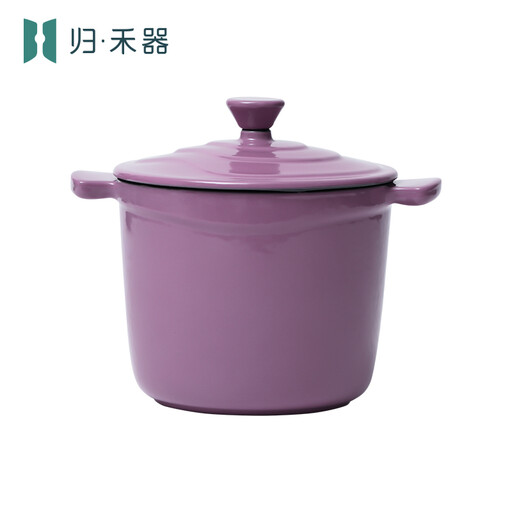
Why this choice suits this profile : Its compact size is suitable for one person, small soups, porridge and individual portions. The specifications state that it is compatible with induction hobs.
The stated 1.3 L capacity prevents you from overestimating the volume based solely on the 14 cm diameter.
Enameled cast iron, 14 cm size and stated induction compatibility.
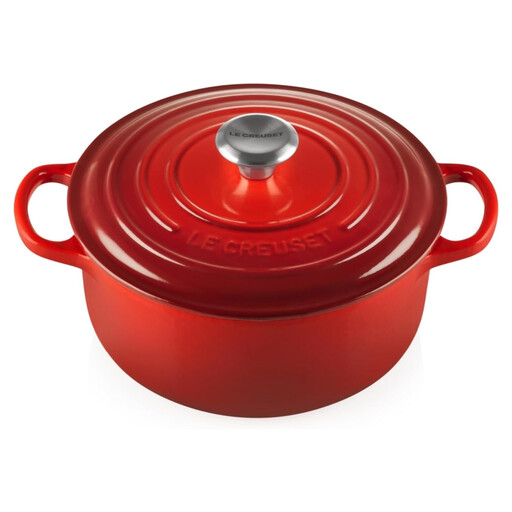
Why this choice suits this profile : This 2.4 L model combines enameled cast iron, a matching lid and wide handles, allowing you to cook and serve straight at the table.
The product specifications detail the compatible heat sources, capacity and precautions to take to avoid thermal shock.
20 cm diameter, 2.4 L capacity, light-coloured enamelled interior and stated induction compatibility.
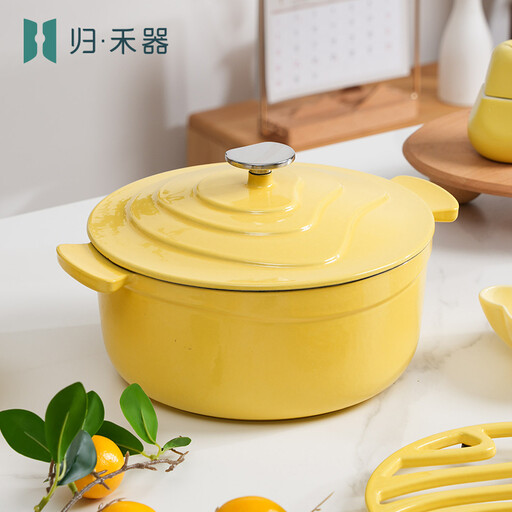
Why this choice suits this profile : With its stated 3.3 L capacity, it is suitable for soups, stews and slow cooking for several people.
The stated volume makes it easy to compare this cast-iron stockpot with the smaller sizes designed for a single portion.
22 cm diameter, 3.3 L capacity, flat base and stated induction compatibility.
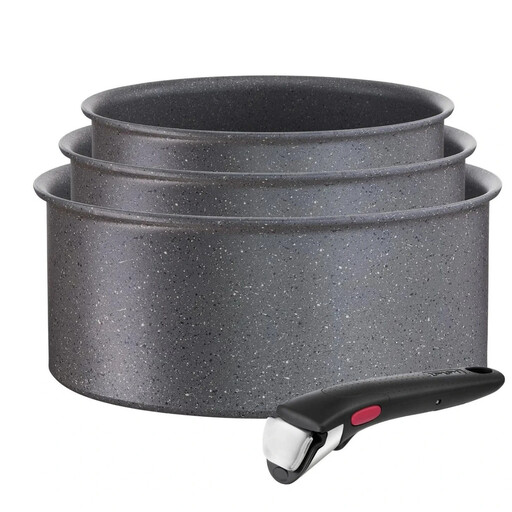
Why this choice suits this profile : This aluminium saucepan, with its non-stick coating and removable handle, is ideal for kitchens where space and versatility are priorities.
The specifications state that the handle must be removed before placing the pan in the oven and that it must be washed by hand.
Induction-compatible, stackable and oven-safe up to 250 °C without the handle, with a coating stated to be free from PFOA, cadmium and lead.
We have put together a complete, real-time updated list of products that meet these demanding selection criteria and European safety regulations.
Cast iron is generally compatible with induction, but this must be confirmed in the model’s specifications. A non-magnetic ceramic casserole will not work directly with this technology. An adaptor plate may sometimes be used, but only if authorised by the manufacturer.
For two to four people, a capacity of 2.5 to 3.5 litres may be suitable, depending on portion sizes and the recipe. For one person, a 1 to 1.5-litre mini casserole prevents you from preparing excessive quantities and heats up more quickly.
It does not require seasoning, unlike bare cast iron, but the enamel must be protected from scratches and thermal shock. Gentle washing, thorough drying and moderate heat will help preserve the surface for longer.