
Livraison le jour même ou le lendemain

Qualité garantie

Débloquez vos offres de bienvenue: Livraison GRATUITE | Jusqu'à -80 % | 30 jours d'essai gratuits à JoyPlus
Téléchargez l'application
A watermelon drink can take many forms: watermelon soda, Korean drink, juice made from concentrate, squash to dilute or even a watermelon snack. This gives you plenty of variety, but can also make it harder to compare different products.
A few common pitfalls regularly arise when shopping:
A watermelon juice may consist of direct juice, juice made from concentrate or simply a flavoured drink. These categories do not produce the same result in the glass.
The Tymbark Apple Watermelon Drink 250 ml, for example, contains 19% apple juice and 1% watermelon juice from concentrate. It is therefore a fruity drink combining two flavours, rather than pure watermelon juice. By contrast, the KATO Watermelon Juice with Nata De Coco 320 ml lists 25% watermelon juice from concentrate and 16% nata de coco, resulting in a noticeably more substantial texture.
Before ordering, check:
To compare a low-calorie watermelon drink, start by checking the energy value per 100 ml, then work out what this represents for the entire container. A drink containing 40 kcal per 100 ml therefore provides around 120 kcal in a 300 ml bottle.
A few examples taken from the product listings:
Sweeteners do not automatically make a drink suitable for every purpose. If you are looking for a more traditional recipe, a sweetened watermelon soda may be ideal. If you want to limit your energy intake, compare the values per serving and check the full ingredients list.
A can or individual sachet is easy to slip into a packed lunch, lunch bag or party basket. A family-sized bottle is better suited to sharing. After opening, several products must be refrigerated and consumed quickly: Tymbark recommends keeping its drink chilled and consuming it within 48 hours, while DİMES advises finishing the bottle within three days.
Products containing the E129 colouring are also accompanied by the regulatory warning concerning a possible effect on children’s activity and attention. This statement appears in particular on the Cantabile, Sweet16, Ice Talk and Tomomasu product listings, as well as those of several other drinks. Always check the label on the packaging before consuming the product: the composition and information may vary between batches.
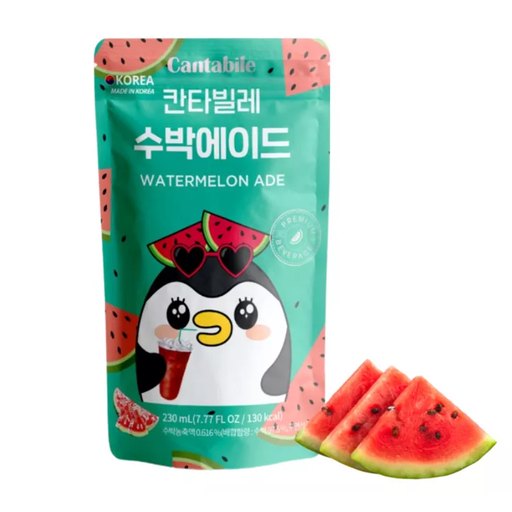
Why this choice suits this profile : Its compact size lets you try a Korean watermelon drink without buying a large quantity. It is best served chilled and contains 3.94 kcal per 100 ml according to the product listing.
The energy value and volume are clearly stated, making it easier to compare with a sweeter watermelon soda.
Individual 230 ml format, watermelon concentrate and a fat-free recipe, according to the information in the product listing.
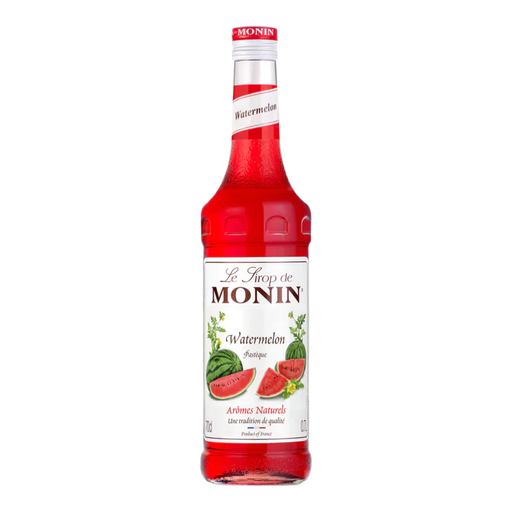
Why this choice suits this profile : This watermelon syrup can be used to make lemonades, iced teas, cocktails or mocktails, depending on the desired dosage.
The 700 ml format and dilution instructions make it clear that this is a concentrate, rather than a drink to consume as it is.
700 ml glass bottle, stated 10% concentrated watermelon juice and made in France, as indicated.
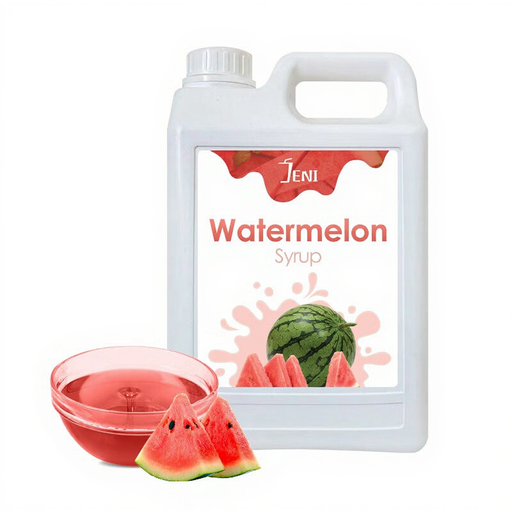
Why this choice suits this profile : Its large container is designed for restaurants, cafés, associations and event organisers that regularly prepare fruity drinks.
The 2.5 kg volume is designed for repeated use, avoiding the need to go through several small bottles during a busy service.
Suitable for lemonades, sodas, cocktails, desserts and slushies, with a red colour and watermelon flavour described by the manufacturer.
We have put together a complete, real-time updated list of products that fully meet these demanding selection criteria and European safety regulations.
For a gathering, compare the total volume, serving method and storage requirements after opening. A 1-litre or 1.5-litre bottle is suitable for sharing, while individual formats make distribution easier. Watermelon syrup can also be used to prepare several recipes, provided it is diluted and measured correctly.
No. Korean products include still drinks, fizzy drinks and formats with a distinctive texture. Tomomasu is carbonated, while Cantabile and Ice Talk are described as non-carbonated fruity drinks. Check the ingredients list for the terms “ carbonated water ” or “ carbon dioxide ”.
The storage period depends on the recipe and the manufacturer’s recommendations. After opening, generally place the drink in the refrigerator and refer to the label. Some products specify 48 hours, while others allow a few days. A syrup sealed airtight may be subject to different instructions. In all cases, follow the best-before date and the stated storage conditions.