
Livraison le jour même ou le lendemain

Qualité garantie

Débloquez vos offres de bienvenue: Livraison GRATUITE | Jusqu'à -80 % | 30 jours d'essai gratuits à JoyPlus
Téléchargez l'application
Who hasn't cursed their shrill alarm in the middle of a frigid winter morning? Getting out of bed when it's still pitch black outside is an ordeal for many. The sonic assault of a classic alarm often leaves a feeling of fatigue that follows us all day. In response, the wake-up light alarm clock has emerged as a gentler alternative: it promises to resynchronise our biological clock by recreating a gradual sunrise, even when the real one is hours away.
However, the market is flooded with models making promises they don't always keep, and it's easy to make the wrong choice. As a section editor at Joybuy, I'm here to break down the pitfalls to avoid and the essential criteria for choosing a device that will truly deliver on its promise: improving the quality of your sleep and, most importantly, your mornings.
To avoid making a mistake, focus on a few technical specifications that make all the difference in terms of effectiveness and daily comfort.
This is the heart of the matter. The device's credibility rests on its ability to imitate natural light. Here are the points to scrutinise:
Light is essential, but don't underestimate the importance of the accompanying sound.
A device you handle every day, often while half-asleep, must be incredibly straightforward.
Rather than a simple product catalogue, we've chosen to identify concrete solutions for different profiles, based on the objective criteria defined above.
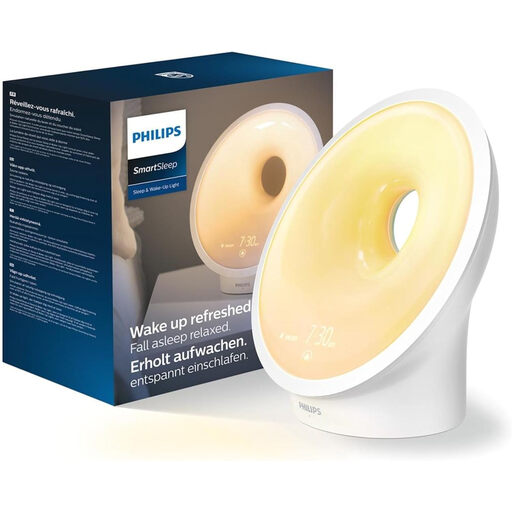
Why this product is a perfect match: This user is looking for an all-in-one solution to optimise their sleep cycle. This Philips model goes beyond a simple alarm clock: in addition to a first-rate dawn and dusk simulation, it integrates light-guided breathing exercises for deep relaxation.
It checks all the boxes of a premium product: a truly progressive and natural light simulation, and an intuitive touchscreen interface that gets straight to the point. It thus avoids the double pitfall of a fake sunrise and an overly complex device.
RelaxBreathe cardiac coherence function; excellent dusk simulation; 25 intensity levels up to 315 lux.
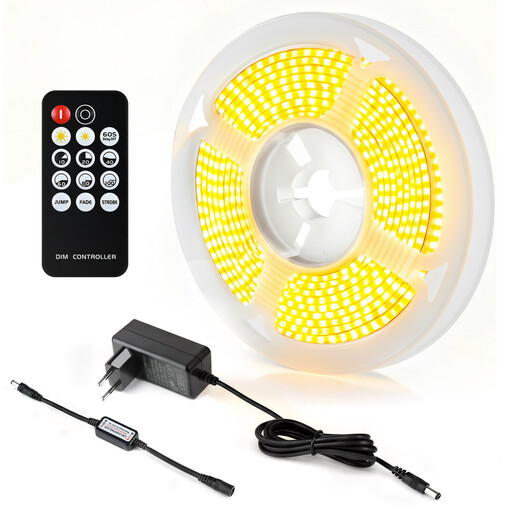
Why this product is a perfect match: Perfect for those who want to create a relaxing atmosphere in the evening without investing in a full wake-up light. This LED strip is designed for warm, indirect lighting, ideal for a custom sunset simulation or simply dimming the room before sleep.
By focusing on one thing and doing it well (providing a beautiful warm light), this strip avoids the trap of superfluous gadgets. It's a simple, effective solution dedicated to ambient lighting.
Perfectly uniform, flicker-free light (COB technology); dimmable from 10% to 100% (remote included); warm white colour temperature (3000K) ideal for relaxation.

Why this product is a perfect match: The solution for anyone who gets up at night and wants to avoid being blinded by the main light. This LED bar turns on as you approach, casting a soft, localised light—just enough to move around safely without abruptly waking up your brain.
This product solves a very specific problem with zero complexity. It avoids the trap of aggressive light in the middle of the night by offering perfectly calibrated accent lighting: bright enough to see, but soft enough not to startle you.
Automatic activation via motion detection; rechargeable via USB; ultra-simple magnetic mounting (no screws or drilling) for hallways, closets, stairs, etc.
To find other accent lights that will guide you through your home without disrupting your sleep, explore our complete selection of products, all tested and approved according to rigorous criteria.
Yes, the principle is scientifically proven. A wake-up light acts on our biological clock (the famous circadian rhythm). By gradually exposing the retina to a light that mimics dawn, the device signals the brain to stop producing melatonin (the sleep hormone) and start producing cortisol (the wakefulness hormone). This process allows for a much more natural awakening and helps you feel more energised, especially during the winter months. Note that this is a wellness tool, not a medical light therapy device.
Almost all current models use LED bulbs. Their lifespan is exceptionally long, often exceeding 20,000 hours. To put it simply: even with daily use, the light source in your device is designed to last for years and years. You will never have to replace it.
Absolutely not. Thanks to energy-efficient LED technology, a wake-up light alarm clock consumes a negligible amount of energy, typically between 10 and 20 watts at full power. In standby mode, its consumption is almost zero. This is much less than a conventional bedside lamp, and the impact on your electricity bill will be invisible.