
Livraison le jour même ou le lendemain

Qualité garantie

Débloquez vos offres de bienvenue: Livraison GRATUITE | Jusqu'à -80 % | 30 jours d'essai gratuits à JoyPlus
Téléchargez l'application
Getting up at night shouldn't be an ordeal. Whether it's to comfort a child, find your way to the bathroom without waking the entire household, or simply move around safely, a little extra light is essential. The motion-sensor night light stands out as the perfect solution, but be warned: the market is flooded with products that often fail to deliver on their promises.
Our mission is to help you see things more clearly. We're cutting through the marketing jargon to focus on what really matters: the pitfalls to avoid and the key criteria for making a smart purchase.
To avoid these pitfalls, you need to look closely at a few key features. These are what will determine if a night light is truly right for your needs.
An automatic night light can work in two ways:
The smartest models combine both technologies: they only activate upon detecting motion when it's dark enough. The result: no unnecessary activation during the day and optimized energy consumption.
The choice depends on where you plan to install it.
Light quality is a non-negotiable comfort factor, especially for a baby's room night light.
To illustrate these criteria in action, here are a few models that meet specific needs.
Why we love it: This two-pack of plug-in night lights is a smart, cost-effective solution for outfitting multiple areas (like a bedroom and hallway) without breaking the bank. Installation is a breeze: just plug it in, and you're done.
The warm white light (2800-3000K) and its stepless dimming feature prevent the harsh lighting pitfall. The simple yet reliable dusk-to-dawn sensor ensures flawless nighttime operation.
Ultra-low power consumption (0.3W) and fine-tuned brightness control for customized comfort.
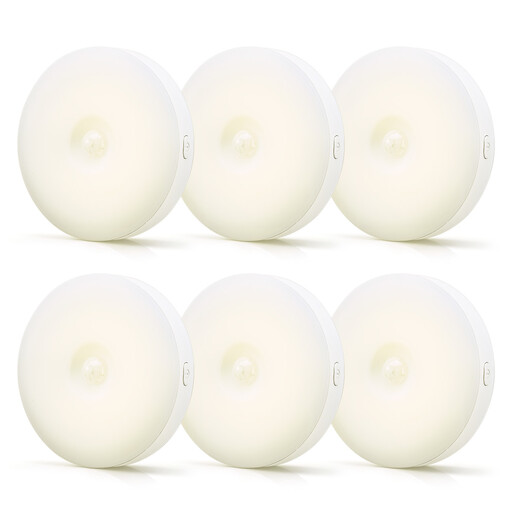
Why we love it: Perfect for lighting areas without outlets: stairs, closets, basements... This 6-pack of rechargeable, magnetic LED night lights is a complete and ultra-versatile solution for the entire home.
The multi-pack format solves the battery life issue: while one light is charging, the others remain operational. The 3 color modes ensure the light is always soft and appropriate.
Wireless installation (magnetic/adhesive) and a choice of 3 color temperatures for total customization.
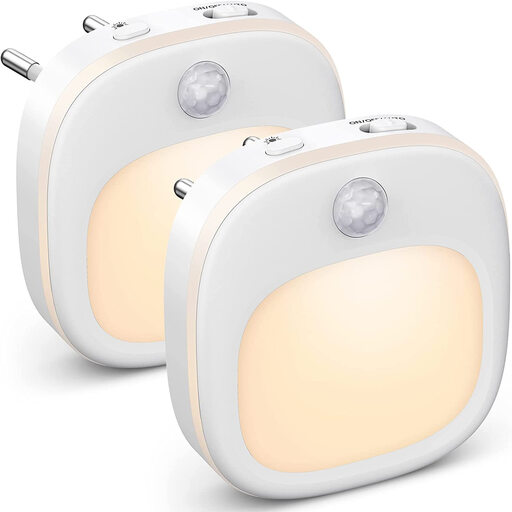
Why we love it: For those who love to have control over every setting. This plug-in model cleverly combines a motion sensor and a light sensor, with advanced options for color and intensity.
It checks all the boxes: the dual sensor ensures precise detection, while the 3 color temperatures and 5 brightness levels offer complete control to eliminate any harsh light.
Dual detection (motion + dusk-to-dawn) and multiple settings for a fully customizable lighting experience.
Discover our full selection of products, all chosen for their adherence to our strict selection criteria and current safety standards.
A dusk-to-dawn sensor reacts to ambient light: it turns the night light on when it gets dark and off at sunrise. A motion detector (PIR), on the other hand, reacts to movement: it turns the light on for a short period when someone approaches. The most advanced models combine both, so they only activate in the dark and when there's motion.
No, almost all models, especially LED night lights, are designed to be extremely energy-efficient. A plug-in night light typically consumes less than 1W, which translates to a cost of just a few dollars per year, even when plugged in continuously.
In a hallway or on a staircase, place it about 30-50 cm (12-20 inches) from the floor. This helps the sensor detect the movement of your legs more easily. In a bedroom, avoid aiming it directly at the bed, so it doesn't activate with every little movement during the night. Placing it near the door is often the best option.