
Livraison le jour même ou le lendemain

Qualité garantie

Débloquez vos offres de bienvenue: Livraison GRATUITE | Jusqu'à -80 % | 30 jours d'essai gratuits à JoyPlus
Téléchargez l'application
The alarm clock ringing in the gloom of a winter morning… a daily torture for many. If you dream of a gentler way to start your day, the sunrise alarm clock stands out as a highly-acclaimed solution. By mimicking the gradual rise of the sun, it prepares the body for a natural, gentle awakening. But be warned, not all models are created equal. To avoid buyer's remorse, here are the pitfalls to watch out for.
The market is flooded with products promising an idyllic wake-up experience, but certain design flaws can quickly turn it into a nightmare.
To ensure you make the right choice and invest in more peaceful mornings, here are the technical criteria to watch closely.
The crucial factor for a good wake-up light is its ability to realistically simulate the dawn. Ensure the model offers a faithful colour progression. The maximum light intensity, measured in lux, is also a key criterion. Adjustable brightness, capable of reaching 250 to 300 lux, allows you to tailor the device to your sensitivity and your room's layout. A significant bonus: your alarm clock can also double as a supplementary light therapy lamp to combat the winter blues.
Light isn't everything. The quality and variety of sounds are essential. Opt for models that offer several high-quality recorded natural sounds (birdsong, ocean waves, etc.). The gradual wake-up feature for audio is just as crucial: the volume should increase very slowly over one to two minutes to avoid any jarring starts. The inclusion of an FM radio or Bluetooth connectivity is a plus for those who prefer waking up to their favourite station or playlist.
Some devices go a step further by offering a sunset simulation feature. This sleep aid option gradually dims the light and sound to gently guide you to sleep. Other features, such as light-guided breathing exercises, can also enhance your evening routine.
There's an ideal device for every profile. Here is a selection of products that meet various needs, designed with the quality criteria we've just discussed in mind.
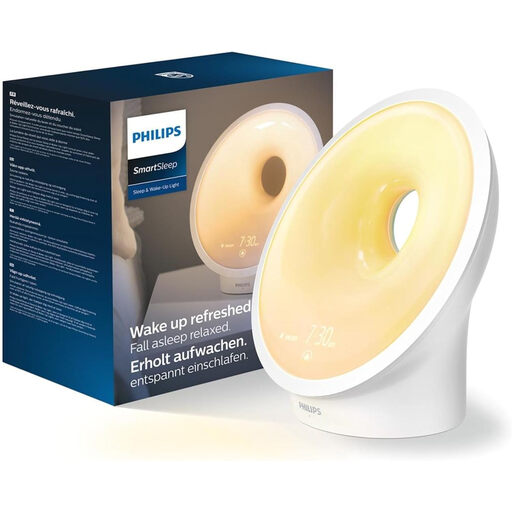
Who is it for? For those who want an all-in-one solution that manages both waking up and falling asleep. It's a device designed to improve the entire sleep cycle, not just the morning.
Mission accomplished: the sunrise simulation is chromatically accurate (from red to bright yellow), the 7 natural sounds are high-quality, and the touchscreen automatically adjusts its brightness so it never disturbs your night.
The sunset simulation, combined with the light-guided breathing relaxation mode (RelaxBreathe), makes it a true coach for falling asleep peacefully.
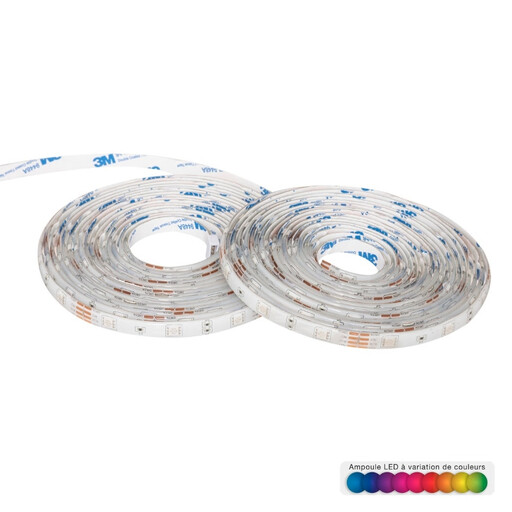
Who is it for? For those who want to sculpt their bedroom's lighting atmosphere. This isn't an alarm clock, but a powerful tool for creating a relaxing evening environment to complement a healthy sleep routine.
By emitting a soft, coloured light in the evening, this LED strip helps prepare the body for sleep, far from the harsh blue light of screens or standard bulbs.
Its 10-metre length, programmable colours, and remote control offer complete flexibility for decorating a wall, a headboard, or the underside of a shelf.
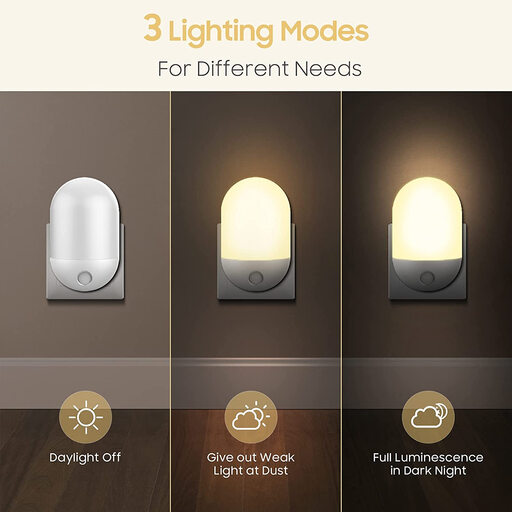
Who is it for? Perfect for those who don't need an alarm but are looking for a supplementary light to get up at night without being dazzled, or to provide reassurance in the dark.
It tackles the problem of nighttime light pollution at its source. Unlike a phone screen, its warm, discreet light only activates in the dark, preserving sleep quality.
Its dusk-to-dawn sensor makes it 100% autonomous. With negligible power consumption (0.5 W), it's the quintessential practical and budget-friendly solution for a hallway or bedroom.
Discover our full selection of products that meet our quality criteria and current safety standards.
Almost all modern models use LED bulbs. These have an extremely long lifespan, often between 20,000 and 50,000 hours. In practical terms, for daily use, this means your device will last for many, many years without you needing to worry about replacing the light source.
Not at all. Thanks to LED technology, these devices consume very little energy. Even at full intensity, a wake-up light's consumption is typically less than 20 watts. In standby mode or when the light is off, consumption becomes negligible. It's a much more economical solution than a traditional bedside lamp.
Yes, absolutely. Most models work perfectly as a bedside lamp. They have several manually adjustable brightness levels, allowing you to choose a comfortable intensity for evening reading before activating the sunset mode or turning it off completely for sleep.