
Livraison le jour même ou le lendemain

Qualité garantie

Débloquez vos offres de bienvenue: Livraison GRATUITE | Jusqu'à -80 % | 30 jours d'essai gratuits à JoyPlus
Téléchargez l'application
The stainless steel cutting board is becoming a staple in our kitchens, and for good reason: hygiene and durability. Gone are the days of plastic boards that get scratched and become breeding grounds for bacteria, or wooden ones that require constant maintenance. However, the market is flooded with models, and they are far from being created equal. To prevent a good investment from turning into a disappointment, it's best to know the pitfalls to avoid.
Many people end up with a board that rusts after a few washes, warps under the heat of a dish, or is so slippery it becomes dangerous. The cause? Usually three unforgivable design flaws:
To avoid falling into this trap, focus on a few key technical features that make all the difference.
A good stainless steel cutting board is much more than a simple rectangle of metal. It's a true kitchen tool that must meet safety, hygiene, and practicality standards. Here are the points to check before you buy.
This is the number one criterion: the type of steel. For kitchen use, 304 stainless steel (also known as 18/8 or 18/10) is the gold standard. This alloy contains chromium and nickel, which give it excellent resistance to rust and corrosion, even when in contact with acidic foods like lemon or tomato.
Its non-porous surface is a major advantage: it prevents bacteria and odours from embedding, making it a naturally hygienic cutting board. Contrary to popular belief, a smooth, hard surface does not promote bacterial growth if it is cleaned properly.
For maximum versatility and food safety, opt for a double-sided cutting board. The principle is simple but highly effective: dedicate one side to cutting raw meat and fish, and the other to vegetables, fruits, and bread. This significantly reduces the risk of cross-contamination.
The presence of a cutting board with a groove is another real bonus. This small channel carved around the edge of the board catches juices from meat or fruit, keeping your worktop clean and dry. It's a detail that makes a world of difference in daily use, especially if you often prepare a cutting board for meat.
A board that slips or bends under the pressure of a knife is not only annoying but, more importantly, dangerous. Thickness is a good indicator of a board's sturdiness and stability. A thickness of at least 2 mm is recommended to ensure good rigidity and the feel of a professional cutting board. Some models are also equipped with silicone edges or non-slip feet for a perfect grip on the worktop. Finally, most of these models are designed to be a dishwasher-safe cutting board, for hassle-free cleaning.
To put theory into practice, we have selected a few models that meet these quality criteria, each suited to a different user profile.
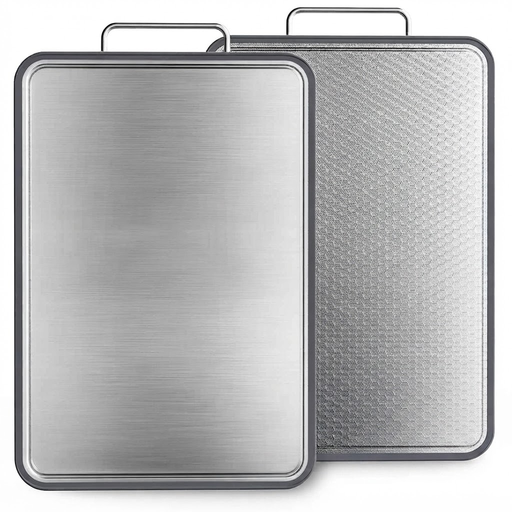
Why it's a great choice: Ideal for those who regularly handle raw meat and fish. Its 100% stainless steel double-sided design and deep groove allow you to work cleanly and safely separate foods.
This model avoids the trap of poor design. The juice groove is present on both sides, and the integrated handle makes it easy to handle and store, making daily use very practical.
100% stainless steel double-sided surface for maximum hygiene. Large cutting area (40x28 cm) and a fine texture that helps hide light scratches.
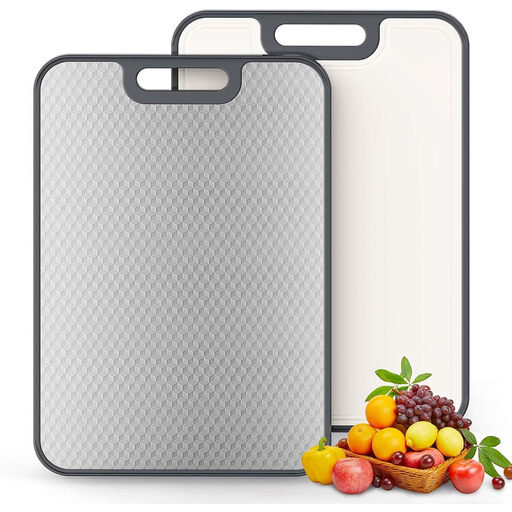
Why it's a great choice: Perfect for those who like the idea of stainless steel for meat but prefer a softer surface for vegetables. This hybrid model offers the best of both worlds and clear task organisation.
It meets the need for versatility without compromise. The stainless steel side is food-grade, and the wheat straw-based PP side is sturdy and easy to clean, avoiding the flaws of low-end plastics.
Smart dual-material design for clear food separation. Fully dishwasher-safe for effortless cleaning.
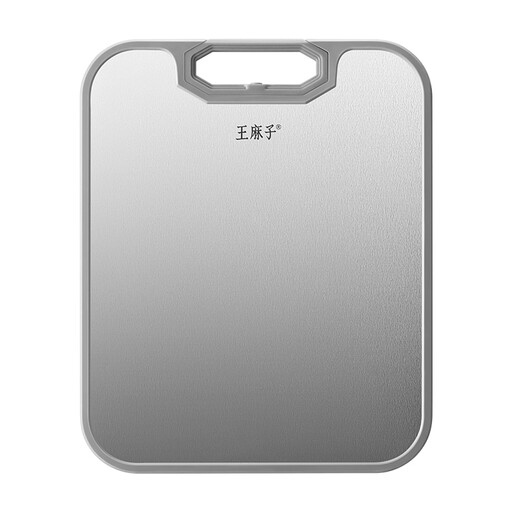
Why it's a great choice: For those seeking a sleek design and impeccable hygiene. Its smooth surface and double-sided design make it as beautiful as it is functional, easy to clean and store.
This model relies on quality steel and sufficient thickness to ensure flatness and long-term durability, thus avoiding the trap of thin boards that warp.
Double-sided design for hygienic food separation. Non-porous surface that retains neither odours nor stains, for a look that stays new for longer.
We have compiled a comprehensive and up-to-date list of products that meet our demanding specifications and safety regulations.
This is a legitimate concern. Stainless steel is harder than wood or plastic, which can potentially dull a knife's edge more quickly. Rest assured, this effect is often overstated. To minimise it, simply use a honing steel regularly to maintain the edge of your blades. The hygiene and durability benefits of a stainless steel board largely outweigh this minor extra maintenance for your knives.
Maintenance is one of the great advantages of a stainless steel board. After each use, a simple wash with hot water and dish soap is sufficient. Its non-porous surface is very easy to clean. Most models are also dishwasher-safe. To remove stubborn odours (garlic, onion, fish), you can rub it with half a lemon or a little white vinegar before rinsing.
304 stainless steel is a "food-grade" steel due to its specific composition (approximately 18% chromium and 8% nickel). This composition makes it highly resistant to rust and oxidation, even when in contact with acidic or salty substances. Other steels, like 430, are also stainless but are less resistant to corrosion and therefore less suitable for prolonged contact with food. Choosing a 304 stainless steel board is a guarantee of safety and longevity.