
Livraison le jour même ou le lendemain

Qualité garantie

Débloquez vos offres de bienvenue: Livraison GRATUITE | Jusqu'à -80 % | 30 jours d'essai gratuits à JoyPlus
Téléchargez l'application
A kitchen chopping board may seem simple to choose. However, a model that is too thin, difficult to clean or unstable can quickly become a daily nuisance. Between wood, known for its durability, bamboo, promoted as an eco-friendly option, plastic, valued for its easy maintenance, and stainless steel, praised for its strength, marketing claims do not always make it easy to compare products objectively.
Before placing your order, focus on the material, dimensions, stability and care instructions. These criteria help you avoid unpleasant surprises and choose a board suited to your kitchen, whether it is a family kitchen, a compact space or one subject to intensive use.
A wooden or bamboo chopping board generally provides a pleasant surface for preparing food and may even be used to serve food directly at the table. In return, these materials usually require hand washing, immediate drying and, in some cases, regular application of a food-safe oil.
Plastic and some stainless-steel models can be placed in the dishwasher. However, their surface may become marked over time, depending on the knives used and the pressure applied. So, the description ‘easy to clean’ does not mean that all models are maintained in the same way.
A board that slips while you are chopping makes precise movements more difficult and increases discomfort. A non-slip underside, a well-designed handle or sufficient thickness can improve stability. However, the board must still be placed on a clean, dry and completely flat worktop.
Even a non-slip chopping board should therefore be checked for stability before use, especially when cutting large or wet foods.
A board measuring 40 cm in length, or a model of around 43 cm, provides plenty of space for chopping poultry, a joint of meat or several vegetables. However, it takes up more room in the sink, dishwasher or cupboard. Conversely, a small board is ideal for fruit, bread and quick preparations, but soon reaches its limits when cooking a family meal.
To limit the transfer of bacteria between raw food and food that is ready to eat, using several separate surfaces is a simple and effective solution. A set of chopping boards makes this organisation easier, provided that each board is cleaned after use.
Before buying, measure the space available between the sink, hob and wall. A rectangular shape is generally a good compromise for everyday cooking. A thickness of around 1 cm already provides reasonable stability, while a thicker model will also be heavier and more cumbersome.
Also consider the weight. A heavy board stays in place more securely, but is less easy to move and store. In a small kitchen, a handle or vertical stand can be particularly useful.
The description ‘dishwasher-safe chopping board’ should be checked in the product specifications, as it does not apply to all materials. Plastic and some composite constructions can withstand this type of washing, while bamboo and solid wood often require manual care.
After each use, rinse the board, wash it with a suitable washing-up liquid and then dry it thoroughly. Replace it if it develops cracks, splinters or deep cuts that are difficult to clean. The manufacturer’s recommendations should always take priority, particularly for products intended to come into contact with food.
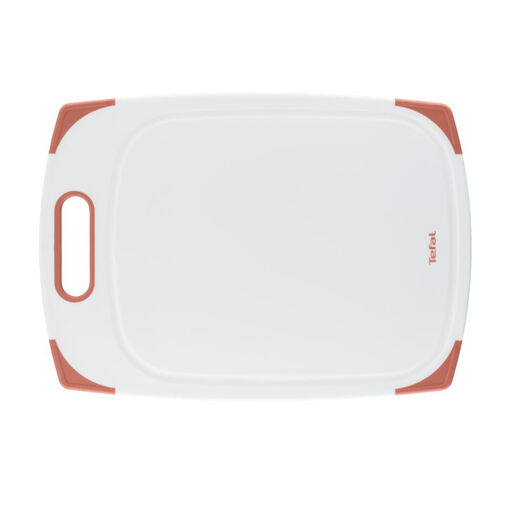
Why this choice suits this profile : With a thickness of 0.9 cm, this plastic board is suitable for everyday preparation and can be washed by hand or in the dishwasher.
The non-slip surface and integrated groove help prevent slipping and collect juices on the worktop.
Plastic construction, carry handle, hanging hook, juice groove and stated dishwasher compatibility.
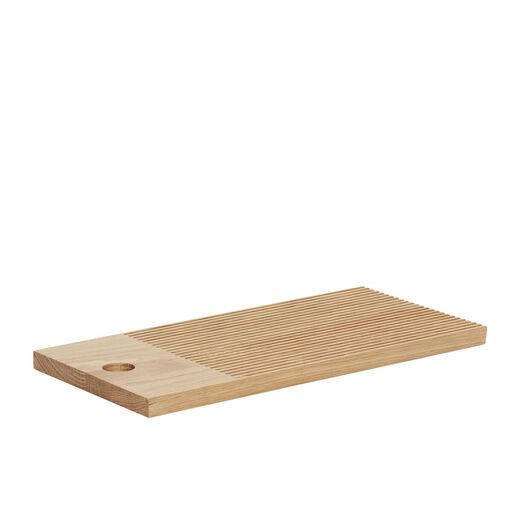
Why this choice suits this profile : This FSC-certified solid oak model measures 40 × 20 cm and is suitable both for chopping and serving at the table.
At 2 cm thick, this board avoids the problem of overly thin models. However, you will need to be happy with manual care before buying it.
Solid oak, FSC certification, rectangular shape and dual use as a chopping board and serving board.
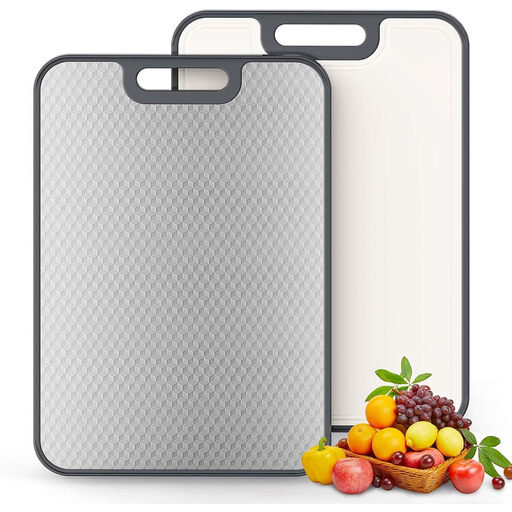
Why this choice suits this profile : Its 43 × 30 cm format and double-sided design are suitable for kitchens where meat and vegetables are prepared regularly.
The two sides allow you to separate different preparations, while dishwasher compatibility makes cleaning after use easier.
A combination of stainless steel and PP, a surface described as scratch-resistant, plus resistance to water, oil and odours according to the product specifications.
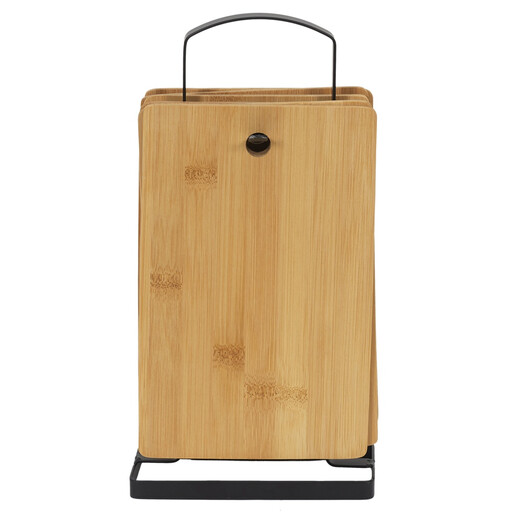
Why this choice suits this profile : The four 14 × 22 cm bamboo boards and their metal stand make storage and small to medium-sized preparations easier.
The stand prevents the boards from being stacked in a drawer. In return, hand washing and immediate drying are essential.
Four-piece set, metal stand, suitable for serving and dimensions adapted to everyday ingredients.
We have selected a complete, real-time updated list of products that meet these demanding criteria and European safety requirements.
Using two sides or several boards makes it easier to keep preparations separate. A double-sided chopping board can be reserved for meat on one side and vegetables on the other. In all cases, wash the board thoroughly after handling raw food, before using it for food that is ready to eat.
Most wooden and bamboo models should be washed by hand. Soaking and the heat of the dishwasher can cause warping, cracks or the different parts to come apart. Always check the product instructions before using this cleaning method.
Replace it if its surface has deep cuts, cracks, splinters, significant warping or a persistent smell despite washing. How long it lasts depends on how often you use it, the material and how it is cared for. Regular checks help ensure you do not keep using a board that is too worn.