
Livraison le jour même ou le lendemain

Qualité garantie

Débloquez vos offres de bienvenue: Livraison GRATUITE | Jusqu'à -80 % | 30 jours d'essai gratuits à JoyPlus
Téléchargez l'application
Adding greenery to your balcony, terrace, or garden is a true pleasure. However, choosing a simple planter can quickly become a headache. A self-watering planter seems like the perfect solution, promising thriving plants without the hassle of daily watering. But be warned: not all promises are created equal. Before you make a decision, it's best to be aware of the few pitfalls that can turn a promising purchase into a real disappointment.
As a Product Expert at Joybuy, I'm here to help you see things more clearly. Let's break down the key points together to guide you towards a product that will truly meet your expectations and help you avoid marketing gimmicks.
The market is flooded with models, but certain critical design flaws are common and can render your planter useless after just one or two seasons.
To avoid these pitfalls, focus on a few key technical points. These are the true guarantees of quality and durability for your future planter.
The choice of material is crucial. For plastic (polypropylene) planters, look for explicit statements about their resistance.
A good self-watering system relies on several key components:
Think about daily use. A large outdoor flower pot is ideal for shrubs, but its weight when full can quickly become a real problem. For large containers, a planter on wheels proves to be a valuable ally for moving your plants, whether for cleaning the terrace or bringing them indoors for protection. For a balcony planter, appropriate dimensions and a secure fastening system are essential. Models like an anthracite grey low-wall planter are perfect for elegantly defining spaces.
To better understand how these criteria translate in practice, here are a few models that stand out for their design and ability to meet specific needs.
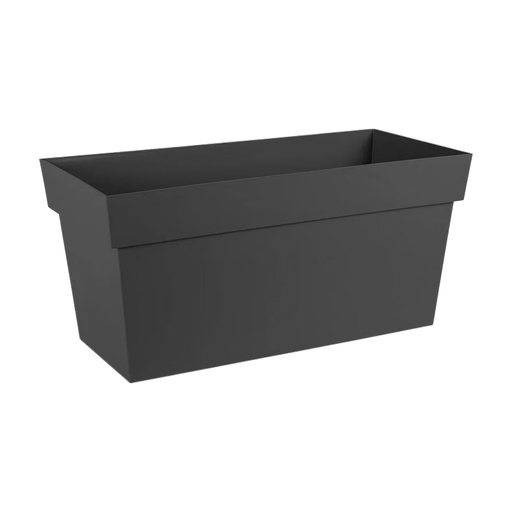
Why we love it: Perfect for a balcony or small terrace, this model combines a generous volume (74 L) with impressive mobility thanks to its integrated wheels. It's the clever solution for those who like to reconfigure their space or protect their plants in winter.
This model is clearly advertised as UV and frost-resistant. Its French manufacturing (certified by Origine France Garantie) is a mark of quality. The water reservoir system is well-designed, with a grid and overflow, far from being a simple gimmick.
Its mobility, thanks to the discreetly integrated wheels, is its real strength. Its generous 74 L volume allows for beautiful floral arrangements or even a small balcony vegetable garden.
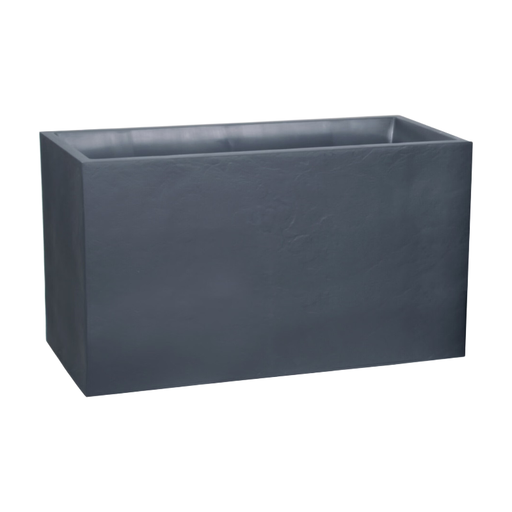
Why we love it: For those looking to structure a terrace or large balcony with an element that is as stylish as it is sturdy. Its stone-effect finish and very large capacity (116 L) make it a top choice for creating elegant and long-lasting green partitions.
Its double-walled construction provides effective thermal insulation, protecting roots from temperature shocks. The stone-effect finish and UV-resistant treatment ensure long-lasting aesthetics. The Origine France Garantie label confirms the high standard of manufacturing.
Its double-walled design and XXL volume make it a true cocoon for plants. Its modular design allows it to be combined with other items from the Volcania range to create a custom, harmonious layout.
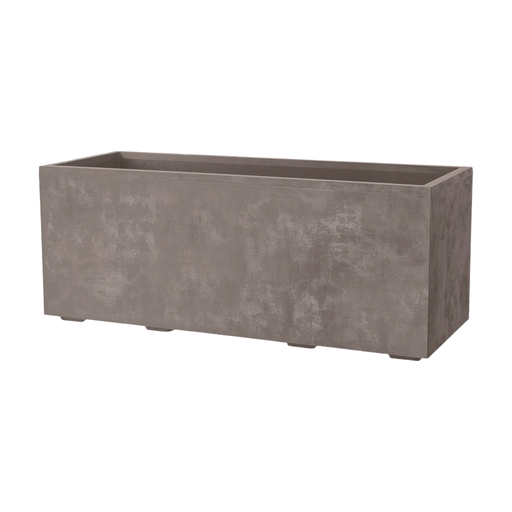
Why we love it: For those who put environmental impact at the heart of their choices. This model is made from recycled plastic and is itself 100% recyclable, all without sacrificing sturdiness.
By focusing on recycled materials, it ticks the sustainability box. Its clearly specified frost and UV resistance sets it far apart from "disposable" products. The removable drainage plug allows for precise watering management and prevents root suffocation.
Its eco-friendly DNA is its real strength. Its robust design and weather resistance make it a sustainable investment, perfectly aligned with more responsible consumption.
The self-watering principle is also ideal for your indoor plants. Discover our selection of wall-mounted models, perfect for adding greenery to your walls without the watering hassle.
The principle is ingenious. A drainage grid separates the potting soil from the water reservoir at the bottom of the container. Water is drawn up to the roots via capillary action, either through direct contact with the soil or via irrigation wicks that "pump" the water. An overflow spout allows excess water to drain away: an essential detail to prevent root rot.
The lifespan depends entirely on the quality of the plastic and its UV-resistant treatment. An entry-level model will barely last one or two winters. Conversely, a high-quality planter, often backed by a manufacturer's warranty of 5, 7, or even 10 years, can easily last for over a decade if well-maintained.
Yes, it's essential. Even for a certified frost-resistant pot, it is imperative to completely empty the reservoir before the first frost. As water freezes, it expands and exerts considerable pressure on the walls, which can cause cracks or even shatter the pot.