
Livraison le jour même ou le lendemain

Qualité garantie

Débloquez vos offres de bienvenue: Livraison GRATUITE | Jusqu'à -80 % | 30 jours d'essai gratuits à JoyPlus
Téléchargez l'application
An EDA self-watering planter can make looking after plants on a balcony, terrace or in the garden much easier. However, you still need to choose a model suited to your requirements. Soil capacity, sunlight exposure, portability, drainage and resistance to the elements are all worth considering before you buy.
Looks aren’t everything. A planter that is too small may restrict plant growth, while a poorly designed water reservoir can leave the compost too wet. Here are the key criteria to review to find a container that suits both your space and your watering routine.
An integrated water reservoir does not replace a watering timer. It is a compartment separate from the growing medium, usually supplied through an opening or tube. Its effectiveness depends on factors including the plant, temperature, wind and volume of soil.
Before choosing your model, check the following:
A large planter quickly becomes very heavy once filled with compost, water and a plant. A 74- or 98-litre model should be placed on a stable surface, particularly on a balcony or raised terrace.
For a planter for terraces and balconies, measure the available space precisely and make sure the floor can support the weight. You should also avoid moving a large full planter unless it has castors genuinely designed for this purpose.
UV and frost resistance primarily relate to the material. They do not mean that every plant will tolerate the same conditions. In full sun, a pot can absorb a great deal of heat; when filled with water and exposed to frost, it may also be subjected to considerable stress.
Choose a product description that clearly details UV protection, frost resistance and drainage recommendations. In winter, also adapt the protection to the plant’s needs, not just those of the planter.
Capacity directly affects your choice of plants. A planter holding less than 25 litres is generally suitable for a moderately sized ornamental plant or a seasonal arrangement. For a shrub, a mature ornamental grass or several flowers, a larger capacity provides more room for the roots.
Length is just as important as capacity. An 80 cm wall planter can help structure a narrow balcony, while a planter approximately one metre long can create a green screen on a terrace or in a large room.
A double-walled planter consists of two layers of material separated by a gap. This design can improve stability and reduce temperature fluctuations around the roots, while also giving the planter a more robust appearance.
However, overall stability still needs to be checked: base width, height, location and the weight of the plant all matter. A tall, narrow planter will naturally be more sensitive to wind than a low, wide one.
Polypropylene and plastics designed for outdoor use are popular because they require little maintenance and resist water splashes. A recyclable flower pot can also support a more responsible approach to shopping, provided you check the information supplied by the manufacturer.
The claims “made in France” and “Origine France Garantie” do not mean the same thing: the first indicates a claimed French origin, while the second refers to a specific certification when it is actually stated on the product. For care, a damp cloth and mild soap are generally sufficient. It is best to avoid abrasive products, which may dull or scratch the finish.
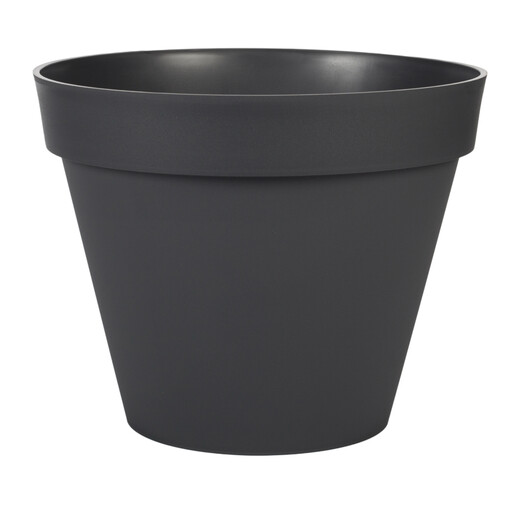
Why this option suits this profile : with a diameter of approximately 40 cm and a capacity of 23 litres, it is suitable for an entrance, balcony or small terrace. It is a great way to get started with an ornamental plant without giving up too much of your space.
Its compact size reduces the risk of buying a planter that is too large and awkward to handle. However, the retention area and perforation beneath the base must remain completely clear.
Claimed recyclable polypropylene, UV protection, water reservoir and a 7-year commercial warranty.
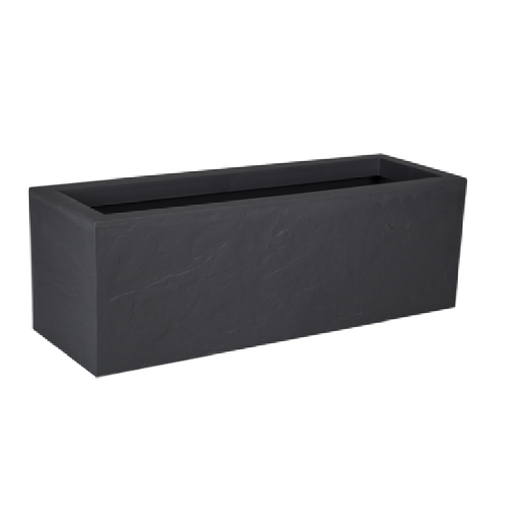
Why this option suits this profile : its dimensions of 99.5 × 39.5 × 43.5 cm and mineral finish make it a genuine decorative feature for a terrace, garden or large room.
Its double wall and retention area are specified in the product description. This means you can avoid mistaking a simple decorative planter for a model genuinely designed to manage water.
98-litre capacity, UV protection, frost resistance, recyclable material and claimed Origine France Garantie certification.
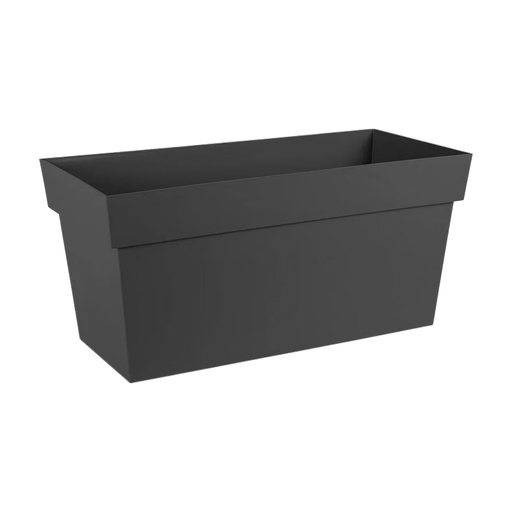
Why this option suits this profile : its castors make it easier to move a 74-litre planter across a flat surface. Its shape is ideal for creating a green screen on a balcony, terrace or patio.
The castors solve the problem of a large planter that cannot be repositioned once full. The filter also helps prevent impurities from entering the water reservoir.
Integrated reservoir, filter grille, drainage system, castors, UV protection and claimed frost resistance.
We have compiled a complete, real-time updated selection of products that meet these demanding criteria and European safety standards.
Place the planter on a flat surface before filling it. For a heavy planter, it is best to choose its final position from the outset. Then add compost suitable for the plant, taking care not to block the drainage openings or filter.
During the first few weeks, check the moisture level of the growing medium regularly. A water reservoir should not turn the compost into a permanently waterlogged sponge. Indoors, use a suitable stand or tray to protect the floor from potential leaks.
Clean the surface with a soft cloth and soapy water. Before a period of severe frost, drain any remaining water if the planter’s design allows it and refer to the recommendations in the product description. More delicate plants may also need to be moved or protected.
No. Plants that prefer consistently moist growing medium can benefit from this system. Mediterranean species or plants that are sensitive to excess water require more careful monitoring. Always check the plant’s requirements and how the drainage system works.
The method varies between models. Some planters have a filling tube or spout, such as the 74-litre Tuscany wall planter. Fill the reservoir gradually and check the moisture level of the compost before adding more water.
Its lifespan depends on exposure, impacts, frost and maintenance. UV protection and frost resistance claimed by the manufacturer are good indicators, but they do not replace effective drainage or a stable installation.