
Same-day & Next-day Delivery

Quality Guaranteed

Unlock Your Welcome Offers: FREE Delivery | Up to 80% OFF | Free 30-day JoyPlus trial
Download the APP
Adding greenery to your balcony, terrace, or garden is an exciting project. But the dream of a lush oasis often clashes with the chore of watering. The self-watering planter emerges as the miracle solution: radiant plants with total peace of mind. Be careful, however, as not all planters are created equal. To prevent a promising purchase from turning into a disappointment, it's crucial to know the pitfalls to avoid before you check out.
This guide breaks down the key points to check for a successful purchase that will transform your outdoor spaces for years to come.
Marketing materials make tempting promises, but a planter's true effectiveness lies in technical details that are too often overlooked. Here are the critical points you should never ignore.
To ensure you make the right choice, carefully examine these three technical aspects. They are the guarantee of your future planter's longevity and effectiveness.
A high-performance self-watering system is a true miniature ecosystem. It must include these three components:
The material determines the durability and aesthetics of your outdoor flower box. For synthetic resin, demand high-quality polypropylene, which is far more resistant to weathering.
The UV-resistant treatment label is non-negotiable if you don't want your designer anthracite planter to fade to a washed-out grey after just one summer. Finally, a double-walled design is a real bonus: it reinforces the structure, improves stability, and, most importantly, provides much better thermal insulation for root comfort.
The shape and features should match your project.
Rather than an exhaustive list, we've selected models that meet specific needs while respecting the performance and durability criteria we've just covered.
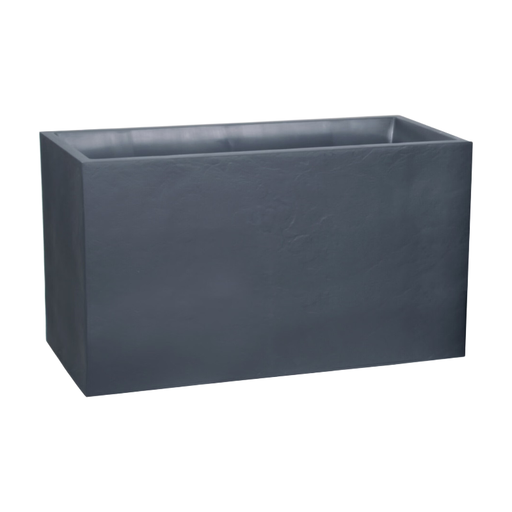
Why we chose it : Ideal for structuring a large space, creating a green partition, or planting shrubs. Its trough format and large capacity make it a true landscape architecture feature.
Its double-walled design ensures excellent stability despite its size, while also insulating the roots. The water retention system is integrated, and the drainage area is pre-drilled for optimal outdoor drainage.
Generous 116-litre volume and a structured, stone-effect design. Certified French Origin (Origine France Garantie).
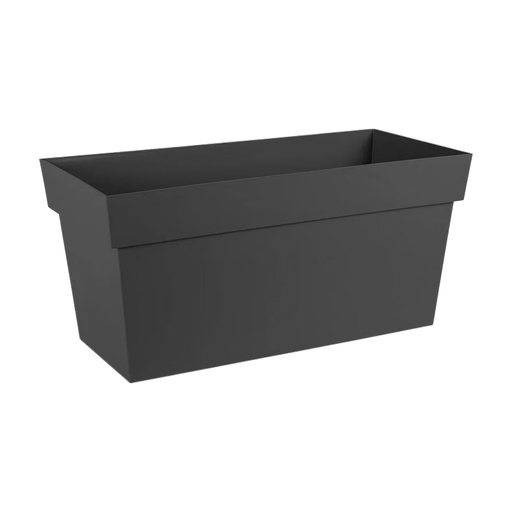
Why we chose it : Perfect for those who love flexibility. Move your plants to follow the sun, rearrange your balcony to entertain guests, or make cleaning your terrace easier.
It combines mobility with performance. The self-watering system includes a filter grid for clean and efficient irrigation. The plastic is frost- and UV-resistant, avoiding the trap of a disposable product that degrades in a single season.
Its excellent manoeuvrability thanks to the integrated wheels and its clever watering system with a pouring spout.
We have curated a complete selection of products that meet our quality criteria for designing your outdoor spaces.
The principle is simple: capillary action. The reservoir, located at the bottom of the planter, is filled with water. The soil, separated from the water by a grid, stays in contact with the moisture via wicks or directly from below. The plant's roots then draw up the amount of water they need, autonomously and consistently. An overflow hole is essential for outdoor use to drain rainwater and prevent the roots from drowning.
The lifespan depends entirely on the quality of the plastic. A budget model might crack or discolour in one or two seasons. In contrast, a high-quality injected polypropylene planter with a certified UV-resistant treatment and a robust design (like a double wall) can easily last 5 to 10 years or more, while retaining its appearance and properties. Certifications like Origine France Garantie (Certified French Origin) are often a sign of high manufacturing standards.
Yes, it is absolutely essential. For outdoor use, the overflow hole must be open. Most models come with a "pre-drilled" or clearly marked area to be perforated. This very simple step allows excess rainwater to drain, preventing the system from becoming saturated and drowning the plants. Conversely, for indoor use, this hole must remain sealed.