
Livraison le jour même ou le lendemain

Qualité garantie

Débloquez vos offres de bienvenue: Livraison GRATUITE | Jusqu'à -80 % | 30 jours d'essai gratuits à JoyPlus
Téléchargez l'application
A pot can look perfectly suitable in the shop, then become tricky to maintain after just a few weeks. On a balcony in full sun, a terrace exposed to the wind, or in a room with little natural light, the choice of container directly affects stability, watering frequency and the lifespan of your planting.
Before buying a planter or flower pot with a water reservoir, three common mistakes keep cropping up:
An integrated water reservoir creates a separate space beneath the substrate. It can help maintain a certain level of moisture and reduce how often you need to water, especially for plants on a terrace or in a balcony planter.
Make sure to check the following points:
The reservoir shouldn't stay saturated all the time. Mediterranean plants, succulents and certain herbs generally prefer the substrate to dry out between waterings.
Measure the available width, but also the height and the space you need to move around. A rectangular planter fits easily on a windowsill or narrow balcony, while a square pot or a tall plant pot will give more structure to a terrace.
A few useful guidelines:
The stated volume refers to the total capacity of the container, not necessarily the amount of soil you need to add. You'll need to allow space for drainage and factor in the weight of the substrate, water and the mature plant.
For an outdoor flower pot, look for specific details about UV and frost protection. Moulded plastic can be lightweight and easy to move, but its performance varies depending on its composition and design.
The most useful details to look for are:
A recyclable flower pot or a planter made in France can also meet buying criteria linked to the product's origin and end of life. It's best to check the exact wording on the product page, such as "Origine France Garantie", rather than guessing the origin from the brand name alone.
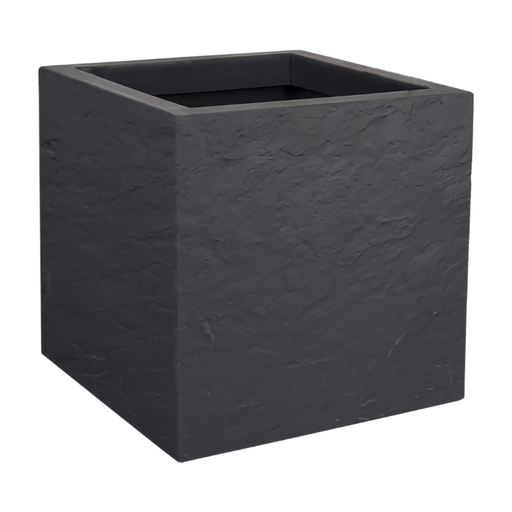
Why this choice suits this profile: its square format of 29.5 × 29.5 × 29.5 cm and 21-litre capacity are ideal for a first planting on a terrace, patio or indoors.
The retention area and pre-drilled holes mean you're not choosing a model without any stated drainage solution.
Anthracite grey stone-effect finish, adaptable format and Origine France Garantie certification stated on the product page.
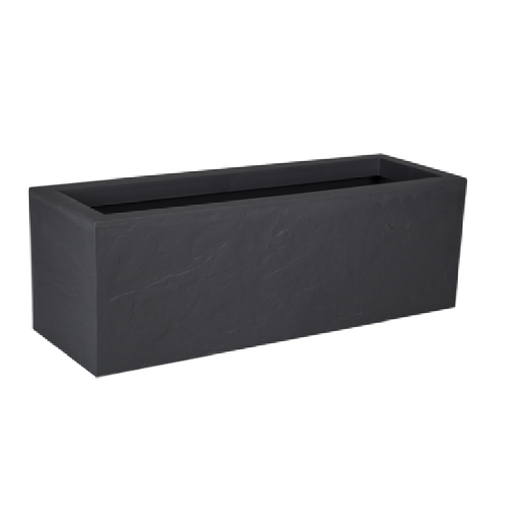
Why this choice suits this profile: with its 98-litre capacity and dimensions of 99.5 × 39.5 × 43.5 cm, it allows you to create a green screen or a generous planting arrangement.
The double wall, water reservoir and details about UV and frost protection provide more solid technical information than a simple decorative claim.
Large capacity, stone-effect finish, product stated as 100% recyclable and certified Origine France Garantie.
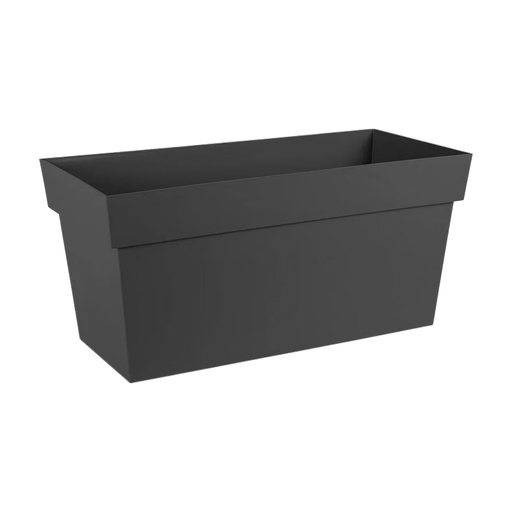
Why this choice suits this profile: with its 74 litres, castors and filling spout, this planter is ideal for terraces and balconies whose layout changes regularly.
The reservoir comes with a filter grid, a drainage system and a dedicated watering mechanism, rather than relying on a simple sealed wall.
Castors, stated UV and frost protection, recyclable materials, made in France and a 7-year commercial warranty.
We've put together a full selection, updated in real time, of products that meet these strict criteria and European safety requirements.
When you receive your planter, check the drainage holes before adding compost. For indoor use, place the container on a saucer or tray that can catch any residual water. On a balcony, check the stability of the whole setup and avoid placing a large planter near an unprotected edge.
To extend its lifespan:
It can space out some waterings by holding a quantity of water beneath the substrate. However, the frequency depends on the plant, the volume of soil, the temperature, the wind and the amount of sunlight. Check the moisture level regularly and avoid leaving the reservoir full all the time.
Yes, as long as the model is suitable for indoor use and any excess water can be collected. Large containers should be placed on a flat, protected surface that's strong enough to support the weight of damp compost.
Start by measuring the available depth and the maximum load your balcony can take. A compact rectangular planter works well for flowers and herbs. For a shrub or a large plant, gradually move up to a deeper container, without forgetting the final weight or the space needed for root development.