
Livraison le jour même ou le lendemain

Qualité garantie

Débloquez vos offres de bienvenue: Livraison GRATUITE | Jusqu'à -80 % | 30 jours d'essai gratuits à JoyPlus
Téléchargez l'application
The join between two floor coverings can quickly catch the eye: laminate flooring that stops short, tiles sitting slightly lower, fraying carpet, or a gap where dust and small debris accumulate. A self-adhesive floor threshold strip lets you conceal that transition without drilling into the floor or bringing out the heavy tools.
However, not all products meet the same needs. A poorly chosen width, a dusty surface, or a finish that clashes with your décor can turn a small renovation into a disappointing purchase. Here are the criteria to check before selecting an adhesive transition profile.
The stated width usually refers to the strip itself, not necessarily the surface area that is actually stuck down on either side of the join. To cover the junction between a wooden floor and tiles, measure the visible gap, then check that the profile sits sufficiently on both floor coverings.
A 4 cm strip may work for a standard joint, but it won't replace a profile designed to absorb a significant height difference. If the floor has a noticeable step, an adhesive PVC transition strip may not compensate for the unevenness.
A self-adhesive finishing profile only sticks properly to a surface that is clean, dry, degreased and sufficiently smooth. Dust, wax residue, crumbly grout or persistent dampness will quickly reduce the effectiveness of the adhesive.
Before fitting, vacuum the area, clean with a product compatible with your floor coverings, then leave to dry completely. Avoid installing the strip straight after a wet mop. On a very porous or uneven surface, test it on a short section first.
A wood-effect threshold strip in black, brown, cherry or grey can change the look of the transition between two rooms. A colour that contrasts too much will highlight the join instead of making it disappear. Compare the colour with the nearest floor and take the room's natural light into account.
A wood-grain finish provides visual continuity, but it won't necessarily match the exact shade of a wooden floor. It's better to think of the strip as a complementary decorative element rather than a perfect replica.
PVC is often used for floor cover strips because it's easy to cut and can follow small irregularities. The models shown here are described as flexible and resistant to scratches, stains and abrasion. These qualities make everyday cleaning easier, but they don't make the product immune to knocks or heavy traffic.
In a kitchen, bedroom or living room, choose a surface that's easy to wipe clean. In a bathroom, carefully check the compatibility of the surface, the possible presence of standing water, and the quality of the preparation. An adhesive strip should not be confused with a waterproofing solution between two floors.
The products available come in 122 cm length, 4 cm width and 0.3 cm thickness, as well as a 1-metre version. These dimensions suit many household joins, but always measure the length you need before ordering.
Cutting with scissors is handy for adjusting the join strip to a door frame or corner. For a straight cut, mark the spot with a pencil, use a ruler, and cut slowly to avoid crushing the edges.
The method involves four steps: measure, cut, remove the protective film and press. For the best result:
If the profile arrives slightly bent after transport, a gentle, brief blast from a hairdryer can help it regain its shape. However, avoid overheating the PVC or the floor covering.
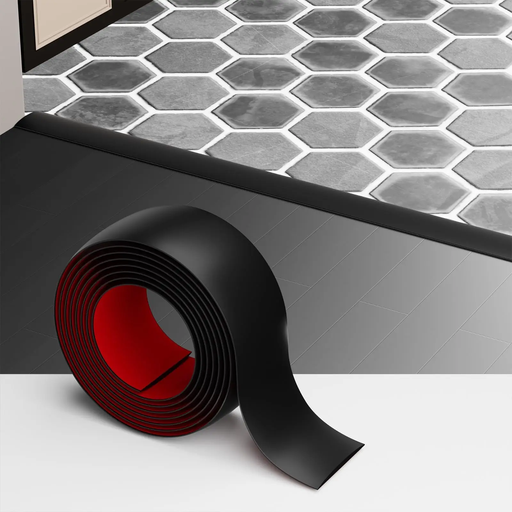
Why this choice suits this profile: Its 122 cm length, 4 cm width and scissor-cut fitting make it ideal for a first installation between two domestic floors. The black shade can add definition to a join in a kitchen, hallway or living room.
The dimensions are clearly stated, and the no-nail, no-extra-glue fitting keeps additional purchases to a minimum. Preparing the floor is still essential, though.
Flexible PVC, wood-grain finish and pre-cuttable adhesive backing for easy adjustment at home.
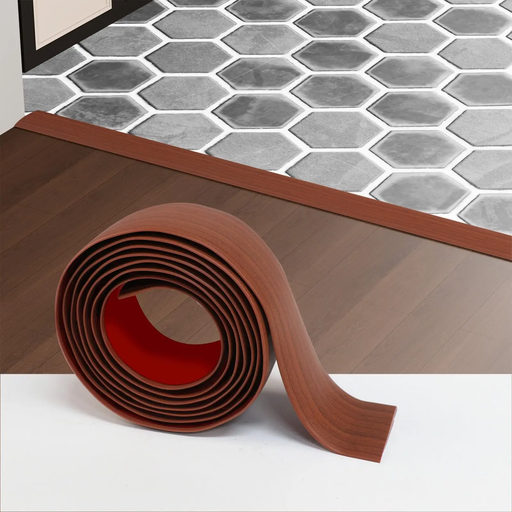
Why this choice suits this profile: Its cherry finish works well in interiors where the link between wooden floor, tiles or carpet needs to stay warm and complement wooden furniture.
The wood texture offers a more refined finish than a plain strip, while still being self-adhesive and a manageable 4 cm wide.
122 cm length, PVC described as stain-resistant and a surface that can be cleaned with a damp cloth.
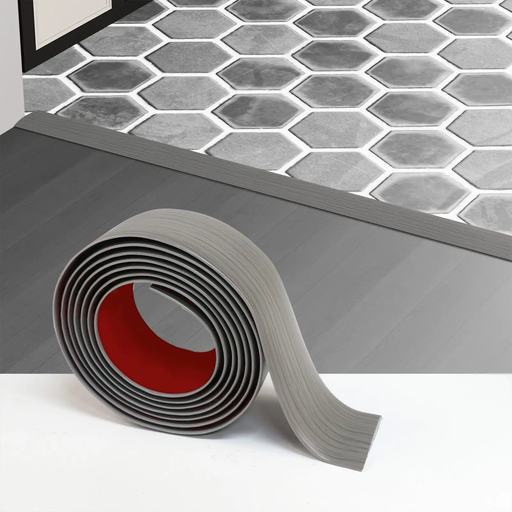
Why this choice suits this profile: The one-metre version makes it easier for small joins or repeated cuts. Its grey shade complements mineral tiles, contemporary flooring or neutral carpet.
The one-metre length reduces waste when several small areas need treating. The claimed scratch and abrasion resistance should still be paired with non-abrasive cleaning.
1-metre format, scissor-cut, flexible PVC and wipe-clean with a damp cloth.
We've put together a comprehensive, real-time updated list of products that meet these strict selection criteria as well as European safety regulations.
Clean and dry both surfaces, measure the width of the join, then cut the strip. Position it first without removing the protective film. Once you've checked the alignment, gradually peel off the backing and press firmly. If the heights are very different, choose a solution designed to compensate for unevenness instead.
Its lifespan depends on the quality of the installation, foot traffic, humidity, temperature changes and cleaning. Good adhesion is more likely on a stable, dry, degreased floor. Check the edges regularly: if they start to lift, avoid walking on them and replace or reposition the profile.
It's possible only if the surfaces are compatible and the area isn't exposed to permanent dampness or standing water. PVC can cope with some everyday use, but a self-adhesive strip is not a substitute for a sealant or a profile designed for immersion. In a bathroom, dry the surface thoroughly and check the manufacturer's instructions before buying.