
Livraison le jour même ou le lendemain

Qualité garantie

Débloquez vos offres de bienvenue: Livraison GRATUITE | Jusqu'à -80 % | 30 jours d'essai gratuits à JoyPlus
Téléchargez l'application
A self-adhesive floor threshold strip lets you quickly conceal the gap between two floor coverings, without drilling or adding glue. It can be used between laminate flooring and tiles, at the junction between vinyl flooring and carpet, or to hide a gap that has appeared after renovation work.
It is a practical solution for both homeowners and tenants who want to give a room a polished finish without calling in a professional. However, not all transition strips are created equal. An unsuitable width, inappropriate adhesive or poorly prepared surface can cause the strip to come away prematurely.
A long strip will not necessarily cover a wide gap. Before ordering, measure the space to be concealed, as well as the available supporting surface on each side. A floor transition strip that is too narrow may leave the edges of the floor coverings exposed.
Models measuring 4 cm wide are suitable for many typical residential junctions. However, if the floors have a significant height difference or the gap is uneven, check whether a wider profile or rigid threshold strip would be more suitable.
A wood-effect finish can blend elegantly into a living room, but the shade shown on screen may differ from that of your flooring. Finishes such as ‘cherry’, ‘brown’, ‘grey’ or ‘black’ will not coordinate equally well with every floor.
Compare the dominant shade, the direction of the grain and the level of contrast. A simple PVC finish can sometimes be less noticeable than a wood-effect design that is too far removed from the existing flooring.
Even a well-designed self-adhesive joining strip will not adhere well to a dusty, greasy, damp or uneven surface. After cleaning, the floor must be completely dry. Wax, cleaning product or old adhesive residue can also reduce adhesion.
Another common mistake is applying the strip to an unstable surface. If the flooring moves significantly, tiles are coming loose or the carpet is lifting, the floor gap cover may follow these movements and eventually come away.
Flexible PVC is very common in self-adhesive finishing strips. It is easy to cut and can also accommodate slight irregularities. At 0.3 cm thick, a model such as those from Art3d remains relatively discreet beneath the threshold between two rooms.
This flexibility makes installation easier, but it does not replace a levelling profile when there is a marked height difference between the two floors. In this case, examine the product’s shape and stated coverage width carefully.
For many household jobs, a 300 × 4 × 0.3 cm roll can cover a long junction or several smaller areas. A 122 × 4 × 0.3 cm format may be easier to handle for a doorway, bedroom entrance or occasional transition.
Measure each section separately. Plan a clean cut and avoid creating multiple joins in a highly visible area. For a laminate-to-tile transition, centre the strip so that it covers both surfaces evenly.
The ‘peel and stick’ design allows for easy, tool-free installation, provided the surface is prepared correctly. Remove the protective film gradually, then smooth the strip from the centre towards the ends to minimise creases and air bubbles.
In a bathroom or near a water source, read the manufacturer’s recommendations carefully. Some models are moisture-resistant, while others are intended solely for residential indoor use and are not recommended for very damp rooms. The technical information should take priority over the product’s appearance and general claims.
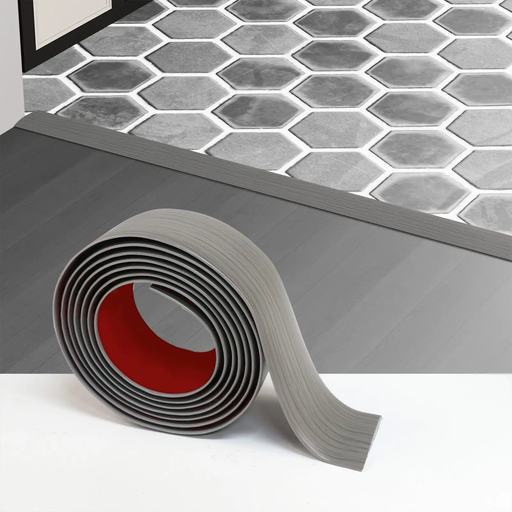
Why this choice suits this profile : its one-metre length is easy to measure and cut for a small junction in a bedroom, hallway or living room. Its grey wood-effect finish can coordinate with light floors or contemporary interiors.
Its compact format limits waste and lets you check the coverage width before tackling a longer installation.
Flexible PVC, 4 cm width, 0.3 cm thickness and can be cut with scissors, according to the product information.
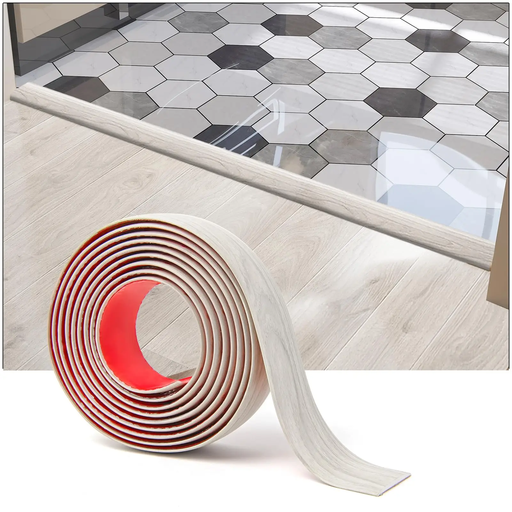
Why this choice suits this profile : its washed-white colour offers a neutral finish in interiors where the junction should remain discreet. At 3 m long, it is suitable for a renovation involving several joins.
Its width and thickness are clearly specified, making it easier to compare them with the measured gap.
300 cm length, PVC construction, self-adhesive installation and easy cleaning with a damp cloth, according to the manufacturer.
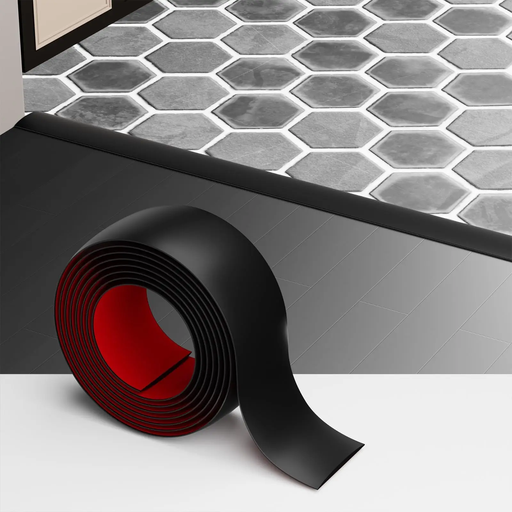
Why this choice suits this profile : its black finish creates a strong visual marker in an entrance hall, kitchen or busy area. It can also complement a contemporary interior.
The product information specifies that the surface must be clean, dry and degreased – an essential condition for minimising edge lift.
PVC described as resistant to scratches, stains and abrasion, with a width of 4 cm and installation without nails or additional glue.
For a laminate-to-carpet transition, check that the carpet does not form a raised ridge beneath the strip. If you install a floor gap cover in a damp area, follow the usage restrictions and do not treat the adhesive as a waterproofing solution.
We have put together a complete, real-time updated list of products that meet these strict selection criteria and European safety regulations.
Yes, provided the tiles are clean, dry, degreased and sufficiently smooth. Very deep grout lines or uneven tiles can reduce the contact area. Test the strip in place before removing the protective film.
Its lifespan depends on the quality of the surface, foot traffic, cleaning and exposure to moisture. Applying it to a dusty or damp surface can cause it to come away quickly. Avoid abrasive products and check the ends of the strip regularly.
Not usually. Self-adhesive models are designed to be installed without additional adhesive. Adding glue not intended for this purpose, particularly wood glue, may be incompatible with PVC and make future removal more difficult. Always follow the recommendations provided in the product information.