
Livraison le jour même ou le lendemain

Qualité garantie

Débloquez vos offres de bienvenue: Livraison GRATUITE | Jusqu'à -80 % | 30 jours d'essai gratuits à JoyPlus
Téléchargez l'application
A seal that is coming away, a crack that keeps reappearing or a shelf that looks ready to fall can quickly turn a small repair into an unexpected expense. When choosing a Rubson sealant or Pattex adhesive for your DIY projects, it is best to look beyond general claims such as “multi-purpose”, “ultra-strong” or “waterproof”.
The most common mistake is using a product that is suitable… but on the wrong surface. A sanitary silicone sealant is designed for seals, not for filling a crack in a painted wall. Similarly, a no nails, no screws mounting adhesive is not necessarily suitable for a surface that is constantly exposed to water. The format matters too: a 50 ml tube is enough for a touch-up, whereas a complete bathroom renovation will generally require a cartridge and an applicator gun. Finally, a white or transparent finish does not, on its own, guarantee compatibility with the material.
Start by identifying the two surfaces to be joined or the area to be filled:
The restrictions on use often mention PE, PP, PTFE, PMMA, flexible PVC, ABS, rigid PS, copper or brass. If your material appears on this list, do not rely solely on the “multi-material adhesive” label : consult the instructions.
A waterproof sealant helps limit water ingress in a specific area, but it cannot compensate for poor preparation or an incorrectly designed installation. Before application, surfaces must be clean, dry, degreased and free from old residue.
For a bathroom or kitchen seal, choose a silicone designed for damp rooms and advertised as mould-resistant. For a window, door or glazed partition, opt instead for a solution suitable for air and water tightness, cold conditions and the movement of the joinery. Outdoors, check resistance to UV rays, weather, moisture and temperature fluctuations.
The packaging has a direct impact on ease of use:
Also remember to clean off any excess. A joint smoothed before the product sets will generally look neater than one touched up after the sealant has dried.
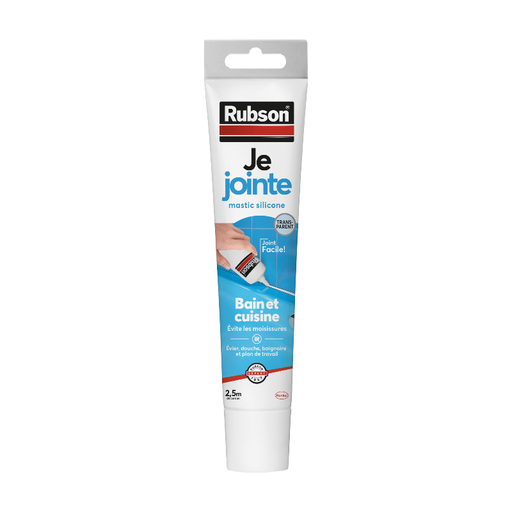
Why this product suits this profile : Its ready-to-use tube is suitable for small touch-ups around a washbasin, sink, bath or worktop, without requiring you to buy an applicator gun.
Its compact format prevents you from buying more product than you need for a short joint. However, the product information lists incompatibilities with acrylic, PE, PP, PTFE and several synthetic materials.
A transparent finish, direct application and a silicone formula advertised as resistant to water and mould.
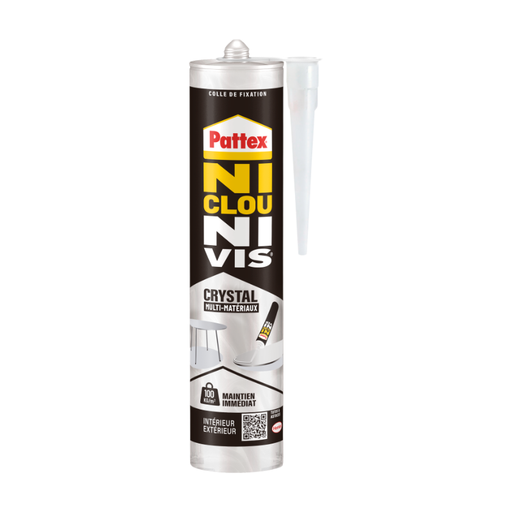
Why this product suits this profile : Its transparent adhesive is designed for installations where appearance matters, particularly on glass, mirrors, transparent plastics and decorative elements.
Its transparency comes with a precise list of uses : it does not make the adhesive compatible with every material. PE, PP, PTFE, PMMA, copper, brass and flexible PVC are excluded.
A Flextec hybrid polymer, a solvent-free formula and resistance advertised against UV rays, moisture and temperatures from −30 °C to +80 °C.
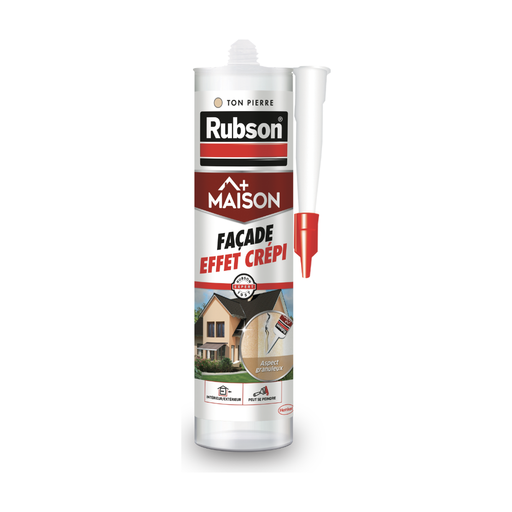
Why this product suits this profile : It is designed for façade work, joints between walls or partitions, and filling cracks in rendered surfaces, both indoors and outdoors.
Its granular texture is intended for rendered surfaces. So do not choose it simply because it is labelled “outdoor” if you are looking for a smooth finish.
An elastic acrylic sealant, weather-resistant according to the product information and suitable for painting once the recommended drying time has elapsed.
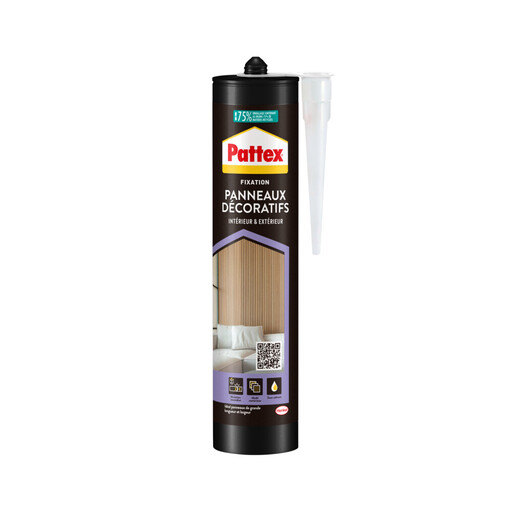
Why this product suits this profile : Its cartridge format is suitable for installing acoustic panels, wooden battens and decorative wall coverings.
The product information specifies the intended use and setting time : panels must remain properly supported until the adhesive reaches its final strength.
A solvent-free formula, application in dots or beads, and advertised adhesion of up to 15 kg/cm², according to the manufacturer’s information.
We have put together a complete, up-to-date selection of products that meet these demanding criteria, while also taking European safety regulations into account.
For fixing without drilling, support the items for the entire recommended time. A repositionable adhesive can make alignment easier, but you will often need to wait several hours before the adhesive reaches its final strength.
A Rubson sanitary silicone designed for damp environments is suitable for joints around sinks, washbasins, showers and baths, provided the materials are compatible. White, transparent or black versions allow you to match the finish to your décor. The old seal must be removed completely before application.
Yes, for small cracks and joints on compatible surfaces such as plaster, wood, cement or brick. The product must be applied to a clean, dry and properly prepared surface. A large or expanding crack, or one caused by a structural issue, requires professional advice rather than simply filling it with sealant.
The right choice depends on the surface and the environment. The Extra Strong version is intended for indoor fixing, with at least one porous material. The water-resistant version is suitable for certain indoor and outdoor applications, while the Crystal Clear version is intended for assemblies where a transparent finish is required. Always check the excluded materials, the repositioning window and the time to allow before placing the item under load.