
Livraison le jour même ou le lendemain

Qualité garantie

Débloquez vos offres de bienvenue: Livraison GRATUITE | Jusqu'à -80 % | 30 jours d'essai gratuits à JoyPlus
Téléchargez l'application
A leak under the sink, a shower seal turning black, a crack on a metal part? For these minor everyday problems, sealant is your go-to solution. But once you're in the DIY aisle, it can be overwhelming: silicone, epoxy, acrylic... How do you navigate the options and choose THE product that will guarantee a clean, long-lasting repair?
No need to worry! Our experts are here to help you make sense of it all. This guide gives you everything you need to select the perfect sealant for your project, along with a selection of reliable products for the most common applications.
To avoid mistakes and ensure your project is a success, there are three criteria to consider.
The first step: identify the surface to be repaired and its environment.
The stresses the seal will need to endure are just as crucial. An expansion joint between two materials must remain flexible, while a repair on a mechanical part must be perfectly rigid. Remember to check its resistance to temperature, tearing, or chemicals, depending on the intended use. Finally, the colour (white, transparent, black, grey...) plays a key role in achieving a neat and discreet finish.
The product's format determines its ease of application.
To put theory into practice, here is our selection of tried-and-tested products.
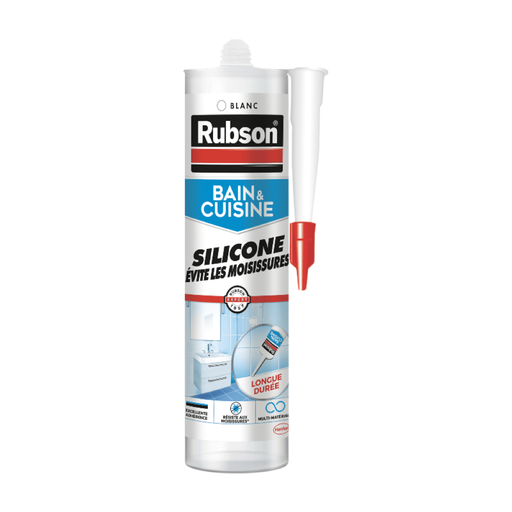
Why it stands out: This sealant is notable for its innovative "No Cutter" application system. The cartridge has a pre-cut cap and nozzle, which simplifies and speeds up application, all without a cutter. Its formula is specifically designed for humid environments.
Benefits:
Who is it for? For anyone looking to easily renovate their kitchen or bathroom seals with an effective, durable, and ultra-simple solution.
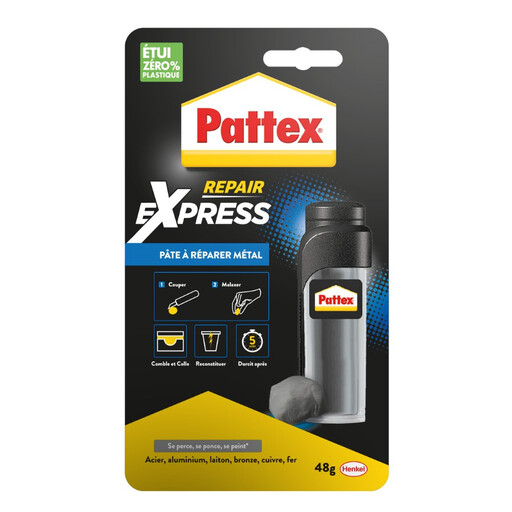
Why it stands out: This two-part epoxy resin, enriched with metal particles, doesn't just bond: it allows you to rebuild, fill, and cold weld. Once hardened, it achieves exceptional hardness and can be worked just like metal itself (drilled, sanded, painted).
Benefits:
Who is it for? For DIY enthusiasts, mechanics, or tradespeople who need to repair, bond, or even recreate metal parts subjected to heavy stress (e.g., a radiator leak, a broken mounting bracket).
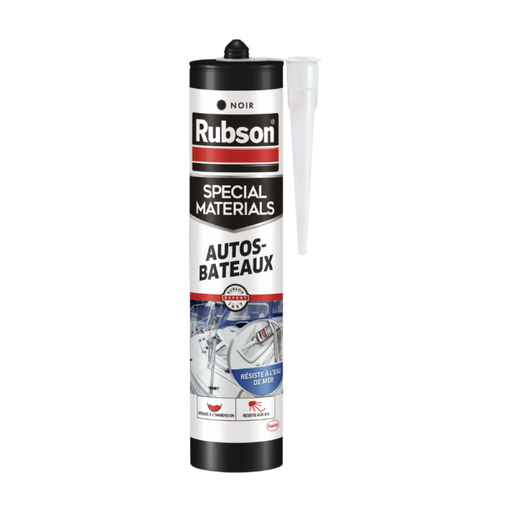
Why it stands out: This black silicone sealant is specially formulated to tackle the extreme conditions of outdoor, automotive, and marine environments, where a standard silicone would fail.
Benefits:
Who is it for? For car, motorbike, camper van, or boat enthusiasts looking for a reliable marine-grade sealant or automotive sealant for assembly, bonding, or outdoor sealing.
Our selection covers the most common needs, but every project is unique. To discover other renovation and DIY solutions, feel free to explore our full catalogue.
Discover our full DIY range on Joybuy
Silicone excels with its high elasticity and perfect waterproofing, making it the champion for wet areas (bathrooms, kitchens). Its only drawback: it cannot be painted. Acrylic, on the other hand, is easily paintable. This makes it perfect for interior finishing touches like caulking cracks or sealing skirting boards. However, it is less flexible and does not hold up well to standing water.
A silicone seal is usually dry to the touch within a few hours. However, be patient! It is crucial to wait at least 24 to 48 hours for it to fully cure before exposing it to water or stress. The safest bet is to follow the manufacturer's instructions on the silicone cartridge.
To remove an old seal, cut along the edges with a utility knife or a special tool. Then, pull on the strip of silicone to peel it away. A special silicone remover and a scraper will take care of any remaining residue. Remember: the surface must be perfectly clean, dry, and degreased before applying the new seal.