
Livraison le jour même ou le lendemain

Qualité garantie

Débloquez vos offres de bienvenue: Livraison GRATUITE | Jusqu'à -80 % | 30 jours d'essai gratuits à JoyPlus
Téléchargez l'application
A small cut, a graze, a dressing that needs securing or a heel that is starting to rub: plasters and adhesive tapes can be invaluable in everyday life. You just need to choose the right product. Medical tape designed to secure a dressing will not replace a waterproof plaster, just as an anti-blister strip should not be applied to an open wound.
The right choice depends less on the promises on the packaging and more on three practical criteria: purpose, material and format.
A fixation tape or medical tape is primarily used to hold a dressing, gauze or medical device in place. It does not necessarily include an absorbent pad and should generally not be applied directly to an open wound.
By contrast, a plaster for minor wounds has a central area designed to cover the injury. So, if you are looking for direct protection, check that it has a non-stick pad.
A waterproof plaster can protect a small wound in the shower, bath or during outdoor activities. However, its effectiveness depends on preparing the skin properly: damp, greasy or poorly cleaned skin can compromise adhesion. The plaster should also be replaced if it becomes wet, dirty or starts to come away.
The claims “water-resistant” and “waterproof” do not always offer the same level of protection. Check the instructions for use, the type of injury covered and the recommended wearing time on the packaging.
A hypoallergenic plaster is designed or tested to minimise the risk of a skin reaction. However, it cannot guarantee that every user will experience no irritation whatsoever. People with reactive skin may prefer a very soft, micro-ventilated backing that is free from natural latex.
If you experience redness, itching or a burning sensation, remove the product immediately. When using it for the first time, avoid leaving it on for several hours without checking how your skin reacts.
Focus on the information that really matters: whether or not it contains natural latex, whether the backing is breathable, whether it has micro-perforations, whether the pad is non-stick and how easy it is to remove. A stretch material moves with you, but the central pad should not be stretched during application.
For fragile skin, very soft non-woven fabric or micro-ventilated tape may feel more comfortable than a rigid fabric. As tolerance varies from person to person, always follow the manufacturer’s warnings.
A box of pre-cut plasters will easily fit in the family first-aid kit. A roll that can be cut to size is more versatile for irregularly shaped wounds, larger areas or securing dressings.
Also remember to check:
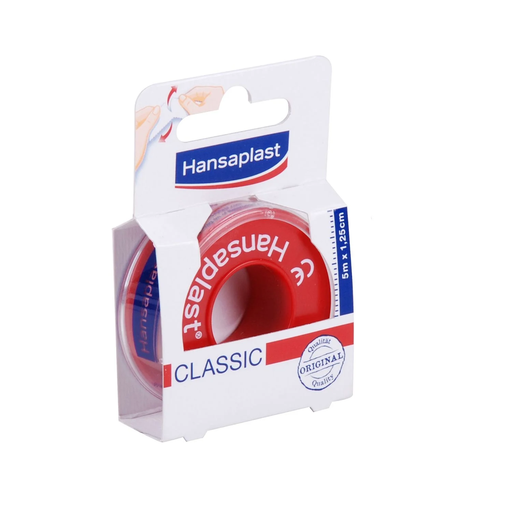
Why this choice suits this profile : This 5 m roll will easily fit in a family first-aid kit for regularly securing dressings or plasters.
Its securing function cannot be confused with that of a plaster fitted with a pad. It tears by hand, so there is no need to buy dedicated scissors.
5 m × 1 cm roll, advertised reliable adhesion, tears by hand and a latex-free formulation.
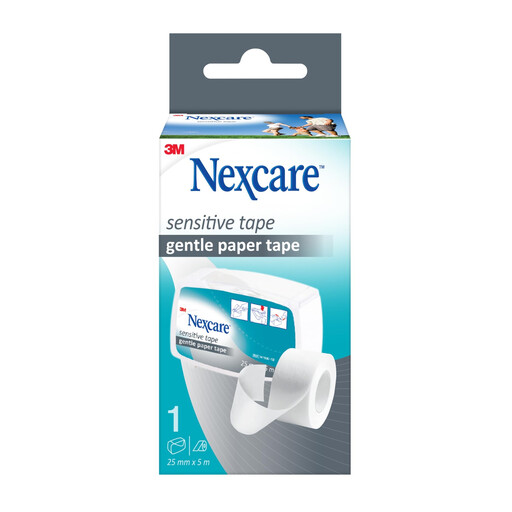
Why this choice suits this profile : Its transparent, stretchable and breathable backing is ideal for users looking for discreet fixation that can adapt to movement.
Its water resistance is advertised without being presented as unlimited protection. The tape is perforated and tears by hand.
25 mm × 5 m format, transparent appearance, stretchable and breathable material, free from natural latex.
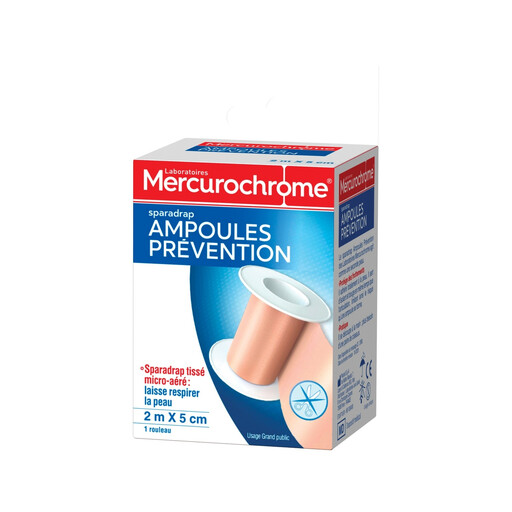
Why this choice suits this profile : Hikers, sports enthusiasts and anyone exposed to repeated rubbing can apply it to intact skin before an activity.
This is an anti-friction prevention strip, not a treatment for an existing blister or an open wound.
2 m × 5 cm roll, micro-ventilated woven fabric, tears by hand and is advertised as leaving no residue when removed.
To protect a wound from water, Mercurochrome transparent waterproof plasters and Nexcare Aqua Clear MAXI can complement a first-aid kit. People with reactive skin may prefer Mercurochrome ultra-soft, stretchable plasters, available in several sizes. As for Steri-Strip wound closure strips, they should be used in accordance with a healthcare professional’s instructions, particularly for sutured or stapled wounds.
We have brought together a complete, real-time updated selection of products that meet these demanding selection criteria and European safety standards.
A plaster directly covers a small wound with its integrated pad. Adhesive tape is primarily used to hold a dressing, gauze or medical device on healthy skin. It therefore does not replace a sterile plaster.
Replace it according to the manufacturer’s recommendations, or sooner if it becomes damp, dirty or starts to come away. Some models claim to last for up to 12 hours, but this does not mean you can stop monitoring the condition of your skin and wound.
A hypoallergenic product may reduce the risk of irritation, but cannot eliminate it completely. Clean and dry the skin around the wound, avoid stretching the plaster too tightly and remove it as soon as a reaction appears. If the injury is deep, infected, bleeding heavily or not healing, seek medical advice promptly.