
Same-day & Next-day Delivery

Quality Guaranteed

Unlock Your Welcome Offers: FREE Delivery | Up to 80% OFF | Free 30-day JoyPlus trial
Download the APP
Repainting a wall, reviving a fence or protecting a deck starts with choosing the right paintbrush. Yet product listings often highlight versatility without spelling out the real limitations. A brush that is too wide for finishing work, fibres that are incompatible with the coating, or a ferrule that warps can make the job difficult from the very first use.
This guide from Joybuy’s product recommendations manager helps you compare the features that matter and choose a paintbrush, a brush or a cleaning accessory suited to your needs in the UK.
A brush designed for emulsion paint is not automatically suitable for wood stain, a colour wash for wood or a waterproofing product. The viscosity of the coating, how it is cleaned and the surface to be treated all directly influence the choice of fibres.
For a deck, a door or a fence, look for a wood stain brush or a varnish brush whose listing clearly states this compatibility. Do not assume that a brush intended for walls will also work on household appliances or surfaces that come into contact with food.
A 100 mm brush covers large areas quickly, but it lacks manoeuvrability in corners and on mouldings. Conversely, a precision brush of 12.5 or 20 mm allows you to work on edges carefully, at the cost of a longer application time on a large surface.
The width should match the task:
Even a well-made brush can lose its shape if it is left soaking in paint or if the product dries on its fibres. Cleaning should follow the instructions of the coating manufacturer: with water for some products, with a suitable solvent for others.
Rinse the brush promptly, remove any residue from between the fibres, reshape the bristles and let it dry completely. Avoid standing it upright on its bristles. This precaution helps prevent deformation and extends the life of the tool.
A synthetic bristle brush is often suitable for paints and coatings whose instructions recommend this type of fibre. Hollow filaments can hold and then release a consistent amount of product, which is handy for edges and details. The products featured here use synthetic fibres or Bristlex imitation silk filaments; this term describes a manufacturing characteristic, but does not on its own guarantee universal results.
For a wood stain or a waterproofing product, always check the recommendations on the tin. Compatibility depends on the coating’s formulation.
A stainless steel ferrule resists moisture and corrosion better than unprotected metal. It must be firmly attached to the handle with no visible play. A beechwood handle offers a classic grip, while a threaded tip can accommodate an extension pole, which is useful for fences or decks.
Inspect the tool before each use: loose fibres, a split handle, a loose ferrule or any distortion are signs that it should be replaced.
For a smooth or semi-smooth surface, a 10 cm paint roller can be quicker than a brush. The ROLLINGDOG 4-piece kit includes a 4-inch tray, two polyester sleeves and a 6 mm frame. It is intended for walls, doors, furniture and cupboards on smooth to semi-smooth surfaces.
For narrow or uneven areas, a brush remains more precise. The right choice therefore depends less on the number of accessories supplied and more on the surface you actually need to treat.
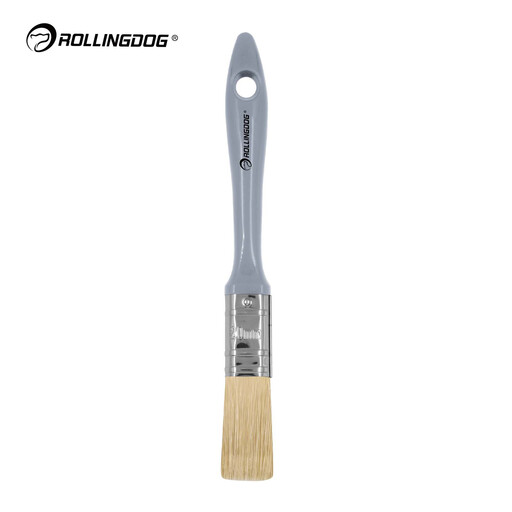
Why it suits this profile: Its 20 mm size is ideal for touch-ups, door edges and small home renovation jobs, without requiring bulky equipment.
Its limited width prevents choosing a brush that is too bulky for edges. The listing mentions a stainless steel ferrule and hollow synthetic filaments.
20 mm size; ready-to-use tool; suitable for edging and detail work, subject to the coating’s recommendations.
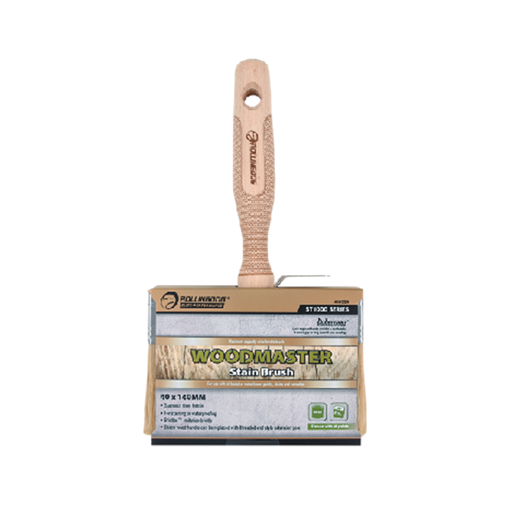
Why it suits this profile: This stain brush is designed for people who regularly maintain shutters, fences, decks or any other absorbent wood.
The listing explicitly states its use for stains and waterproofing products. The threaded handle can be used with a compatible extension pole.
Dimensions 40 × 140 mm; stainless steel ferrule; beechwood handle with threaded tip.
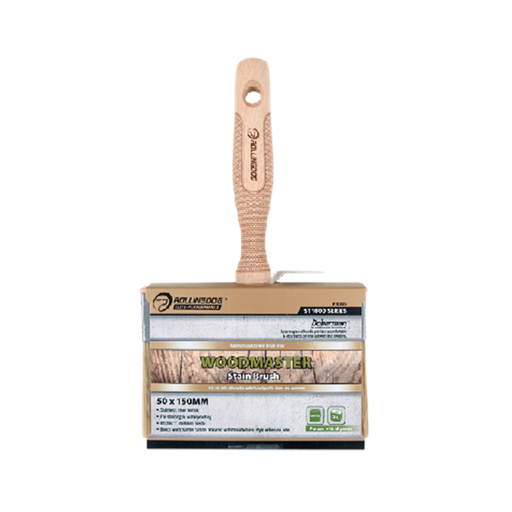
Why it suits this profile: Its greater width is ideal for large-scale wood projects, particularly fences, decks and large absorbent surfaces.
The listing distinguishes uses for stains and waterproofing from standard painting work. It also states compatibility with a threaded-tip extension pole.
Dimensions 50 × 150 mm; Bristlex imitation silk fibres; beechwood handle and stainless steel ferrule.
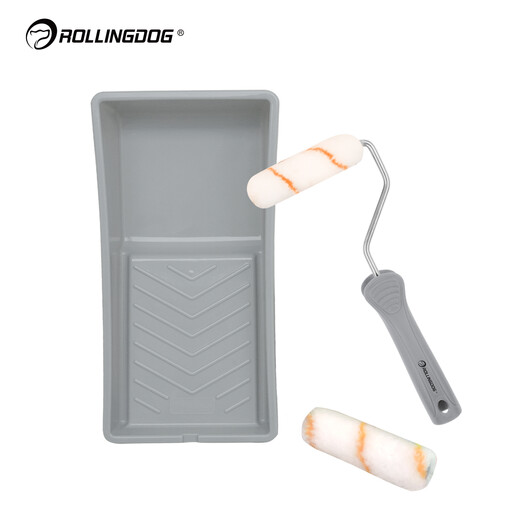
Why it suits this profile: The kit includes a tray, a frame and two 4-inch sleeves (approximately 10 cm) for wall repairs and small renovation jobs.
This is not a simple brush presented as universal, but a set intended for smooth to semi-smooth surfaces and controlled applications.
Two polyester sleeves; tray included; compatible with a conical-tip extension pole according to the product listing.
A cleaning brush is not a replacement for a paintbrush. For tile grout, choose a grout brush with tough nylon bristles, such as the JE CHERCHE UNE IDEE model. However, test the pressure on polished or scratch-sensitive surfaces.
For wheels, a 33 cm wheel brush with chenille microfibre can reach inner areas and wheel arches. Use it with a suitable product and rinse it after each use. For appliance maintenance, check exact compatibility: brushes for robot vacuum cleaners, such as the Narwal Freo X Ultra side brush set, are designed for specific models and must not be fitted to another model.
Browse an updated selection of products suited to different edging, painting and home maintenance needs.
For edges, mouldings and frames, a 20 to 50 mm brush is generally more manoeuvrable. For wide, flat panels, a 10 cm paint roller can reduce the number of coats. Then use a brush for corners and touch-ups.
Its lifespan depends on the coating, how often it is used and, most importantly, how it is cleaned. A brush that is rinsed immediately, dried flat or hung up, and then stored away from moisture, will keep its shape for longer. Replace it if its fibres come loose, harden or remain bent.
Not always. Check the product label and choose a stain brush or a waterproofing brush when that use is indicated. Wear gloves and safety goggles, ensure good ventilation and follow the manufacturer’s instructions for cleaning and disposing of residues.