
Same-day & Next-day Delivery

Quality Guaranteed

Unlock Your Welcome Offers: FREE Delivery | Up to 80% OFF | Free 30-day JoyPlus trial
Download the APP
Repainting a wall, freshening up a door or renovating a piece of furniture involves more than choosing the right paint. Painting tools have a direct impact on the evenness of the finish, the amount of product used and the time spent cleaning up. Some purchases can still prove disappointing if a few essential features are overlooked.
A 9-inch paint roller allows you to cover large surfaces quickly, provided it is paired with a compatible roller frame. The 9-inch width, or around 23 cm, is not enough to guarantee compatibility: the core diameter, usually expressed in millimetres, matters too.
A 9-inch sleeve designed for an 8 mm core will not necessarily fit a 6 mm frame. Before ordering, check the width, core diameter and attachment system.
A roller sleeve that is too thin may apply paint unevenly or wear out quickly. Conversely, a very thick sleeve is not always suitable for smooth surfaces: it may leave a heavier texture.
A polyamide roller is a versatile option for semi-smooth to semi-rough surfaces. However, the fabric weight and fibre length must be suited to the surface. On a slightly uneven wall, a 12 mm nap will help cover minor imperfections. For a smooth door or piece of furniture, shorter fibres generally provide better control over paint application.
Not all accessories are compatible with every formulation. Some pads are designed only for latex paints or water-based products. Check the manufacturer’s instructions before use and test the product on an inconspicuous area.
An accessory that is not cleaned properly can also harden between coats. An airtight paint sleeve storage container allows you to store a sleeve that is still loaded with paint temporarily between sessions, without leaving it to dry in the open air. However, it does not replace thorough cleaning at the end of the job.
Nap height, also known as the “nap”, is one of the essential criteria:
The 4-inch high-density polyamide roller shown below has a 12 mm nap and a 6 mm core. It is designed for semi-smooth to semi-rough surfaces and can be used with different paints, with particularly useful compatibility for latex paints.
In a large room, a 9-inch roller reduces the number of passes required. For small surfaces, touch-ups or furniture, a 4-inch mini paint roller offers greater precision. It is also more practical around switches, skirting boards and frames.
A kit containing a paint tray, a frame and several refills helps avoid compatibility issues. Even so, check the width and diameter of each component, particularly if you already use an extension pole.
Inside corners, door edges and window surrounds require a narrower working surface than a standard roller. A paint pad with an ergonomic handle can be suitable for flat, smooth surfaces. For the joins between two walls, a double-sided corner paint pad makes it easier to work along both planes.
To prevent marks, load the tool evenly, remove excess paint on the paint tray’s grid and apply the product in passes with a slight overlap.
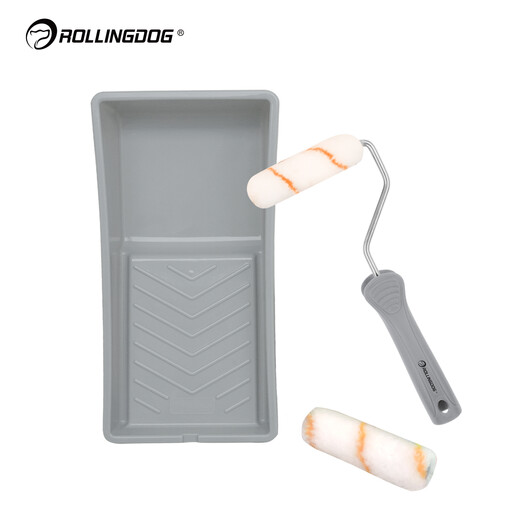
Why this choice suits this user profile : This kit includes a 4-inch tray, a 6 mm frame and two 12 mm polyester sleeves. It is suitable for small renovation jobs, touch-ups and DIY work on smooth to semi-smooth surfaces.
The components are supplied as a matching set, reducing the risk of buying an incompatible frame and refills.
Compact format, two sleeves included and compatibility with a pole featuring a tapered tip, according to the product description.
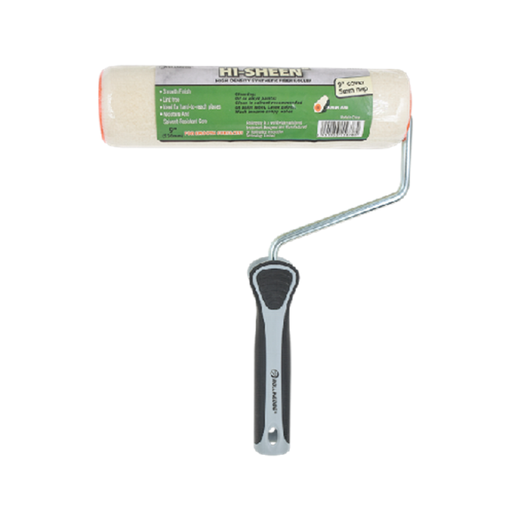
Why this choice suits this user profile : Its 9-inch format and 5 mm nap are suitable for smooth walls, ceilings, doors and furniture when you want to work quickly while keeping paint application under control.
The fibre length is clearly stated, so there is no need to automatically choose a thick sleeve for a smooth surface.
9-inch width, 5 mm nap and stated compatibility with an 8 mm frame.
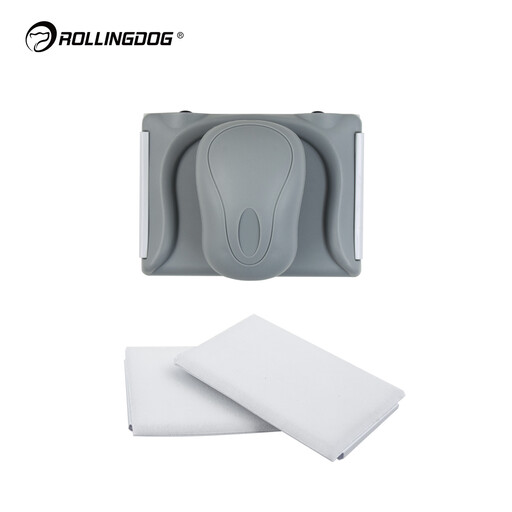
Why this choice suits this user profile : This pad is suitable for doors, furniture, mouldings and smooth edges. The two refills make it easier to continue a job involving several finishing areas.
Its compatibility is limited to water-based coatings, reducing the risk of using the nylon with an unsuitable product.
4-inch format, ergonomic handle and two nylon refills included.
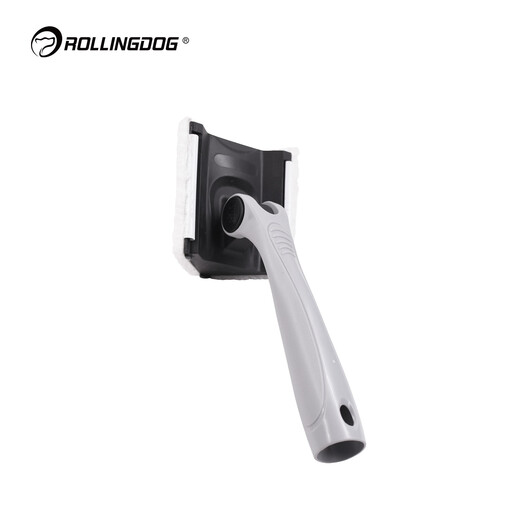
Why this choice suits this user profile : Its double-sided microfibre surface and handle, adjustable to five positions, are particularly suitable for corners, joins and hard-to-reach areas.
Its corner-specific design avoids forcing a wide roller into a join, which could leave too much paint there.
9 × 6 cm pad, double-sided microfibre and handle adjustable to five positions.
We have put together a comprehensive, regularly updated selection of products that meet these strict criteria, as well as European safety regulations.
To work comfortably, also have a roller frame suitable for the sleeve, a tray with a grid, masking tape and an airtight container for storage. The ROLLINGDOG Paint Pal Roller Sleeve Storage container accommodates sleeves up to 4.3 inches and is suitable for foam, microfibre or woven fabric models.
If you are looking for a replacement part instead, check the appliance reference carefully. The Narwal vacuum cleaner roller brush T732930 is advertised as compatible with the Narwal Freo X Ultra, Freo X Plus, Freo Z Ultra, Z10 and Z10 Ultra models. It can be fitted without tools, but the appliance must be switched off and disconnected from its station before any work is carried out. These are floor-washing vacuum cleaner accessories, not tools for applying paint.
After use, clean the sleeves according to the instructions on the paint tin: with water for some water-based products, or with the appropriate solvent for other formulations. Allow the accessories to dry completely before storing them. Replace them as soon as the fibres become flattened, misshapen or difficult to clean.
For a smooth to semi-smooth wall, consider both the roller width and nap height. A 9-inch roller is suitable for large surfaces, while a 4-inch mini roller is more practical for touch-ups and narrow areas. A 10 to 12 mm nap may be suitable for semi-smooth surfaces, subject to the paint manufacturer’s recommendations.
A sleeve can be placed temporarily in a reusable airtight storage container to slow drying between sessions. How long it can be stored depends on the paint used, the room temperature and how airtight the container is. If work is interrupted for an extended period, thorough cleaning remains the safest option.
A kit is practical for beginners or small repairs, as it generally includes a tray, a frame and compatible sleeves. Buying components separately is worthwhile if you already have a frame, need a specific diameter or want to choose a fibre suitable for several types of surface.