
Same-day & Next-day Delivery

Quality Guaranteed

Unlock Your Welcome Offers: FREE Delivery | Up to 80% OFF | Free 30-day JoyPlus trial
Download the APP
Repainting a room, freshening up a ceiling or renovating a façade involves more than simply buying a tin of paint. A well-chosen painting tool kit makes preparation easier, delivers a more even finish and reduces the need for touch-ups. Poorly matched equipment, on the other hand, can leave marks, waste paint and turn cleaning into a chore.
Before buying a professional painting set or equipment for your DIY decorating project, take the time to avoid these three common pitfalls.
A well-matched set should therefore cover three stages: protecting surfaces, applying paint to large areas and taking care of the finishing touches.
For walls and ceilings, a 23 cm paint roller is a common size. It allows you to work quickly while remaining easy to handle in a domestic room. A 30.5 cm roller is better suited to large, unobstructed surfaces, potentially with a compatible extension pole.
For touch-ups, doors, furniture and narrow areas, a 10 cm mini paint roller offers better control. Also check that the frame, sleeve and extension pole are compatible.
A polyester or polyamide sleeve with a 12 mm pile is generally suitable for smooth to semi-rough surfaces, such as prepared walls, plaster or certain plasterboard surfaces. Foam rollers can be used on smooth surfaces and for certain finishes that require even paint application.
The roller material is not the only consideration, however: it must be suitable for the paint and comply with the recommendations on its packaging. Before painting the entire room, test it in an inconspicuous area to check the amount of paint applied, the resulting texture and the drying time.
Film with a pre-installed adhesive edge can speed up application along skirting boards, windows and coving. Models measuring 150 cm or 280 cm wide can protect furniture, floors or large sections of wall. For the adhesive to hold properly, the surface must be clean, dry and dust-free.
After use, clean rollers and brushes promptly with water or the solvent specified by the paint manufacturer. Wear gloves and suitable eye protection, ventilate the room and follow waste-sorting and disposal instructions. For work at height, use compliant equipment and avoid leaning beyond its safe working area.
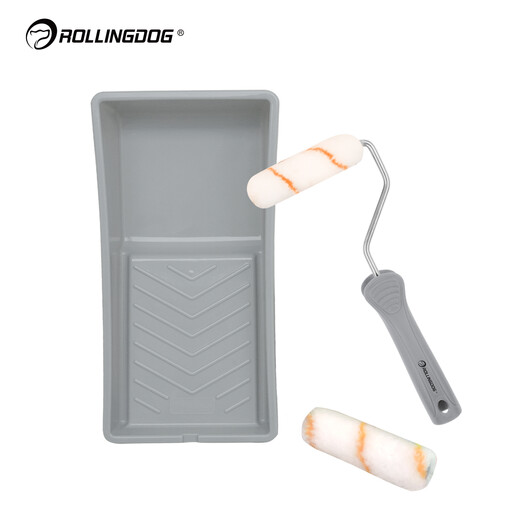
Why this choice suits this profile: This compact format is ideal for small rooms, touch-ups, doors, furniture and finishing work. It includes a 10 cm tray, a frame and two 12 mm polyester sleeves.
The 10 cm format means you do not have to handle a large roller in narrow areas and reduces the need to buy separate accessories for an occasional project.
Two sleeves included, compact handling and compatibility with a pole featuring a conical tip.
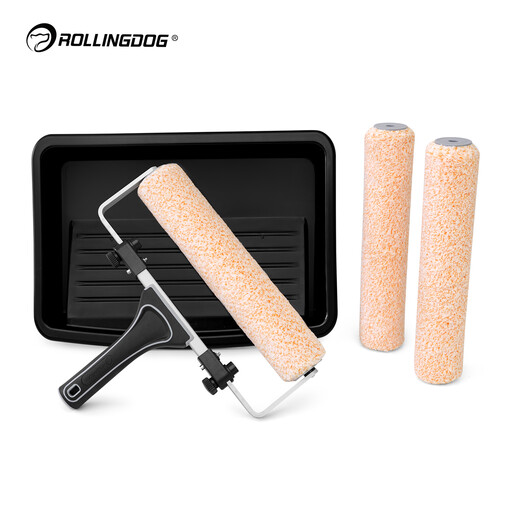
Why this choice suits this profile: This 5-piece set is designed for large surfaces: walls, ceilings and spacious rooms. Its adjustable frame accepts sleeves measuring 23 to 30.5 cm.
The adjustable width allows you to match the tool to the surface instead of using the same roller in every situation.
Three 30.5 cm microfibre sleeves, an adjustable aluminium frame and a conical pole connector.
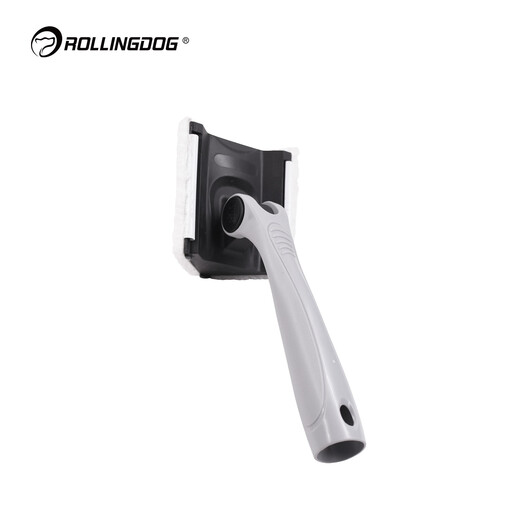
Why this choice suits this profile: This corner paint pad is designed for wall junctions, edges, doors, furniture and fences. Its double-sided microfibre surface measures 9 × 6 cm.
It complements a roller in corners rather than trying to replace it. Its handle adjusts to five positions, allowing you to work at different angles.
Double-sided microfibre and a five-position handle, with no assembly required.
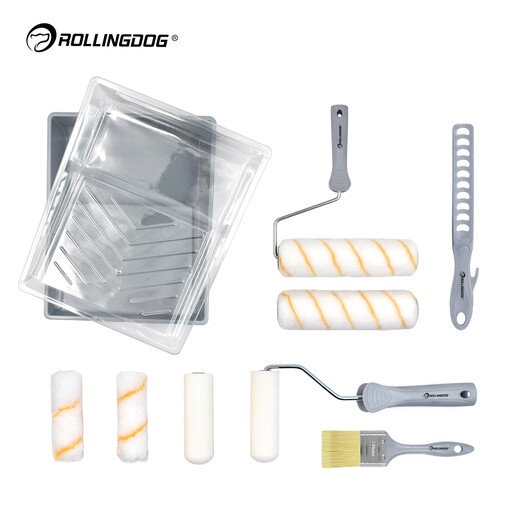
Why this choice suits this profile: This wall and ceiling kit includes a 23 cm roller, a 10 cm mini roller, polyester and foam sleeves, a 50 mm brush, a tray and three disposable liners.
The range of formats means you do not have to rely on a single tool for walls, edges and small surfaces.
14 items, 12 mm sleeves, frames compatible with a click-fit pole and disposable tray liners.
For a cleaner renovation, add pre-taped masking film in the appropriate size. The 150 cm × 30 m model protects floors and furniture over a long length, while the 280 cm × 15 m version is suitable for wider surfaces and bulky furniture. Follow the stated removal time, temperature limits and application recommendations after testing it on a small area.
20, 40 and 50 mm brushes are an effective complement to a roller for painting skirting boards, frames, woodwork and areas requiring touch-ups. Clean them, dry them and then gently reshape the bristles before storing them. This organisation avoids duplicate purchases and turns a simple assortment of decorating accessories into a coherent set of equipment, ready to use on multiple projects.
We have put together a complete, real-time updated list of products that fully meet these strict selection criteria and European safety regulations.
At a minimum, you will need a 23 cm roller, a 10 cm mini roller, a brush for edges, a tray, a grid or liner, and masking film or a dust sheet. When painting a ceiling, a compatible extension pole can save you from repeatedly climbing up and down.
It depends on how often it is used, the type of paint and how well it is cleaned. A sleeve washed immediately, dried thoroughly and stored away from dust can be used for several projects. Replace it when its fibres become flattened or tangled, or when it leaves marks. A brush should be replaced as soon as its bristles become misshapen or start to come loose.
A complete kit is a good choice for a renovation requiring several sizes and accessories. For a simple touch-up, a mini kit or a single brush can help keep costs down. Always compare the actual contents, roller dimensions, materials used and compatibility with your paint before making your choice.