
Same-day & Next-day Delivery

Quality Guaranteed

Unlock Your Welcome Offers: FREE Delivery | Up to 80% OFF | Free 30-day JoyPlus trial
Download the APP
An outdoor planter needs to withstand the weather, provide enough space for your plants and blend naturally into your outdoor setting. Yet disappointing purchases often come down to the same mistakes: misjudged dimensions, inadequate drainage or a material that fades after just a few seasons. Before choosing an outdoor flower pot, it is therefore worth considering a few practical criteria rather than relying solely on the colour or the photo.
A planter with a water reservoir can reduce how often you need to water, but it does not eliminate the need for suitable drainage. Permanently stagnant water can weaken the roots, particularly indoors or during periods of heavy rain.
Check for pre-drilled holes, a retention area or a removable plug. The system should suit the intended location: open drainage for a patio exposed to rain, or controlled water retention for certain plants and sheltered areas.
A large-capacity planter may seem ideal for planting a shrub or creating a colourful display. Once filled with damp compost, however, it can become extremely heavy. On a balcony, loggia or raised patio, you therefore need to consider the location and the stability of the whole arrangement.
Measure the available surface area, check the width of access routes and avoid placing a heavy container near an edge unless it is resting on a stable support. On a narrow balcony, a 50 cm rectangular planter will often be easier to install than a one-metre-long trough.
A stone, terracotta or metal finish is not enough to assess a container’s durability. For outdoor use, look for precise information about frost resistance, UV resistance and resistance to temperature fluctuations. A frost- and UV-resistant pot will generally retain its appearance and strength better over the seasons, provided you follow the manufacturer’s recommendations and take local conditions into account.
The shape of the planter should suit the available space and the plant’s growth:
The stated capacity does not always correspond to the amount of compost you will actually need to add. Take the water reservoir, drainage system and size of the root ball into account.
A moulded plastic planter or a polypropylene model can be lightweight, easy to move and simple to clean. Recycled or recyclable materials may also suit a more responsible approach to shopping. However, take care not to confuse the two concepts: a product may be made from recycled material, be recyclable at the end of its life, or have both characteristics.
For routine care, a damp cloth is generally all you need. Avoid abrasive products, which could dull an anthracite finish or stone-effect decoration.
A water reservoir is useful when watering is infrequent or when a plant benefits from consistent moisture. However, it does not replace checking the compost. In winter, retained water and damp soil can intensify the effects of frost. Make sure the openings remain clear and follow the recommendations specific to the model and plant.
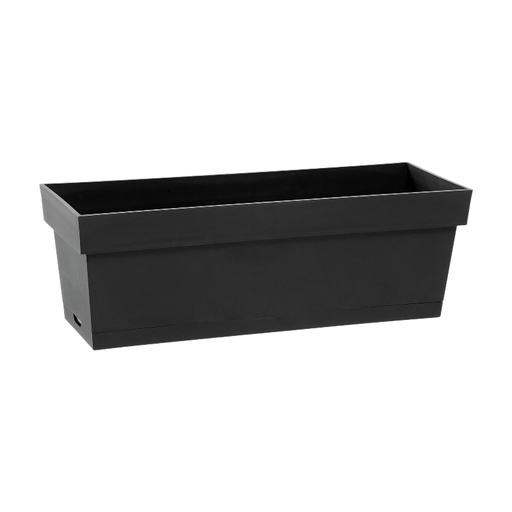
Why this choice suits this profile : Measuring 50 × 18 × 16.7 cm, it is suitable for balconies, window sills and patio edges. Its compact format makes it easy to arrange flowers or aromatic herbs.
Its compact format reduces the risk of choosing a trough that is too bulky or heavy for a small space.
Moulded plastic, net weight of 0.68 kg, stated French manufacture and anthracite-grey finish.
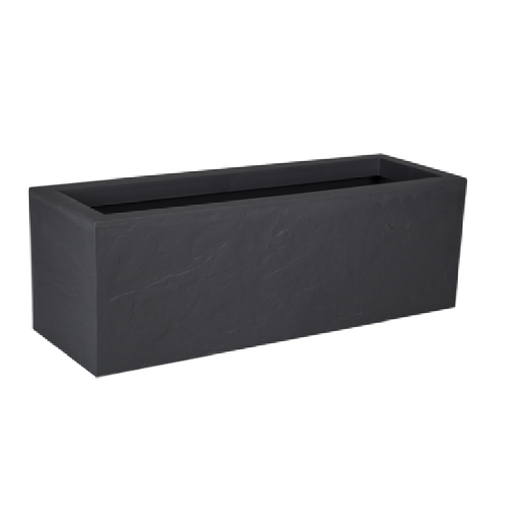
Why this choice suits this profile : With a capacity of 98 litres and a stone-effect finish, this trough accommodates a generous floral display or a shrub, while adding an elegant structure to a patio.
The double wall and retention system are clearly specified. This allows you to check that the way it works matches your needs before buying.
98-litre capacity, UV protection, frost resistance, 100% recyclable product and stated Origine France Garantie certification.
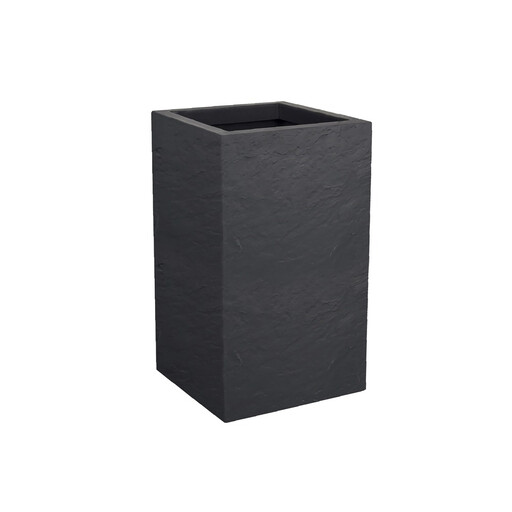
Why this choice suits this profile : Standing 49.5 cm tall, its square shape creates a vertical focal point on a patio, near an entrance or in a garden, while retaining a capacity of 36 litres.
The retention base and pre-drilled holes are clearly specified, helping to prevent mistakes related to watering or a lack of drainage.
36-litre capacity, anthracite finish, UV protection, frost resistance, modular design and stated Origine France Garantie certification.
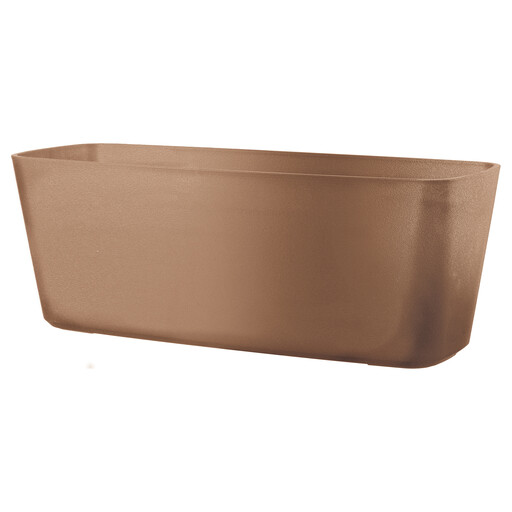
Why this choice suits this profile : Its removable plug lets you choose between draining water outside and retaining it for indoor decoration, depending on how it is installed.
The removable plug makes the water-management mode visible and adjustable, rather than imposing drainage that cannot be controlled.
Recycled and recyclable material, stated frost and UV resistance, easy care with a damp cloth and no assembly required.
We have compiled a complete, real-time updated selection of products that meet these demanding criteria and European safety standards.
Place the container on a flat, stable surface. On a balcony, distribute the load carefully and avoid moving a full planter. Before planting, check the drainage openings and choose a growing medium suited to the species.
To avoid unpleasant surprises:
When offered, the guarantee covers the conditions specified by the manufacturer. It does not replace proper installation or regular care.
Measure the available length and depth, as well as the height of the balustrade. A shallow rectangular planter is suitable for flowers and herbs. For a shrub, allow for a larger capacity and check the total load, including the compost and water.
It can make some watering less frequent, depending on the plant, season, exposure and reservoir capacity. However, the growing medium should not remain saturated all the time. Check its moisture level regularly and make sure the drainage system is working properly.
Look for an explicit statement of frost and UV resistance in the product description. Even a container designed for outdoor use must be placed on a stable base and remain properly drained. In severe frost, damp soil can exert considerable pressure on the walls.