
Livraison le jour même ou le lendemain

Qualité garantie

Débloquez vos offres de bienvenue: Livraison GRATUITE | Jusqu'à -80 % | 30 jours d'essai gratuits à JoyPlus
Téléchargez l'application
Are you looking for a non-alcoholic malt drink to replace fizzy drinks or accompany a meal without opting for a standard beer? In France, the available options can sometimes look very similar: a 330 ml can, a carbonated malt beverage, a recipe enriched with B vitamins, or a family pack. Yet their ingredients, sugar content and packaging can vary significantly.
Before buying a non-alcoholic malt drink, take a moment to check three things: what it actually contains, the amount of sugar per can, and the format that suits your consumption. Here are the main criteria to examine when comparing different options, rather than relying solely on the packaging.
An alcohol-free drink isn't necessarily low in sugar or calories. The information provided for certain Supermalt references, for example, shows 12.8 g of sugar and 62 kcal per 100 ml. A 330 ml can therefore contains around 42.2 g of sugar and 205 kcal.
The term "alcohol-free" only tells you about the alcohol content: it says nothing about the sugar level. To compare products, always multiply the values given per 100 ml by 3.3 when dealing with a 330 ml can.
Some products are marketed as drinks rich in B vitamins. Supermalt's product sheets mention vitamins B1, B2, B3, B5 and B6, while Maltina claims to contain vitamins A, B and C as well as calcium. These details describe the recipe, but they are not a medical opinion.
It's better to check the nutritional table and the ingredients list than to be swayed by the can's design. An enriched drink can also contain a significant amount of sugar.
A pack of malt drinks can be a good idea if you drink them regularly, but it requires more storage space. Before opening, cans should generally be kept in a dry place at room temperature, away from direct sunlight. Once opened, the drink should be consumed quickly and, if the label says so, stored in the fridge.
Also remember to check the best-before date printed on each carton. For occasional consumption, buying a few individual cans may be more practical than a 24-pack.
Malt is usually made from barley, sometimes combined with sorghum. Supermalt, Hyper Malt and Vitamalt recipes indicate the presence of barley containing gluten. Maltina also mentions barley malt and malted sorghum.
If you need to avoid gluten, read the label in full and don't rely solely on the "alcohol-free" claim. In France, allergens must be clearly listed in the ingredients or in a dedicated statement.
The 330 ml malt drink format is typically a single serving. A can is easy to store and serve at the table, during a picnic or at a party. Glass bottles may be more suitable for a meal, but they are heavier and require more care during transport.
For daily consumption, compare the price per litre rather than just the carton price. A 6-pack lets you try a recipe without too much commitment, while a 24 × 330 ml format is more aimed at households, associations or events.
Most malt drinks are fizzy and slightly sweet. The data provided for Hyper Malt shows around 14.5 to 15 g of sugar per 100 ml, depending on the variant. Vitamalt Classic, meanwhile, lists 14 g of sugar and 67 kcal per 100 ml.
Carbonation also affects the mouthfeel. A carbonated malt drink will feel more refreshing when served very cold, while a more malty and sugary recipe will give a richer impression. To know the exact composition, always check the label on the product you receive: the information can change depending on the market and the batch.
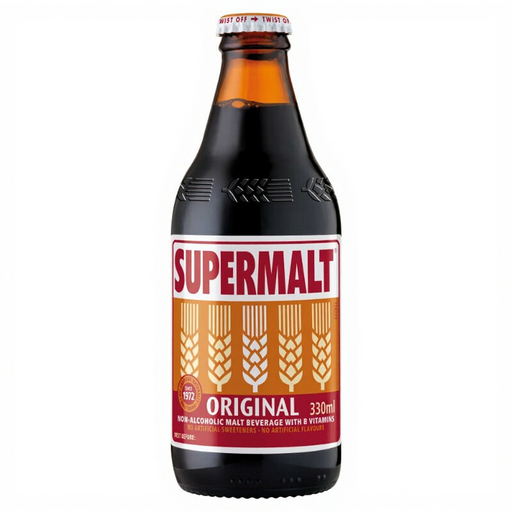
Why this choice works: A single-serving format to discover an African-inspired malt drink, perfect with a meal or as a refreshing break.
The product page clearly states the presence of barley and gluten, as well as the nutritional values: you can check the composition before buying.
330 ml can, 10.1% barley malt and B vitamins listed in the recipe.
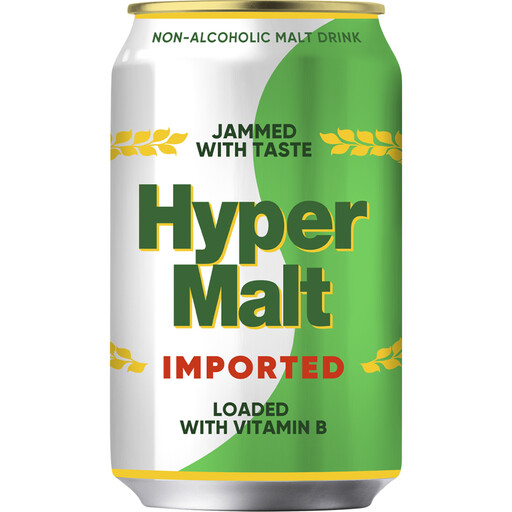
Why this choice works: This product is aimed at those looking for a well-carbonated drink with a pronounced malt flavour, best served very cold.
The product specifies a 12.9% barley malt content and shows the sugar per 100 ml, making it easy to compare with other recipes.
330 ml format, barley malt, hops and room-temperature storage before opening.
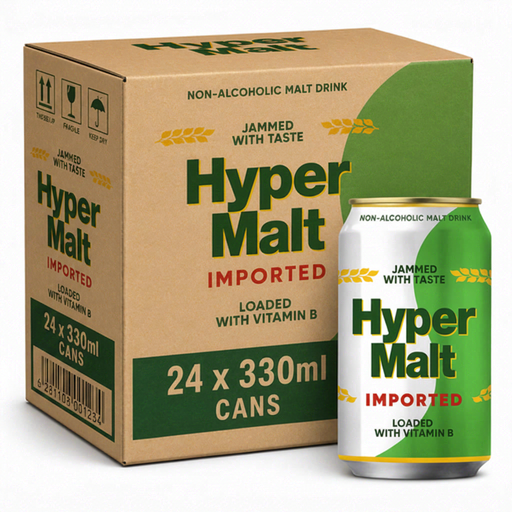
Why this choice works: The 24-can carton is ideal for families, associations and events where several people are looking for an alcohol-free alternative.
The packaging is clearly stated: you can estimate the total volume and the space needed before ordering.
24 cans of 330 ml, 12.9% barley malt and detailed allergen information.
We've put together an updated selection of malt-based drinks and products so you can compare formats, recipes and packaging.
No, not necessarily, but many products are made from malt or barley. Supermalt, Hyper Malt, Vitamalt and Maltina all indicate the presence of barley containing gluten. Check the label of each product before consuming it.
Most products are best enjoyed chilled. Place the cans in the fridge before the meal, then drink the beverage quickly after opening. Avoid freezing it: the carbonation and the container could be damaged.
The total price may be better per litre, but it depends on the offer and delivery costs. Calculate the price per can and the price per litre, then consider your storage space and how often you drink it.