
Livraison le jour même ou le lendemain

Qualité garantie

Débloquez vos offres de bienvenue: Livraison GRATUITE | Jusqu'à -80 % | 30 jours d'essai gratuits à JoyPlus
Téléchargez l'application
Whether you're mounting a shelf without drilling, repairing a precious object, or ensuring a comfortable fit for a dental prosthesis, finding the right mounting adhesive can quickly become a headache. The shelves are overflowing with promises: "extra strong," "instant," "all-purpose." Yet, the wrong choice almost always ends the same way: a bond that fails, a damaged material, and money thrown down the drain. Before you decide, watch out for these two common pitfalls:
To avoid these setbacks, forget the marketing slogans and focus on a few purely technical criteria.
Choosing the right adhesive is, above all, about finding the product whose technology precisely matches your project. Here are the three points to check every time.
Each major family of adhesives has its specialty.
This is a fundamental criterion.
An adhesive used for a baseboard in a hallway is not subjected to the same stresses as a fixture on a terrace. Always check if the product is a water-resistant glue, and if it's resistant to humidity, UV rays, and temperature fluctuations (usually indicated in °C on the packaging). An indoor-only adhesive will lose all its effectiveness if exposed to the elements.
To help you see more clearly, we've matched user profiles with the most suitable solutions, applying the criteria we've just covered.
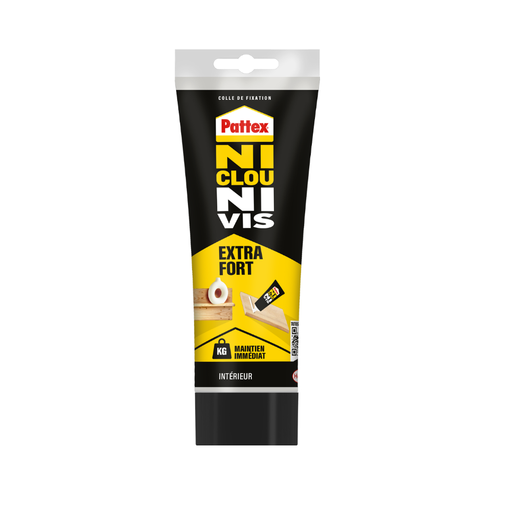
Why we chose it: Ideal for small indoor fixes when you don't want to get the drill out. Perfect for installing baseboards, battens, or decorative objects on plaster or brick walls. Simple, clean, and effective.
It doesn't claim to be universal. Its technical sheet clearly states its use: indoor and on porous materials, thus preventing application errors.
Solvent-free formula, ideal for living spaces. Powerful fixing without drilling or screwing, for a quick and damage-free job.
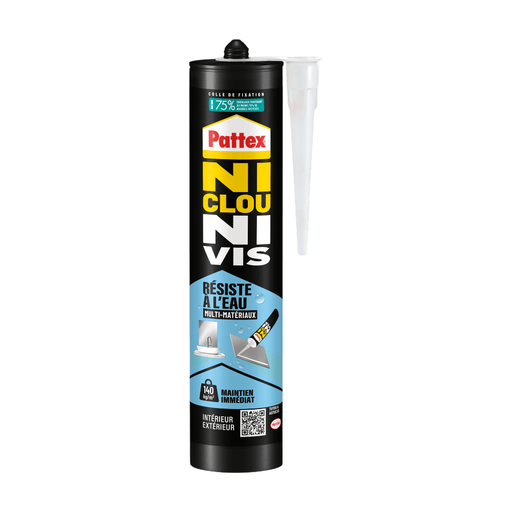
Why we chose it: For more ambitious projects that require a durable bond both indoors and outdoors. Ideal for gluing wall panels, decorative elements in a bathroom, or accessories on a terrace.
It directly addresses the pitfall of usage conditions. Its Flextec formula is designed to resist water, humidity, and temperature variations (-30°C to +80°C).
Indoor/outdoor versatility and a powerful instant grab. It is repositionable for 10 minutes, allowing for precise adjustment.
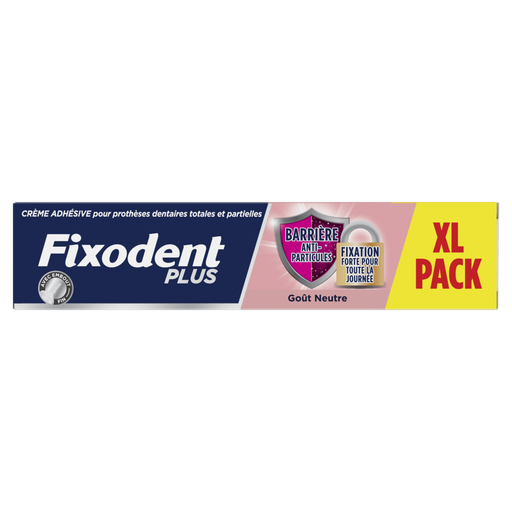
Why we chose it: For denture wearers looking to avoid the discomfort caused by food particles getting trapped under their appliance. A targeted solution for everyday peace of mind.
This denture adhesive cream is not a DIY glue. It is specifically formulated for oral use, meets health safety standards, and addresses a very specific need.
Its fine-tip applicator allows for precise application to create an effective barrier against food particle infiltration, which improves comfort throughout the day.
We have compiled a complete list of products that meet our selection criteria and current safety standards.
The main difference lies in their use and composition. A mastic adhesive is thick, flexible, and designed to support heavy loads and fill gaps, making it ideal for construction. Super glue (cyanoacrylate) is liquid, has a very fast setting time, and is used to precisely bond small parts on smooth surfaces. Mastic is for strength and flexibility; super glue is for speed and finesse.
It depends on the product. Many mastic adhesives, like those in the Pattex range, can be painted after a full cure (usually 24 hours). This is a real plus for a flawless finish. On the other hand, cyanoacrylate glues or certain specialty adhesives are not designed to be painted. Always check this information on the product's packaging.
You shouldn't confuse "instant grab" with "final strength." The instant grab allows you to let go of the object after a few seconds. However, the final strength, which is the maximum solidity of the bond, is often not reached until after 24 to 48 hours. Putting stress on the bond too early is a common mistake that compromises the result. Patience is therefore the key to a successful bond.