
Livraison le jour même ou le lendemain

Qualité garantie

Débloquez vos offres de bienvenue: Livraison GRATUITE | Jusqu'à -80 % | 30 jours d'essai gratuits à JoyPlus
Téléchargez l'application
Whether you're a passionate mechanic, a weekend DIYer, or just someone who likes to be prepared for breakdowns, a good mechanic's tool case is an essential investment. The problem? The market is flooded with offers, each one seemingly more tempting than the last. Faced with hundreds of pieces and promises of durability, it's easy to fall for the classic traps... and end up quickly disappointed.
As the Head of Product Recommendations at Joybuy, my role is to help you cut through the noise. Let's break down the pitfalls to avoid and the real technical criteria that make all the difference in choosing wisely.
Before you jump on a sale, it's crucial to recognise the signs of a poor-quality product, often hidden behind slick marketing.
For a car maintenance kit or general DIY, three parameters deserve your full attention. These are what guarantee the quality and longevity of your future tool case.
Don't be fooled by vague descriptions. The quality of the steel is what determines a tool's strength.
The ratchet set is the king of tools for working quickly and efficiently, especially in tight spaces. Its precision is directly dependent on the tooth count of its mechanism.
It bears repeating: a complete tool kit isn't the one with the most pieces, but the one with the right pieces. Make sure it contains the following essentials:
To help you see how these criteria apply in practice, here are a few options that cater to distinct user profiles.
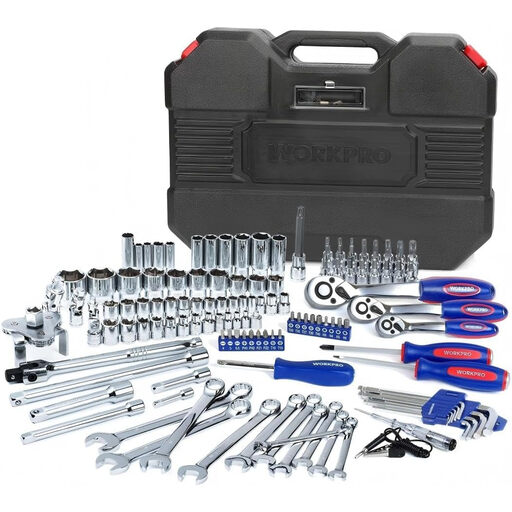
Why we chose it: Ideal for anyone looking for a do-it-all kit for the home and car without breaking the bank. Perfect for everyday repairs, assembling furniture, or basic vehicle maintenance.
This kit doesn't fall into the "more pieces is better" trap. It focuses on the essentials (sockets, ratchets, wrenches...) instead of overwhelming the user with a mountain of superfluous bits.
Its greatest strength? The combination of all three drive sizes (1/4", 3/8", 1/2"), which gives it maximum versatility. The tools, made from Cr-V steel with a chrome finish, are a guarantee of good durability.
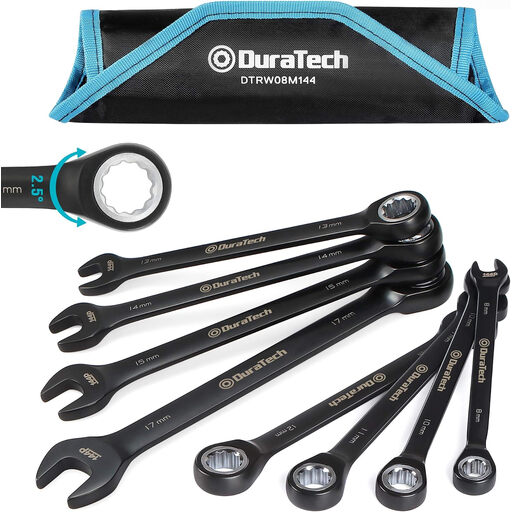
Why we chose it: The perfect solution for the pro or the advanced enthusiast who often works in cramped engine bays where every degree of movement is crucial.
It bypasses the low-quality ratchet trap by incorporating a high-performance 144-tooth mechanism. It's built for precision and reliability under high stress, where a standard model would give up.
Its swing arc of just 2.5 degrees is a real asset in the most inaccessible areas. The Cr-V steel construction with a black chrome finish enhances its corrosion resistance.
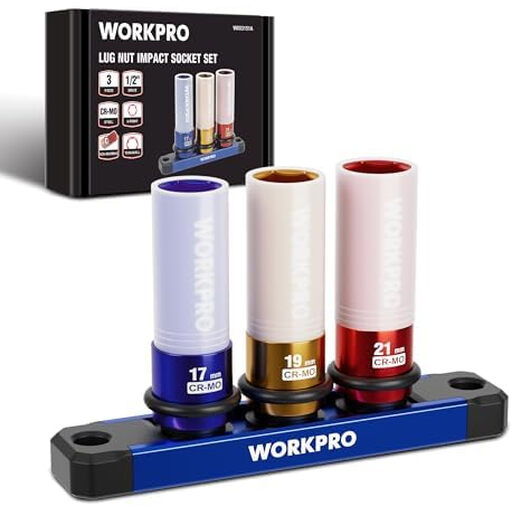
Why we chose it: The essential accessory for anyone who regularly changes their tyres and wants to protect their precious alloy wheels. No more scratches or chips!
Unlike standard sockets that risk scratching rims, this kit is designed entirely for their protection. It will save you from the hefty bill of repairing a wheel damaged by an unsuitable tool.
The Cr-Mo steel ensures maximum impact resistance (ideal with an impact wrench), while the plastic sleeve and internal insert provide double protection for both the wheel and the lug nut.
We have selected a full range of products for you that meet our criteria for quality and performance.
To put it simply, Chrome Vanadium (Cr-V) steel is the Swiss Army knife of tool steels. It's highly versatile and offers an excellent balance of hardness and strength, ideal for hand tools (wrenches, ratchets...). Chrome Molybdenum (Cr-Mo) steel, on the other hand, is a marathon runner. It's more durable and can better withstand impacts and fatigue, making it the material of choice for impact sockets used with an impact driver.
Yes, absolutely! A 72-tooth ratchet, with its 5° swing arc, is already very effective and will get you out of most situations in auto mechanics. Models with more teeth (100, 120, 144) offer superior working comfort in the most inaccessible spots, but they are more of a convenience than a necessity for everyday use.
Even the best steel isn't immortal. To prevent rust, a few simple steps are all it takes. After each use, wipe your tools with a dry cloth to remove grease, oil, and moisture. Then, always store everything back in the case, and keep it in a dry place. A pro tip? Occasionally spraying a light coat of protective oil (like WD-40) on the metal parts, especially the ratchet mechanism, will significantly extend their lifespan.