
Livraison le jour même ou le lendemain

Qualité garantie

Débloquez vos offres de bienvenue: Livraison GRATUITE | Jusqu'à -80 % | 30 jours d'essai gratuits à JoyPlus
Téléchargez l'application
Whether you're a weekend DIYer or a passionate hobbyist mechanic, choosing the right tools can quickly become a real headache. Faced with an overwhelming number of models and vague marketing claims, it's easy to make a mistake. To avoid buyer's remorse, here are the most common pitfalls to watch out for before you pull out your credit card.
To make the right choice, it's essential to understand a few key technical concepts that determine the performance and lifespan of your tools.
Torque measures the tool's rotational force. High torque is essential for heavy-duty tasks, like loosening lug nuts in automotive mechanics, where a powerful impact wrench works wonders. Conversely, for assembling furniture or working on electronics, a low, finely adjustable torque is your best friend to avoid causing damage. A good cordless drill/driver will always feature a torque adjustment collar to adapt to different materials.
For cordless power tools, the battery is the heart of the system. Choosing a brand that offers a wide range of tools compatible with the same battery platform (e.g., 18V or 24V) is a winning long-term strategy. This allows you to buy your next "bare" tools (sold without a battery or charger) at a much better price, while also simplifying the management of your tool arsenal. Check the battery's capacity, expressed in amp-hours (Ah), which directly impacts its runtime.
The durability of a hand tool depends on the steel used. For a socket set or a ratchet wrench, opt for models made of Chrome Vanadium (Cr-V) Steel. This alloy offers excellent resistance to torsion and corrosion. For screwdriver bits, S2 steel is the gold standard: it's harder and better withstands the wear and tear of intensive fastening and unfastening. A good surface treatment (like black phosphate coating) also improves durability and the smooth operation of parts.
Rather than an exhaustive list, here are a few suggestions tailored to specific profiles and needs, all while avoiding the pitfalls we've just discussed.
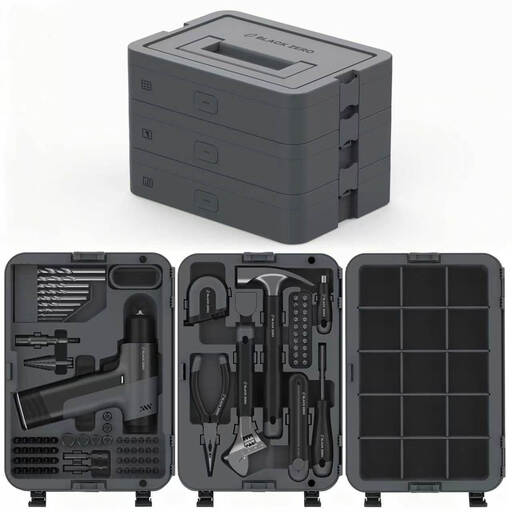
Why we love it: This set is perfectly tailored for everyday small repairs and home DIY projects. It combines a cordless drill with essential hand tools in a compact and cleverly organised format.
Unlike 'catch-all' cases, this set features a patented compartmentalised structure. Every tool has its dedicated spot, so there's no more clutter or time wasted searching for the right bit.
The combination of a cordless drill and hand tools in a single, well-organised case makes it an ultra-practical and coherent starter kit.
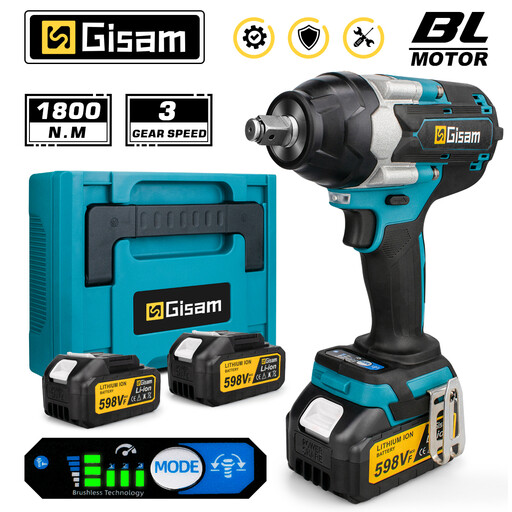
Why we love it: Built for heavy-duty **auto mechanics**, this impact wrench delivers monstrous torque to tackle the most stubborn bolts, like those on wheels or suspension components.
This tool is compatible with Makita 18V batteries, one of the most popular platforms on the market. This means you aren't locked into an obscure brand and can easily expand your toolset.
Its truck-like torque (up to 1800 N·m!) and brushless motor are a guarantee of power and longevity for intensive mechanical use.
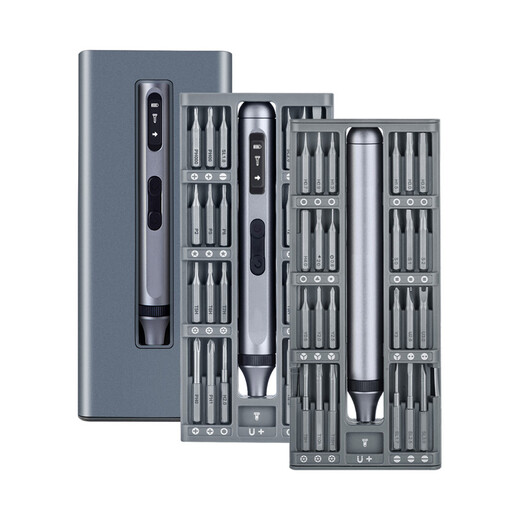
Why we love it: Essential for repairing electronics (smartphones, PCs, watches), this screwdriver offers precise control and a wide array of specialised bits, all in an ultra-handy pen-style format.
This proves that the race for torque is a mistake. With its electric torque of 0.3 N·m, it's calibrated for gentle fastening, eliminating the risk of damaging tiny screw threads or printed circuit boards.
The kit includes 48 magnetic bits to cover nearly all micro-fastening needs, as well as tweezers and a spudger (plastic pry tool) for delicate disassembly.
Explore our complete, up-to-date selection of tools that meet our demanding selection criteria and current safety standards.
A drill/driver is the ultimate multi-purpose tool: it drills and drives screws, with an adjustable torque. Its rotation is continuous. An impact wrench, on the other hand, is a specialist for high-torque fastening and loosening. It works by delivering repeated rotational impacts to break loose the tightest nuts. While ideal for mechanics, it's completely unsuitable for drilling.
Yes, and without a doubt for regular use. A brushless motor has no carbon brushes, which are wear parts that create friction. The advantages are numerous: less maintenance, better energy efficiency (resulting in longer runtime), controlled heat generation, and an extended tool life. For occasional use, a brushed motor remains a viable and more affordable option.
A few simple steps make all the difference. For power tools, regularly clean the ventilation slots to prevent overheating. Store batteries in a dry place, away from extreme temperatures, and avoid leaving them fully discharged for extended periods. For hand tools (wrenches, sockets, etc.), a quick wipe with a cloth after each use to remove grease and moisture is enough to prevent rust.