
Livraison le jour même ou le lendemain

Qualité garantie

Débloquez vos offres de bienvenue: Livraison GRATUITE | Jusqu'à -80 % | 30 jours d'essai gratuits à JoyPlus
Téléchargez l'application
Packing your own lunch is a smart move that's economical, healthy, and eco-friendly. But you need the right container, and that's where things can get complicated. A lunch box leaking at the bottom of your bag, a lingering curry smell that permeates everything, corners that are impossible to clean… It's a nightmare scenario many of us know all too well. To ensure you don't regret your purchase, let's review the pitfalls to avoid and the criteria that truly matter in finding the perfect food container.
To make the right choice, you need to focus on a few key technical criteria. This is what will separate a long-lasting investment from a purchase you'll quickly regret and will determine the convenience and safety of your future bento box.
The choice of material is crucial and will depend entirely on your use case.
A good seal relies on a winning combination: a quality silicone gasket and a reliable locking system. Opt for thick, removable gaskets for impeccable cleaning. Four-sided locking clips are generally much more secure than simple press-on lids. For soups and saucy dishes, an insulated food jar with a screw-on lid remains the most secure solution.
A compartmentalised lunch box is ideal for keeping your starter from mixing with your dessert. Some bento-style models go even further with removable dividers for maximum flexibility. For fans of "meal prep" (preparing meals in advance), a set of stackable food storage containers in various sizes is the perfect solution for optimising space in the fridge or freezer.
To illustrate this advice, here are a few models that stand out from the crowd, each catering to a specific need.
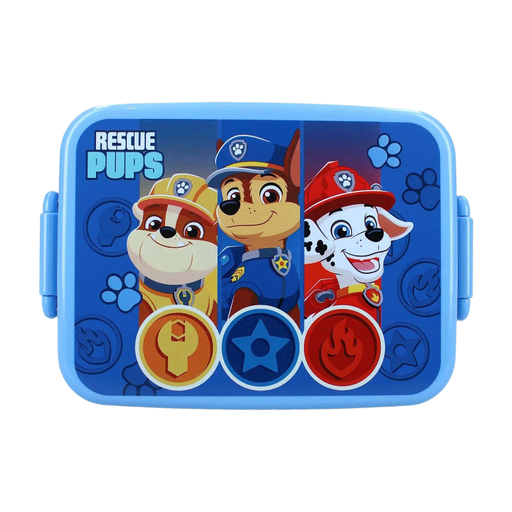
Why it's a great fit: Ideal for parents looking for a simple and fun solution for their children's school meals. Its colourful design and compact size are perfectly suited for young kids.
Its simple design, without complex seals, avoids the difficult-to-clean trap. The clip closure is easy for little hands to manage while remaining secure for transport in a school bag.
Durable and lightweight plastic construction, easy for a child to carry. Hand washing is recommended to preserve the graphics.
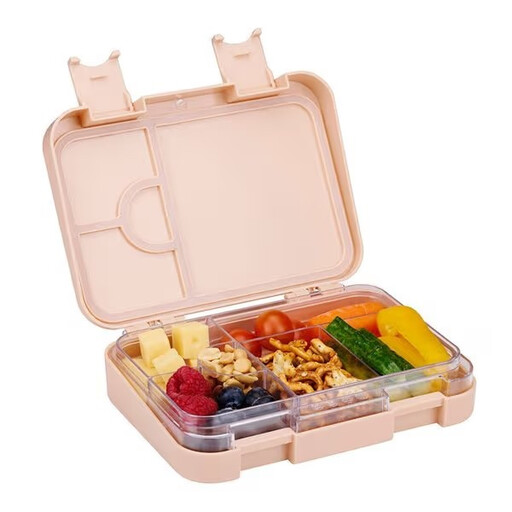
Why it's a great fit: Perfect for adults who love to create varied and well-organised meals. Its six compartments allow you to separate the main course, sides, fruits, and snacks without flavours mixing.
Its fixed-compartment structure puts an end to food mixing. Fully dishwasher-safe, cleaning is a breeze.
Perfect modularity with 6 compartments for precise portion control and meticulous organisation. Dishwasher-safe for hassle-free maintenance.

Why it's a great fit: This set is designed for meal prep enthusiasts. The 316 stainless steel is a premium material for long-term storage in the freezer and refrigerator, guaranteeing hygiene and durability.
Unlike many plastics, 316 stainless steel doesn't retain stains or odours. Its robustness ensures long-lasting leak-proofing and excellent resistance to warping, even after countless dishwasher cycles.
Set of 3 sizes (600 ml, 1100 ml, 2200 ml) for maximum flexibility. Premium material (316 stainless steel), freezer and dishwasher-safe for heavy-duty use.
We have selected a full range of products that meet our quality criteria and current safety standards.
To neutralise odours, fill the container with a mixture of warm water and baking soda (about one tablespoon per litre of water). Let it sit for several hours, or even overnight, before rinsing thoroughly. An extra tip: leaving the open container in the sun can also work wonders.
It all depends on your priorities. A glass container is certainly heavier and more fragile than its plastic or stainless steel counterparts. However, it scores points for hygiene (zero stains, zero odours) and versatility (oven and microwave-safe). If you commute by car or if weight isn't a deal-breaker, it's an excellent option. For journeys on public transport or on foot, stainless steel or a high-quality plastic would be a smarter choice.
Both are food-grade steels and are perfectly safe. 304 stainless steel is the most common and is suitable for most uses. 316 stainless steel, which is enriched with molybdenum, offers superior corrosion resistance, especially against salt and acids. If you often store very salty or acidic dishes (tomato sauces, lemon vinaigrettes…), a 316 stainless steel container will prove more durable in the long run.