
Livraison le jour même ou le lendemain

Qualité garantie

Débloquez vos offres de bienvenue: Livraison GRATUITE | Jusqu'à -80 % | 30 jours d'essai gratuits à JoyPlus
Téléchargez l'application
A compartmentalised lunch box lets you separate your main course, sides, fruit and snacks. But a model that looks appealing in a photo can quickly prove impractical in daily use. Whether for a child, a teenager or an adult, the right choice depends mainly on how you plan to use it, how easy it is to clean and how well it travels.
A box fitted with clips or a press-on lid can hold solid foods perfectly well without being suitable for sauces, soups or very liquid preparations. So the term "airtight" is worth checking on the product page: look for the presence of a seal, the type of closure and any recommendations regarding liquids.
When carrying a meal in a bag, place saucy foods in a compartment designed for that purpose or in a separate airtight food container. Close each clip fully and avoid filling the compartments to the brim.
Six sections aren't necessarily more practical than two or three. Narrow compartments can restrict the size of sandwiches, fruit or portions. For a lunch box intended for a child, also check that the closures are easy for small hands to operate.
A compact model suits smaller appetites and short outings. For a full lunch at the office or a school day, a more generous capacity will sometimes be preferable.
Seals, removable lids and interior corners can trap food residue. Before buying, check whether the different parts come apart and whether the manufacturer allows dishwasher use. A decorated plastic box may need hand washing and may not be microwave-safe.
Most stainless steel and glass models are not microwave-safe, especially when they contain metal parts. It's also best to let each component dry completely before closing the box.
A bento box with fixed compartments separates foods effectively but offers less flexibility. Removable dividers let you change the layout and make cleaning easier. To compare two models, look at the external dimensions, the size of each section and the total capacity in millilitres.
Borosilicate glass is generally valued for its resistance to temperature changes as stated by the manufacturer. However, it is heavier and more prone to impact than a plastic box. Stainless steel, particularly 18/8 or 316L grade as per the product page, suits users who want a durable structure and don't need to reheat their meal in the microwave.
Plastic and polypropylene are lightweight, making them easy to carry in a schoolbag or rucksack. Nevertheless, check the instructions: some models are hand-wash only and cannot withstand reheating.
For a food storage container, the quality of the lid matters just as much as that of the container. Look for clips that are firm enough, a seal that is correctly positioned and a lid that doesn't warp when the box is full.
The phrase "dishwasher-safe" doesn't necessarily mean all parts can go on the same rack. Follow the manufacturer's instructions, remove the seals where advised and regularly inspect the clips, any cracks and any signs of warping.
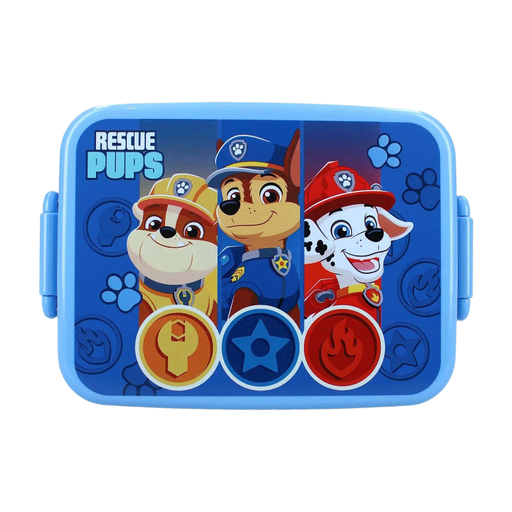
Why this choice suits this profile: Its 16 × 13 × 5 cm size and reportedly lightweight design make it suitable for first packed meals at school or on a picnic.
The press-on closure limits the risk of accidental opening with solid foods. The product page recommends hand washing and advises against microwave use.
Durable plastic according to the product page, press-on closure, fun design and a size suitable for children from 3 years old.

Why this choice suits this profile: This borosilicate glass set includes five 1,040 ml containers and five 370 ml containers for preparing, storing and transporting several portions.
The two sizes mean you don't have to use one large box for everything. The clip-on lids are described as leak-proof, but compatibility with liquids should be checked in the instructions.
10-piece set, five 1,040 ml containers and five 370 ml containers, borosilicate glass and clip-lock lids.

Why this choice suits this profile: Its five compartments and 316L stainless steel construction are suitable for meal prep, picnics and repeated use.
The separation limits food mixing. The four loops hold the lid firmly in place, but hand washing is recommended and the metal rules out any microwave use.
Stated 316L stainless steel, five compartments, PP lid and four closure loops.
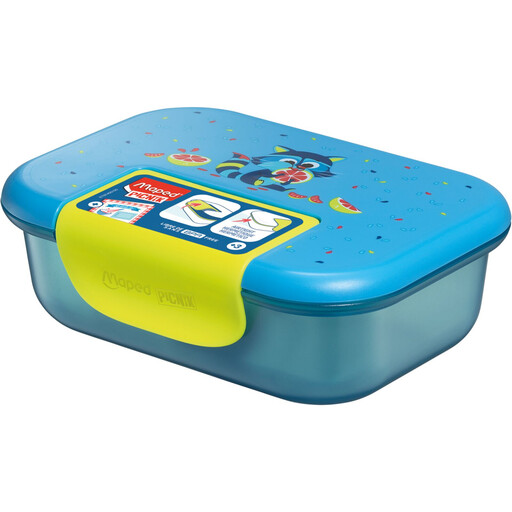
Why this choice suits this profile: Its 900 ml capacity, attached lid and fluorescent clip are designed for children's meals and daily journeys.
The attached lid reduces the risk of losing it in a schoolbag. The product page states it is dishwasher-safe but excludes microwave use.
Stainless steel base, 900 ml capacity, attached lid, wide clip and dishwasher-safe care according to the product page.
We've put together a comprehensive, real-time updated list of products that meet these strict selection criteria and European safety regulations.
Not necessarily. The dividers mainly stop solid foods from mixing together. For a sauce or soup, look for a seal and a closure described as leak-proof, then transport the box horizontally. A dedicated airtight food container will sometimes be more suitable.
Stainless steel suits users who prioritise durability and regular maintenance. Glass is practical for storing food in the fridge, but it is heavier. Plastic remains the most practical choice for children and for travel, provided you follow the manufacturer's washing and temperature instructions.
Wash the box soon after the meal, then dry the lid and container separately. Regularly check the condition of the seals and clips. Avoid abrasive sponges, very hot foods when the instructions advise against it and the microwave if the product page forbids it. Replace the box as soon as you notice a crack, a broken clip or a warped seal.