
Livraison le jour même ou le lendemain

Qualité garantie

Débloquez vos offres de bienvenue: Livraison GRATUITE | Jusqu'à -80 % | 30 jours d'essai gratuits à JoyPlus
Téléchargez l'application
Preparing a lunch for school, the office, the gym or a picnic calls for a container that’s practical, sturdy and easy to clean. A stainless steel lunch box can be ideal – provided you check a few details before ordering. Behind claims like “airtight”, “insulated” or “dishwasher-safe”, performance can vary noticeably depending on the lid, the seals and the overall design.
Here are the criteria to examine so you can avoid nasty surprises and choose a stainless steel lunch box that fits your habits.
A clip-on lid or one that simply sits on the base doesn’t necessarily guarantee a leak-proof seal. If you want to transport a salad with dressing, soup or a saucy dish, go for an airtight stainless steel container fitted with a seal and a clearly described closure system. The clips should lock firmly without any play and remain easy to operate after several washes.
For a child, ease of opening matters just as much as leak resistance. A mechanism that’s too stiff can turn a children’s lunch box into a real struggle at the canteen.
Not all stainless steels are documented with the same level of detail. Some product pages specify a 304 or 316/316L grade, while others simply say “stainless steel”. This information doesn’t replace the usage instructions, but it does allow you to compare models on a more objective basis.
Also remember to check the materials of the lid and seal – they can be made from PP, silicone or borosilicate glass. A stainless steel food storage box isn’t necessarily entirely metal.
A stainless steel food container should not be placed in the microwave unless the product as a whole is explicitly stated to be suitable. Metal is generally incompatible with this type of appliance. Also remove lids, seals and any plastic parts before using the container in the oven or with a heat source, and only if the product page allows it.
If you need to reheat your lunch at work, a glass model or transferring the contents to a suitable dish may be more practical. If you want to eat hot food without reheating, look instead at an insulated lunch box with vacuum insulation.
A compartmentalised lunch box keeps foods separate, but its external dimensions can be larger. Before ordering, measure the space available in your bag, fridge or locker.
Dividers are handy for keeping carbohydrates, vegetables, fruit and proteins apart. They also make it easier to judge portion sizes visually. However, be aware that a welded compartment isn’t necessarily leak-proof independently of the others – sauce can travel from one section to another if the lid doesn’t form a seal around each area.
Trays with five compartments, like some PURECOOK or Maxcook models, are better suited to carefully organised meals than to transporting liquids.
A food container that’s dishwasher-safe cuts down on cleaning time, but do check the recommendations for the lid and seal. Some manufacturers advise hand washing to preserve the airtightness or any printed designs.
After washing, let each part dry completely, paying particular attention to the underside of the seal. Avoid abrasive sponges and sharp objects, which could scratch the surface or distort the closure system.
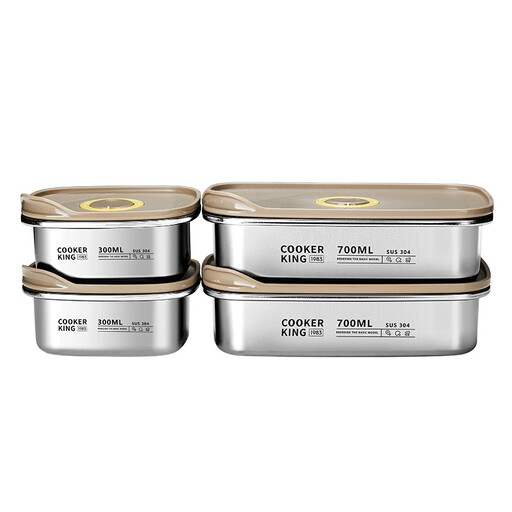
Why this choice suits this profile: This set of four containers is a great starting point for kitting out your home, preparing lunches or organising outings. The boxes stack to take up less space in the fridge or cupboard.
The product page states it is made from food-grade stainless steel and is dishwasher-safe. It also specifies that the product should not be used in the microwave or oven.
Set of 4 pieces, stackable design, polished surface, intended for fridge use, lunches and picnics.
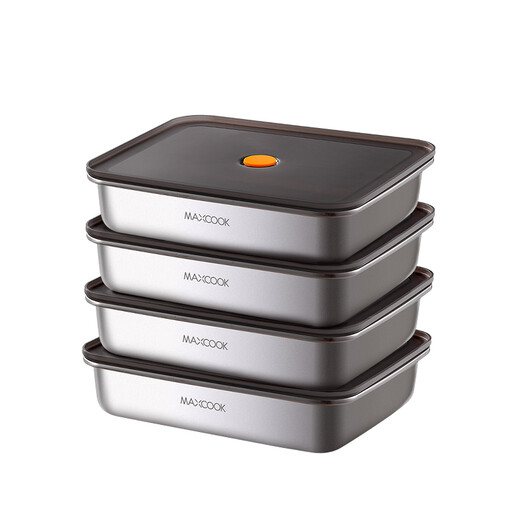
Why this choice suits this profile: With four containers of the same capacity, this set is aimed at those who prepare several meals in advance or regularly store generous portions.
The capacity of each box is clearly stated, and the set is designed for the freezer and dishwasher. The fitted lids keep food secure in a closed container.
316L stainless steel, four identical 1,600 ml containers, lids included, freezer-safe and dishwasher-safe.
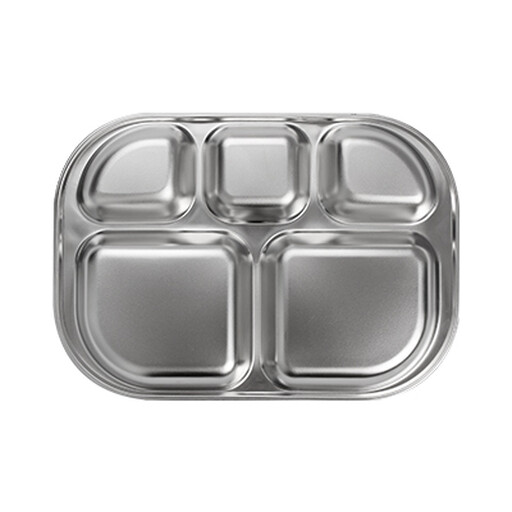
Why this choice suits this profile: This format is designed for portioned meals, well-organised family menus, camping and users who want to keep foods separate without multiplying the number of boxes.
The five sections are described as independent. This means you can verify the actual separation of foods, rather than relying solely on the word “bento”.
304 stainless steel, five compartments, dishwasher-safe as stated on the product page, and unbreakable design unlike glass.
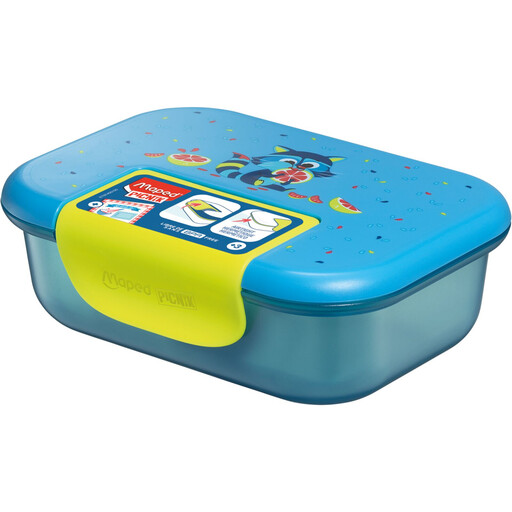
Why this choice suits this profile: Its rectangular shape slips easily into a school bag, and its large fluorescent clip is designed for small hands to operate, provided the recommended age is followed.
The lid stays attached to the base, reducing the risk of losing parts. The product page also mentions a leak-proof closure and dishwasher-safe cleaning.
900 ml capacity, attached lid, fluorescent clip, stainless steel base and a size suitable for school as well as picnics.
We’ve put together a comprehensive, real-time selection of products that meet these demanding criteria and European safety standards.
Before the first use, wash the box and all its accessories. If the model is airtight, remove the seal regularly to get rid of any residue that can build up. Avoid overfilling the container – the lid may not close properly, and pressure can increase with hot food.
A stainless steel lunch box can be used in the fridge and, depending on the product page instructions, in the freezer. Models with a glass lid require extra care when there’s a sudden change in temperature. To transport liquids, choose a container whose leak-proof seal is explicitly guaranteed, and keep the box upright when the instructions recommend it.
Many models are dishwasher-safe, but the instructions can differ for the base, lid and seal. Always check the product manual. A gentle cycle and thorough drying help preserve the effectiveness of the closure.
Generally, no. Stainless steel should not be placed in the microwave. Some products may be advertised as compatible with a specific heat source, but you must then follow the manufacturer’s instructions carefully and remove any parts that aren’t intended to be heated.
For a child or a snack, a capacity of 600 to 900 ml may be enough, depending on the menu. For an adult taking a full meal, allow around 1 to 1.7 litres. When meal prepping, several boxes of different capacities make portioning and fridge organisation much easier.