
当日/次日达

品质保障

开启新人专享福利: 全场免邮 | 低至 2 折 | 免费试用 30 天 JoyPlus 会员
下载 Joybuy
Finding cleaning products that are effective, gentle on sensitive skin, and safe for children can often feel like a daunting task. Between labels full of promises and endless ingredient lists, it's easy to get lost. Our mission: to help you see things more clearly and make the right choice, far from the marketing jargon.
Before making a choice, it's crucial to recognise common misconceptions and traps that can be costly for both your wallet and your skin.
Many packages proudly display claims like "from natural origin" or "plant-based." While these statements are often true, they are no guarantee that a product is hypoallergenic. An ingredient, even if 100% natural, can be highly irritating or allergenic (think of certain essential oils). The right approach: rely on official certifications, not marketing slogans.
A product labelled "for sensitive skin" can still contain fragrances or preservatives known for their allergenic risk. Substances like methylisothiazolinone (MIT) or certain perfumes, even subtle ones, are frequent causes of irritation. The only solution: scrutinise the ingredient list.
The fear is legitimate: will a natural cleaner or hypoallergenic product perform as well on tough stains? This is a persistent myth. Today, modern formulations combine incredibly effective cleaning agents with skin-friendly ingredients. You no longer have to choose between cleanliness and gentleness.
To navigate the aisles with confidence, focus on these few objective points that make all the difference.
Labels are your best allies for verifying a brand's real commitments. Here are two essential ones:
A hypoallergenic formula is defined first and foremost by what it does NOT contain. Look for products that explicitly exclude:
A hypoallergenic dish soap without fragrance or dyes is always a winning choice for the family.
The requirements aren't the same for everyone. A baby laundry detergent or a special baby bottle soap must meet even stricter criteria. Their formulas are generally fragrance-free, tested under paediatric supervision, and designed for a perfect rinse, leaving no residue on the laundry or dishes of little ones.
To help you put this advice into practice, here are a few options that cater to specific user profiles.
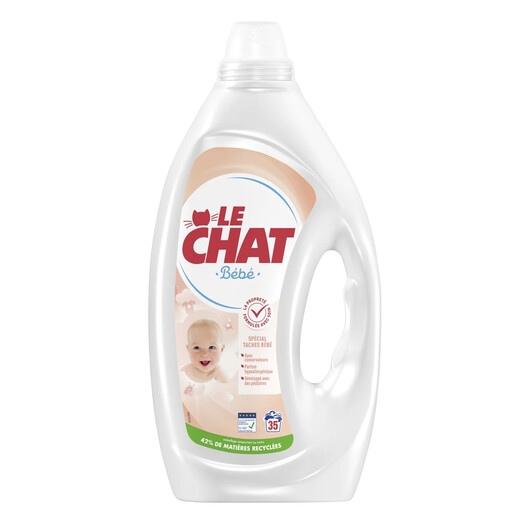
Why we love it: Specially designed for the delicate skin of little ones, this detergent tackles classic stains (carrot purée, milk, etc.) while ensuring high tolerance, all developed with paediatricians.
Its ECARF certification is a true seal of trust, far more reliable than a simple "sensitive skin" claim. Its fragrance is hypoallergenic, and its formula is free from listed allergenic preservatives.
Effective on baby stains, dermatologically tested, and comes in a bottle made with at least 42% recycled plastic.
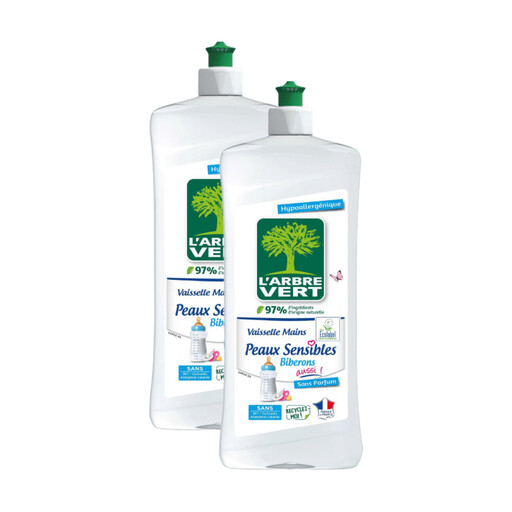
Why we love it: This is the solution for ultra-reactive skin. Its formula gets straight to the point by eliminating all the extras: zero fragrance, zero dyes, zero MIT, and none of the listed skin allergens.
It focuses on the essentials: its fragrance-free formula eliminates one of the main causes of irritation. The ingredient list is intentionally short and transparent.
European Ecolabel certified, with 97% of ingredients from natural origin. Versatile enough for the whole family's dishes, including baby bottles.
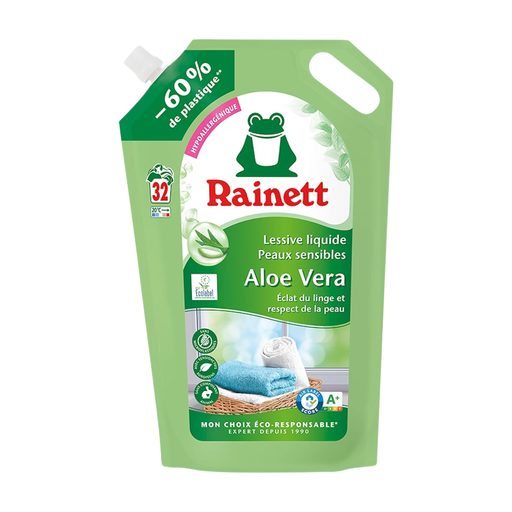
Why we love it: The perfect choice for those who want to make no compromises between caring for their skin and the planet. This detergent combines a gentle, aloe vera-infused formula with solid ecological credentials.
It goes beyond a simple "green" claim. The European Ecolabel certification and its 100% vegan formula are tangible proof of an approach that combines ecology with respect for sensitive skin.
Effective from 20°C for energy savings. Its 7-enzyme formula tackles a wide range of stains, proving that a product can be eco-friendly, gentle, and high-performing all at once.
We've curated a complete selection of products that meet our strict criteria and safety standards.
No, that's a persistent myth! Modern formulas use plant-based cleaning agents and enzymes that effectively target and break down stains (grease, starch, etc.) without resorting to harsh chemicals. You can expect great performance, even at low temperatures.
baby laundry detergent is truly suitable?Rely on three key indicators: the "hypoallergenic" claim, the absence of fragrance (or a fragrance formulated to minimise allergy risks), and ideally, an endorsement from paediatricians or a certification (like ECARF). A good rinse is also essential to ensure no residue is left behind.
eco-friendly household products always hypoallergenic?Not always. A product can be eco-friendly (biodegradable, recycled packaging) but contain natural allergens, like certain essential oils. To get the best of both worlds, the winning combination is a product that has both an eco-label (e.g., European Ecolabel) and clear guarantees about its hypoallergenic formula.