
Livraison le jour même ou le lendemain

Qualité garantie

Débloquez vos offres de bienvenue: Livraison GRATUITE | Jusqu'à -80 % | 30 jours d'essai gratuits à JoyPlus
Téléchargez l'application
For parents, choosing hypoallergenic baby nappies isn't just about counting how many are in a pack. An ill-fitting nappy can lead to leaks, while a poorly understood ingredients list makes selection difficult for a baby with sensitive skin. The price per nappy, eco-friendly claims, and phrases like "long-lasting protection" also deserve careful scrutiny.
Here are the criteria to check before buying, along with a selection of models suited to different needs.
Labels like "3 to 6 kg" or "7 to 14 kg" serve as a guide, but two babies of the same weight can have very different body shapes. A nappy that's too large leaves gaps around the thighs; one that's too small compresses the tummy and absorbs less effectively.
To avoid mistakes, watch for marks on the skin, fasteners that come too close to the centre, and repeated leaks. In this case, it's often better to change size than to rely on extra creams or more frequent changes.
Eco-friendly baby nappies may contain bio-based materials, certified cellulose, or recycled packaging. That doesn't mean every part of the nappy is natural or biodegradable. The elastics, adhesives, outer films, and absorbent components can be made from different materials.
So check the stated bio-based content, the certifications displayed, and the composition of the part that touches the skin. A bio baby nappy is still a disposable nappy: it must go in the household waste, never down the toilet.
Good absorption also depends on the leak barriers, the width of the waistband, the position of the absorbent core, and the overall fit. Claims like "up to 12 hours" are a manufacturer's usage guideline and don't replace regular nappy changes.
The baby nappy size and weight chart is your first filter. For newborns, a cut-out at the cord area can make care easier and reduce friction on the tummy. Sizes 0 and 1 meet specific needs: Pampers size 0 is designed for babies under 3 kg, while Love & Green offers a size 1 for babies weighing 2 to 5 kg.
As your child grows, also check their freedom of movement. A well-fitted nappy should stay in place when your baby rolls over, crawls, or starts walking.
For sensitive skin baby nappies, look for:
The term "hypoallergenic" generally means the product has been formulated or assessed to reduce the risk of an allergic reaction. However, it doesn't guarantee no reaction in every child. If redness persists, stop using the product and seek advice from a healthcare professional.
Compare the price per nappy rather than the pack price. A larger pack can reduce the cost per use, but it's better to try a small quantity before ordering several months' supply. Needs change quickly during the first few weeks.
Reusable and disposable nappies suit different circumstances. Reusable nappies require equipment, washing, and drying; disposable nappies focus on convenience, especially for outings, nursery, or nights. For mobile children, nappy pants make dressing and quick changes easier.
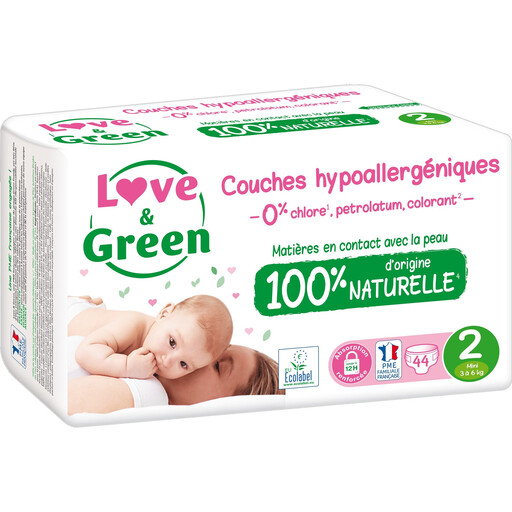
Why this choice suits this profile: With 44 nappies, this pack lets you try size 2 without building up a huge stock for a baby weighing 3 to 6 kg.
The stated composition mentions 65% bio-based materials, as well as being free from fragrance and lotion.
The manufacturer mentions FSC and TCF cellulose, a umbilical cut-out, and EU Ecolabel certification.
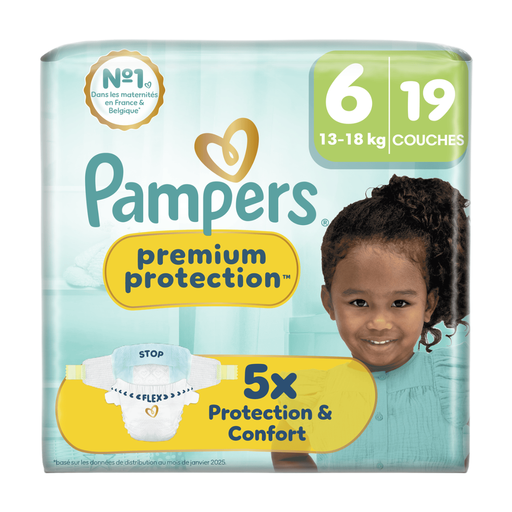
Why this choice suits this profile: This size is suitable for children weighing 13 to 18 kg and focuses on comfort, absorption, and leak protection.
The product page details the absorbent layer, the Stop & Protect back pocket, and the absence of regulated fragrance allergens in the European Union.
The nappy is dermatologically tested and its design reportedly includes micro-cavities intended to draw liquid stools away from the skin.
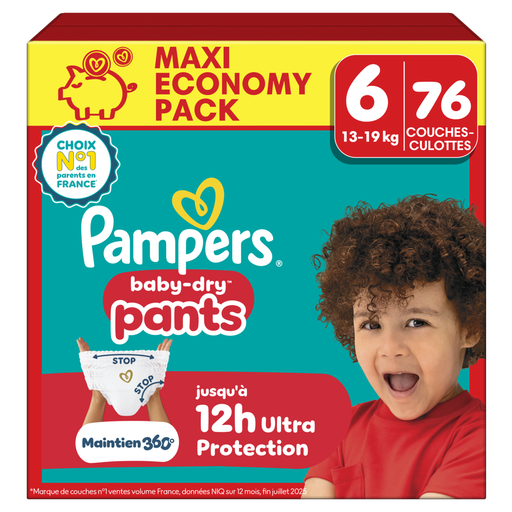
Why this choice suits this profile: Nappy pants are ideal for mobile children, nursery days, and quick changes.
The 360° stretchy waistband and side barriers are designed to move with your child and help prevent leaks, according to the product page.
The pack contains 76 pieces. Removal is done by tearing the sides, then an adhesive strip allows you to roll up the nappy before disposing of it.
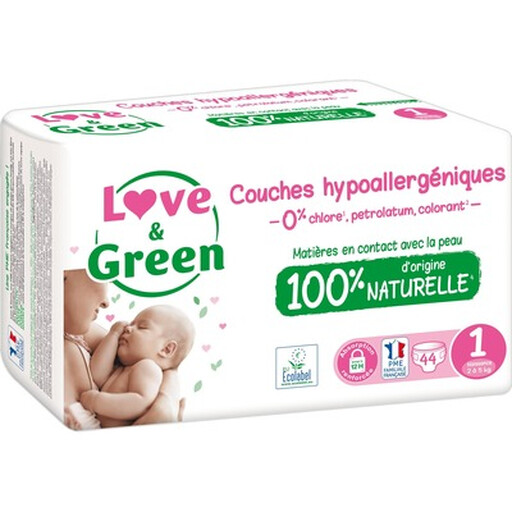
Why this choice suits this profile: The newborn size and umbilical cut-out meet the needs of the first few weeks. The pack of 44 lets you start without stocking up too much.
The product page states a fragrance-free and lotion-free composition, as well as an umbilical cut-out designed to minimise contact with the cord.
61% bio-based ingredients are stated, with FSC cellulose and recycled and recyclable plastic packaging.
We've put together a comprehensive, real-time updated list of products that meet these demanding selection criteria and European safety standards.
Refer to the birth weight and the fit offered. According to the Pampers product page shown here, size 0 is suitable for babies under 3 kg, while Love & Green size 1 covers weights from 2 to 5 kg. An umbilical cut-out can be useful during the first few days.
No. This term indicates that the manufacturer aims to reduce the risk of a reaction, but every skin can react differently. Choose a fragrance-free composition, change the nappy regularly, and watch for any signs of irritation.
This depends on its absorbency, the child's age, and the amount of liquid. Promises of long-lasting protection don't replace regular changes. Check the nappy, change it as soon as it's wet or soiled, and follow the instructions on the packaging.