
Same-day & Next-day Delivery

Quality Guaranteed

Unlock Your Welcome Offers: FREE Delivery | Up to 80% OFF | Free 30-day JoyPlus trial
Download the APP
When you have sensitive or reactive skin, everyday tasks like laundry or washing dishes can quickly turn into a nightmare. Itching, redness, tightness... What's to blame? Very often, it's unsuitable household or personal care products. Faced with shelves overflowing with marketing promises, it's hard to know what to choose and avoid making a decision that ultimately makes things worse.
As a Product Expert at Joybuy, my mission is to help you see things more clearly. Let's break down the traps to avoid so you can finally choose products that truly respect your skin.
To avoid falling into the trap, it's better to rely on a few objective criteria. These benchmarks will help you know at a glance if a product is right for you.
The term hypoallergenic is a crucial starting point. It means the product has been "formulated to minimise the risk of allergic reactions." This is a much stronger commitment than a simple dermatological claim. To go a step further, look for independent certifications:
A short ingredient list is often a good sign. Opt for allergen-free household products. Pay special attention to the absence of:
Brands that clearly display their composition, the percentage of naturally derived ingredients, and the place of manufacture naturally inspire more confidence. A product that is made in France is not only a guarantee of rigorous controls but also a support to the local economy.
To guide you, here are a few options that meet specific needs, in line with the criteria we've just discussed.
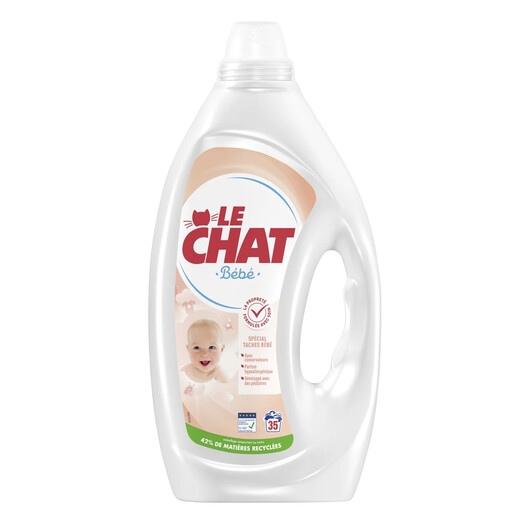
Why it's the right choice: A baby's skin is particularly thin and permeable. Developed with paediatricians, this detergent raises the bar with its ECARF certification, which ensures maximum skin tolerance for the whole family's laundry.
It doesn't just settle for a "dermatologically tested" claim. The ECARF certification is objective, verifiable proof of its low-irritant formulation.
Effective on baby stains (cereal, milk, carrots). Formula is free from preservatives and contains a hypoallergenic fragrance.
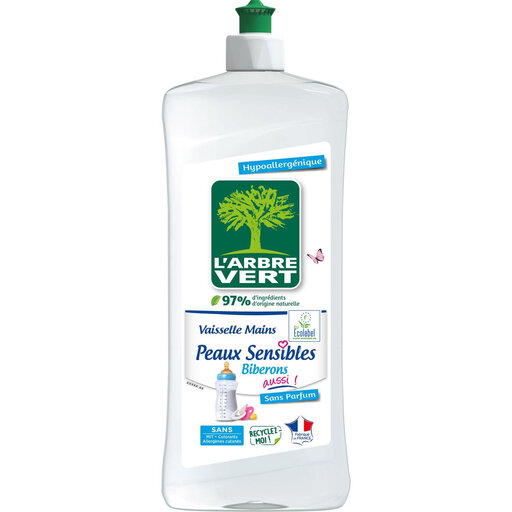
Why it's the right choice: For those who prioritise transparency and local production, this hypoallergenic dish soap is a safe bet. It is made in France, fragrance-free, and its formula is composed of 97% naturally derived ingredients.
It sidesteps the hidden ingredient trap by clearly stating what it doesn't contain: no fragrance, no dyes, no MIT, and no listed skin allergens.
EU Ecolabel certified. Its fragrance-free formula is perfect for the most reactive skin types and for cleaning baby bottles.
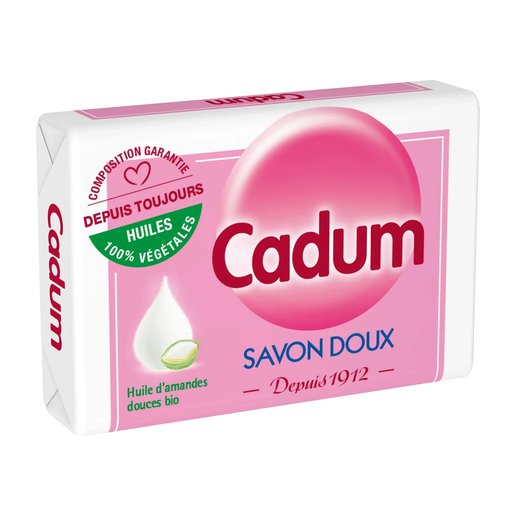
Why it's the right choice: For washing hands or the body, getting back to basics is often the best solution. This soap for reactive skin relies on a simple, tried-and-true formula, based on 100% vegetable oils and enriched with organic sweet almond oil.
It avoids the complex formula trap by offering a minimalist composition renowned for its gentleness, a far cry from the cocktails of preservatives and sometimes harsh surfactants found in liquid soaps.
Gentle formula suitable for the whole family (ages 3 and up). Leaves skin soft and comfortable thanks to organic sweet almond oil.
We have selected a complete range of products for you that meet these demanding criteria.
It's not an absolute requirement, but it is a wise precaution. An infant's skin is thinner and more permeable than an adult's. A baby laundry detergent is specifically formulated without the most common irritants and with hypoallergenic fragrances, which significantly reduces the risk of skin reactions.
The term "hypoallergenic" indicates that the formula has been designed to minimise the risk of allergies, but it cannot guarantee a complete absence of reaction. The "allergen-free" claim generally refers to the absence of the 26 allergenic fragrance substances listed by European regulations. A product can therefore be free of these 26 allergens but still contain another ingredient to which you are personally sensitive. Vigilance is key.
Not necessarily. Some naturally derived ingredients, like pure essential oils or raw plant extracts, can be very potent and potentially irritating for already fragile skin. A product's safety depends less on the origin of its ingredients and more on the rigour of its formulation and its ability to respect the skin's balance.