
Livraison le jour même ou le lendemain

Qualité garantie

Débloquez vos offres de bienvenue: Livraison GRATUITE | Jusqu'à -80 % | 30 jours d'essai gratuits à JoyPlus
Téléchargez l'application
Switching to glass food storage containers is an excellent way to better organise your kitchen and store food more healthily. The problem is, the market is flooded with products that make enticing promises but, in practice, fall short. A lid that warps, glass that cracks, or a seal that fails can quickly turn a good investment into a disappointment. To avoid making a mistake, it's crucial to know how to navigate the most common pitfalls.
Here are the three key things to watch out for to make the right choice:
To make a purchase you won't regret, focus on the features that truly guarantee the durability and versatility of your glass storage container.
The type of glass is the number one criterion. Borosilicate glass is specially engineered to withstand significant temperature fluctuations. This allows it to go safely from the freezer to the microwave, and even serve as a glass baking dish. Standard glass (soda-lime) doesn't offer this flexibility and poses a real risk of breakage. For maximum versatility, insist on "borosilicate glass."
The quality of an airtight glass jar depends entirely on its locking system. The most reliable options are:
The shape of the container directly impacts your kitchen organisation. Square or rectangular models stack better and optimise space in both the refrigerator and cupboards. Also, remember to check for dishwasher compatibility (for both the dish and lid) to make your life easier.
Rather than an endless list, here are a few models that meet specific needs, all selected according to the quality and practicality criteria we've just discussed.

Why we chose it: This set is perfect for meal prep fans. It offers multiple sizes (5 x 1040 ml and 5 x 370 ml) to accommodate both main courses and side dishes. Its borosilicate glass allows it to go directly from the fridge to the microwave to heat up lunch at the office.
The locking clip system ensures a reliable seal for transport, while the borosilicate glass eliminates the risk of breakage from thermal shock during reheating.
A complete and cohesive set that meets most meal prep needs, with materials designed for heavy use.
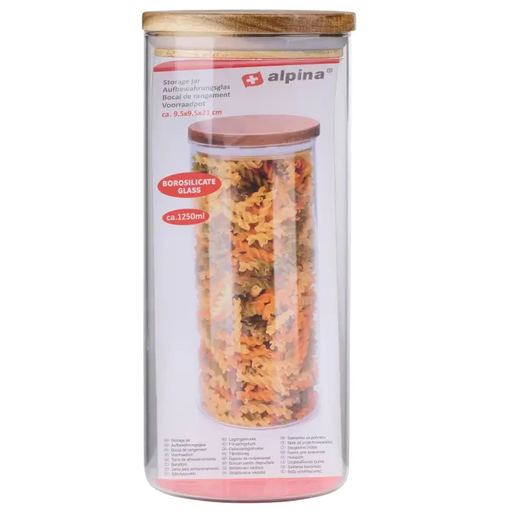
Why we chose it: Ideal for those seeking both aesthetics and impeccable organisation for their dry goods. The acacia wood lid adds a natural touch, and the square shape optimises shelf space, whether lined up or stacked.
This jar is designed specifically for dry foods. Its wood lid with a gasket ensures good preservation without making false promises: it's not meant for the oven or microwave, which prevents any misuse.
An elegant design and a square shape that maximises storage space. The perfect blend of function and form for a well-ordered kitchen.

Why we chose it: This large 2.3L dish is the ultimate all-in-one tool. It allows you to bake a family-sized casserole in the oven, store leftovers in the fridge, and then reheat them in the microwave thanks to its clever lid.
It perfectly sidesteps the "oven-safe" trap. The dish is made of PYREX borosilicate glass, the gold standard for heat resistance. Its lid, which is not oven-safe, includes a steam vent for safe reheating in the microwave.
Its extreme versatility (baking, storing, reheating) and vented lid make it the ideal complete solution for family meals.
We have compiled a complete list of products that meet our selection criteria and quality standards.
As a general rule, no. The vast majority of plastic lids are not designed for the oven; they could melt or release harmful substances. For the microwave, it depends on the model: check the manufacturer's instructions. Some, like the one on the PYREX Cook & Heat, are equipped with a valve that you open to let steam escape. When in doubt, it's best to remove the lid or use a dedicated microwave cover.
For perfect maintenance, the ideal method is to remove the silicone gasket from the lid after each use, especially after storing saucy or greasy dishes. Wash the gasket, lid, and container separately with hot, soapy water or in the dishwasher. Make sure every component is completely dry before reassembling to prevent moisture from getting trapped.
The main difference lies in their chemical composition, which determines their resistance to thermal shock. Regular (soda-lime) glass can crack during a sudden temperature change. Borosilicate glass, on the other hand, contains boron trioxide, which gives it a very low coefficient of thermal expansion. It can thus withstand extreme temperature differences, allowing it to go from the freezer to the oven (after a period of adjusting to room temperature) without shattering. It is the material to prioritise for a truly versatile glass container with a lid.